
The Ghost Who Never Got Caught: The Story of Sukumara Kurup
How One Man’s Greed Turned into India’s Most Notorious Manhunt and a Tale of Betrayal, Mystery, and Tragedy

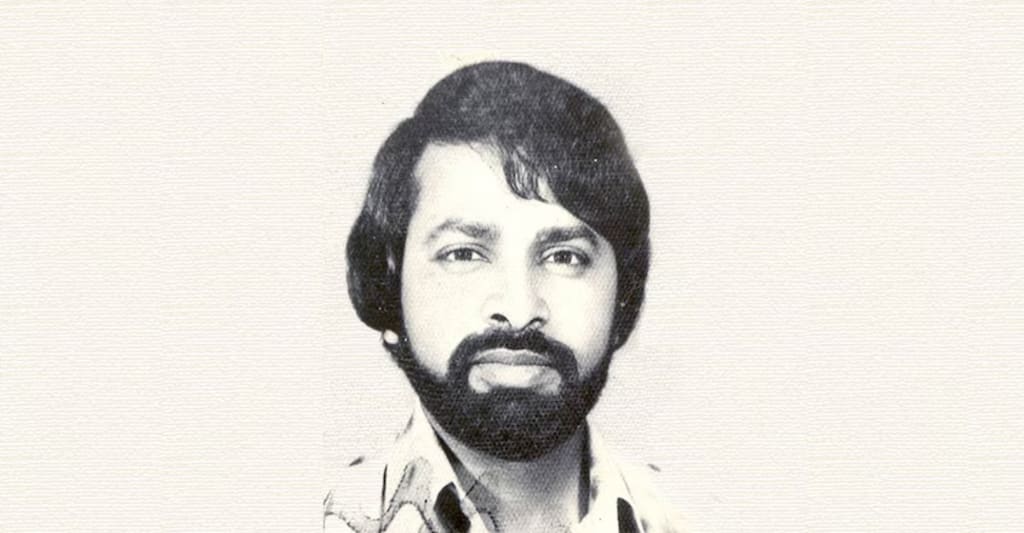
The quiet roads of Kerala were illuminated by flames on a cold January night in 1984. A burning car stood as the centerpiece of the scene, its charred remains drawing the attention of locals and law enforcement alike. Inside the vehicle, investigators found a body, burned beyond recognition. Initially, it was assumed that Sukumara Kurup, a wealthy expatriate from Abu Dhabi, had met with a tragic accident.
However, as days unfolded, so did the truth—one far more sinister than anyone could have imagined. The body wasn’t Sukumara Kurup’s. It belonged to Chacko, an innocent man murdered as part of an audacious insurance fraud. Sukumara Kurup had not perished. Instead, he had orchestrated the crime, staged his death, and disappeared into the shadows, beginning his life as a fugitive.
For nearly four decades, Sukumara Kurup has remained India’s most infamous ghost, a fugitive who evaded justice and etched his name into the annals of criminal folklore.
The Ordinary Beginnings of an Extraordinary Criminal
Gopalakrishna Kurup, who would later become known as Sukumara Kurup, was born in Kerala. His early years were unremarkable, marked by the typical struggles of a middle-class family. Like many young men of his generation, Kurup sought greener pastures abroad. He moved to Abu Dhabi in the 1970s, where he secured a well-paying job and lived a life of relative comfort.
But comfort wasn’t enough for Kurup. Ambition turned into greed, and the thought of earning wealth quickly and effortlessly consumed him. By 1984, he returned to Kerala with a dark plan that would make him infamous: he intended to fake his own death to claim a life insurance payout of ₹8 lakh—a fortune at the time.
Kurup’s plan was as simple as it was horrifying. He would find someone who looked like him, murder the individual, and pass off the victim’s body as his own.
The Sinister Plot Takes Shape
To execute his plan, Kurup enlisted the help of his brother-in-law Bhaskara Pillai, his driver Ponnappan, and his friend Shahu. Together, they searched for a victim who resembled Kurup. Their search ended with Chacko, a film representative from Kerala.
Chacko was an ordinary man leading an ordinary life. On the night of January 21, 1984, Chacko unknowingly walked into a trap. Lured by the offer of a ride, he entered the car driven by Kurup and his accomplices. Once inside, the men drugged Chacko, rendering him unconscious.
What followed was cold-blooded and calculated. Kurup and his accomplices strangled Chacko to death, his lifeless body becoming the centerpiece of their plan. They placed his body inside Kurup’s car, drove it to a secluded spot, and set it ablaze. The intention was clear: the body would be unrecognizable, and Kurup’s death would appear genuine.
As the flames consumed the vehicle, Kurup’s accomplices believed their crime was flawless. But they were wrong.
The Truth Unravels
When police arrived at the scene, the charred vehicle and its contents initially suggested a tragic accident. However, trained investigators found inconsistencies that raised suspicions.
Forensic experts were brought in, and their findings shocked everyone: the body inside the car did not belong to Sukumara Kurup. It was Chacko’s. The insurance scam was exposed, and the murder became a case of national interest.
The Kerala Police acted swiftly, arresting Kurup’s accomplices, including his brother-in-law and driver. Under interrogation, they confessed to the crime and revealed the full extent of Kurup’s involvement.
But by then, Sukumara Kurup had disappeared.
The Great Escape
While his accomplices faced the law, Kurup fled, using his wealth and connections to stay one step ahead of the authorities. The police launched a massive manhunt, but Kurup proved to be elusive.
Some reports suggested that he fled to the Gulf, assuming a new identity and blending into the expatriate community. Others claimed he was hiding in India, protected by powerful allies. Over the years, sightings of Kurup were reported across various states, and even abroad, but none led to his capture.
As years turned into decades, Sukumara Kurup’s ability to evade justice became legendary. He became a symbol of cunning and deception, earning the title of “India’s most wanted fugitive.”
The Forgotten Victim: Chacko
Amid the sensationalism surrounding Sukumara Kurup’s escape, one story often fades into the background—that of Chacko, the innocent man whose life was cruelly stolen.
Chacko was a hardworking man, a film representative trying to make a living. He was a husband and father, with dreams and responsibilities like any ordinary person. His brutal murder left his family shattered.
For Chacko’s widow and child, life became a nightmare. They were thrust into the public eye, forced to relive their grief as the case dominated headlines. While Sukumara Kurup became a household name, Chacko’s story was relegated to a footnote in the saga.
A Cultural Phenomenon
The story of Sukumara Kurup transcended the realm of crime, becoming a cultural phenomenon in Kerala. His name entered folklore, and his crime became a cautionary tale told to generations.
The case inspired books, documentaries, and, most notably, the 2021 Malayalam film Kurup, starring Dulquer Salmaan. While the film took creative liberties, it brought the story to a new generation, reigniting debates about Kurup’s whereabouts and motivations.
For many, Sukumara Kurup represents more than just a fugitive; he is a symbol of greed, cunning, and the imperfections of the justice system. But for others, the romanticization of his story is a troubling trend that overshadows the real tragedy—the murder of Chacko.
The Hunt Continues
Decades after the crime, the Kerala Police continue to review the case periodically. Advances in technology, including facial recognition and international policing, offer hope that Kurup might one day be caught.
But as time passes, the likelihood of his capture diminishes. Questions linger: Did Kurup flee abroad? Is he living quietly under a new identity? Or has he passed away, taking his secrets with him?
For the authorities, the case is a reminder of both their determination and their limitations. For Chacko’s family, it is an unresolved chapter that keeps the wounds of the past open.
Lessons from the Sukumara Kurup Case
The Sukumara Kurup case exposed vulnerabilities in India’s legal and insurance systems, prompting reforms to prevent similar crimes. It also highlighted the importance of forensic science in solving complex cases.
More importantly, it underscored the devastating human cost of crime. While Kurup’s story has been romanticized, it is ultimately a tale of greed that destroyed lives and shattered families.
Conclusion
The story of Sukumara Kurup is one of ambition, betrayal, and an extraordinary escape from justice. It is a tale that has fascinated and horrified people for nearly four decades, blending elements of mystery, crime, and human tragedy.
But beyond the intrigue lies a darker truth. At the heart of this saga is Chacko, a man who became a pawn in someone else’s game. His life was stolen, his family left to grieve, and his memory overshadowed by the legend of the man who killed him.
As we recount the story of Sukumara Kurup, let us remember the real victim and the enduring pain of his family. Kurup may be a ghost who escaped justice, but his crime remains a chilling reminder of the destructive power of greed.
For now, Sukumara Kurup remains a fugitive, a ghost who continues to haunt the conscience of a nation. Whether he is ever caught or not, his story will remain a cautionary tale—a dark chapter in India’s criminal history that refuses to close.
About the Creator
Hariprasad
Passionate writer exploring the intersection of technology, geopolitics, and nature. Sharing insights on AI, global dynamics, and the beauty of our planet to inspire curiosity and meaningful conversations.
Keep reading
More stories from Hariprasad and writers in Criminal and other communities.
The Chinese Dragon Challenges OpenAI and U.S. AI Dreams: How DeepSeek is Reshaping the Future of AI
Artificial intelligence is now the biggest battleground for the technological race of the 21st century. For decades, AI development has been dominated by large players such as the United States, specifically companies like OpenAI, Google DeepMind, and Microsoft. These firms developed cutting-edge models in AI-such as ChatGPT and Bard-and thus orchestrated global perceptions about the capabilities of AI. But with the emergence of DeepSeek, a Chinese AI platform that prioritizes cost-efficiency and open-source innovation, the U.S. will be forced to rethink its strategies on AI.
By Hariprasad12 months ago in Education
The Second Crime Scene: The 8 Bodies Found in the Ephrata Storage Locker
DOSSIER ENTRY: THE SECOND CRIME SCENE TARGET LOCATION: EPHRATA SELF STORAGE (FACILITY NAME REDACTED) SEARCH DATE: WEDNESDAY, JANUARY 7, 2026 EVIDENCE RECOVERED: 8 INTACT HUMAN CORPSES / SKELETAL REMAINS THEORY: "FINISHED GOODS WAREHOUSE" STATUS: VERIFIED (AFFIDAVIT OF PROBABLE CAUSE)
By Sunshine Firecracker4 days ago in Criminal
The Facebook Marketplace of Horrors: Inside the groups where bones are traded like baseball cards.
It Wasn't the Dark Web When we hear about the illegal sale of human body parts, we imagine the "Dark Web"—encrypted Tor browsers, Bitcoin wallets, and shadowy Russian servers. The terrifying reality of the Jonathan Gerlach case is that he wasn't hiding in the digital shadows. He was hiding in plain sight.
By Sunshine Firecracker4 days ago in Criminal



Comments
There are no comments for this story
Be the first to respond and start the conversation.