
The Chinese Dragon Challenges OpenAI and U.S. AI Dreams: How DeepSeek is Reshaping the Future of AI

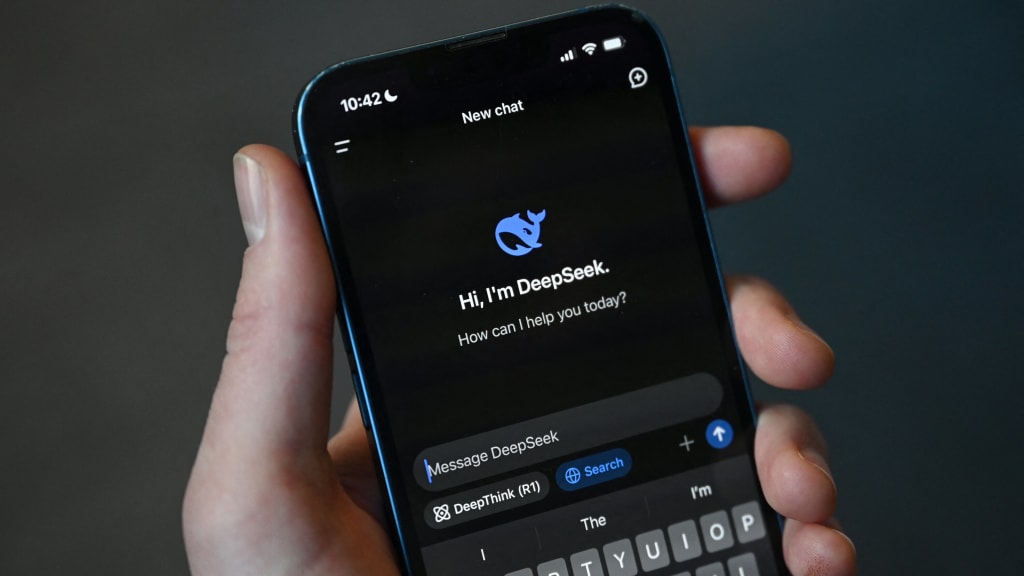
Artificial intelligence is now the biggest battleground for the technological race of the 21st century. For decades, AI development has been dominated by large players such as the United States, specifically companies like OpenAI, Google DeepMind, and Microsoft. These firms developed cutting-edge models in AI-such as ChatGPT and Bard-and thus orchestrated global perceptions about the capabilities of AI. But with the emergence of DeepSeek, a Chinese AI platform that prioritizes cost-efficiency and open-source innovation, the U.S. will be forced to rethink its strategies on AI.
DeepSeek is not just another AI challenger; it is a paradigm shift. Using open-source frameworks and focusing on affordable, scalable solutions, DeepSeek is rapidly expanding its reach into markets that U.S. companies have struggled to penetrate. As the "Chinese dragon" grows stronger, America's AI ambitions face unprecedented challenges.
The Rise of DeepSeek: Affordable and Scalable AI
DeepSeek established itself as a disruption in the international AI landscape by focusing on affordability. It thereby addresses markets that high-cost U.S. AI solutions have previously left to be underserved. DeepSeek innovative approach is based upon three pillars as follows:
Open-source integration:
DeepSeek develops on top of mature open-source bases such as TensorFlow, PyTorch, or Hugging Face. These popular platforms are trusted in the community and form good bases for implementing AI applications, and DeepSeek customizes such frameworks for each market, decreasing R&D investments by a vast margin.
Lean Infrastructure:
DeepSeek uses edge computing and proprietary AI chips to optimize processing power and reduce energy consumption. Unlike OpenAI's GPT models, which are very resource-intensive and rely heavily on cloud computing, DeepSeek minimizes its dependence on centralized infrastructure, cutting operational costs dramatically.
Global Accessibility:
By offering affordable AI tools, DeepSeek is capturing the attention of developing nations in Africa, Southeast Asia, and Latin America. These regions often lack the financial resources to adopt premium U.S. AI services, making DeepSeek a welcome alternative.
The Open-Source Advantage
One of the major strategies adopted by DeepSeek is the full use of open-source technology. The development of AI frameworks through open sources has democratized innovation. Now, innovations can flourish in a collaborative environment all over the world. DeepSeek has utilized this trend in several ways:
Efficient Development: With open-source platforms, it eliminates the need to build AI solutions from scratch. This accelerates the development cycle with minimal costs.
Community Contributions: DeepSeek leverages collective knowledge of global open-source users. Bugs get fixed quicker; features get in more rapidly and innovation is coming at a velocity that proprietary cannot match.
Local Solutions: By being open source, the deep learning framework by DeepSeek may be localized by regions and local languages. With this, the product managed to find some room in the market in regions whose language is other than English and in areas wherein the US players lag.
Impact of DeepSeek on America's AI Dreams
DeepSeek is no more a technology issue but a geopolitical and an economic threat to the dominance of America in AI. Here are some of the ways through which DeepSeek is reshaping the global face of AI and throwing it out of US ambitions:
1. Cost Disruption
Training and deploying advanced AI models like OpenAI’s GPT require immense financial resources. For example, the GPT-4 model, used in tools like ChatGPT, costs tens of millions of dollars to train. DeepSeek, with its open-source foundations and cost-efficient infrastructure, offers similar capabilities at a fraction of the cost. This disrupts the pricing model of U.S. companies, making them less competitive in price-sensitive markets.
2. Market Expansion
DeepSeek is cheaper and has been adopted by developing economies. The Southeast Asian, African, and Latin American nations, which were mostly locked out by the AI revolution because of cost factors, found DeepSeek. Its rising adoption erodes the global market share of U.S. firms and diminishes the latter's influence in emerging economics.
3. Technological Parity
DeepSeek accelerates the pace at which it could catch up in technology with U.S. platforms by using open-source frameworks. It is utilizing others' time spent on proprietary algorithms by applying available openness into its own customized productions. This enables levelled playing fields and a faster market lead for DeepSeek.
4. Fragmentation of AI Standards
The US has always insisted on establishing norms globally in AI ethics, governance, and deployment. DeepSeek's emergence means a new player with different priorities and values. Because DeepSeek offers localized, customized solutions, the approach lends itself more to states antsy about accepting US-centric frameworks. This means breaking America's monopoly over the global narrative on AI.
5. Geopolitical Influence
AI is not a mere technological advantage but a geopolitical power tool. DeepSeek has been successful at the same time as China's desire to become the world's leader in technology. Seizing markets and shaping AI adoption help China to rise in the international AI race, challenging America on its roots.
Challenges for U.S. AI Companies
DeepSeek's rise presents great challenges to U.S. companies like OpenAI, Google, and Microsoft. In order to compete, these firms need to adjust to the new paradigm:
Cost Optimization: U.S. companies must look for ways to decrease the cost of training and deploying AI models. This could include more efficient algorithms, optimized hardware, or even partnerships for shared infrastructure.
Open-Source Collaboration: Adopting open-source principles will allow U.S. companies to access the world's innovation and lower development costs. The success of Hugging Face has proven that open-source collaboration can be a powerful force.
Ethics and Transparency: By focusing on ethical AI development and transparent practices, U.S. companies can distinguish themselves from DeepSeek and build trust with global users.
Strengthening alliances by working with its allies in Europe and Asia can help U.S. companies counterbalance China's increasing dominance in the AI sector.
The Future of AI: Collaboration or Confrontation?
The rise of DeepSeek indicates that the AI industry has become increasingly competitive and fragmented. Even though competition is a given, it also brings an opportunity for collaboration. For example, open-source technology may help bridge the gaps between nations and make AI more inclusive.
However, this is difficult within the geopolitical realities that characterize the relationship between the US and China. As the AI becomes crucial for economic influence and strategic heft, any nation is reluctant to share that advancement with their peers. Now, the stakes on both sides elevate the race for leadership in AI dominance.
Conclusion:
DeepSeek has shaken the global AI world with its innovative approach of using open-source technology at cost-effective solutions. DeepSeek is forcing the industry to rethink its priorities and strategies as it challenges U.S. giants like OpenAI.
For the United States, DeepSeek is a challenge and an opportunity. By embracing open-source collaboration, investing in cost-efficient technologies, and prioritizing ethical standards, U.S. companies can maintain their leadership in the AI race. However, failure to adapt could see the "Chinese dragon" soar higher, leaving America's AI dreams behind.
The next decade will ultimately lay the fate of AI in the world. As DeepSeek rises, the world will closely observe how the U.S. responds-and if it can keep its feet on the ground against this new, yet unwavering, challenger.
About the Creator
Hariprasad
Passionate writer exploring the intersection of technology, geopolitics, and nature. Sharing insights on AI, global dynamics, and the beauty of our planet to inspire curiosity and meaningful conversations.
Keep reading
More stories from Hariprasad and writers in Education and other communities.
Lunana: The Most Remote School in the World – A Classroom Above the Clouds
A Classroom Above the Clouds Imagine a school where the daily commute involves a treacherous trek through the Himalayas, where books and supplies arrive on the backs of yaks, and where the nearest road is more than a week's journey away. This is not a scene from a fantasy novel but a reality for the students and teachers of Lunana Primary School, the most remote school in the world, nestled in the heart of Bhutan.
By Hariprasad12 months ago in Education
Restored to Its Roots: The Homecoming of a Historic Waterwheel
The quiet sound of rushing water once again spins a historic waterwheel in its original location. After decades of absence, the wheel has returned to the same stream it once relied on for power, bringing a sense of closure and continuity to a community that never forgot its value. This return marks not just the restoration of a structure but the revival of a piece of living history.
By Grady Gastonabout 3 hours ago in Education
The Human Guide Behind Technical Excellence
Mentorship of skilled technicians plays a decisive role in shaping strong careers and reliable work standards. Technical skill alone does not make a technician capable. Real growth comes from shared experience, steady guidance, and trust built over time. In many industries, mentorship fills the gap between classroom learning and real job demands. It helps technicians move from basic ability to confident performance. This article explores how mentorship supports learning, builds skills, and strengthens the future workforce.
By Michael Gastinel3 days ago in Education
Miss Persephone's Manual to a Seemingly Ordinary Life
Miss Persephone was found at the dining table, her blue eyes swollen, her tears arriving and retreating like the tides of the ocean. Earlier that day, her family had visited her in the retirement home where she had lived for eight years. It was her eightieth birthday.
By Imola Tóth4 days ago in Fiction


Comments (1)
Wonderful! Well written! Great work