
The Dragon of Hong Kong
How One Man Built an Asian Crime Empire That Terrified Governments and Ruled the Underworld
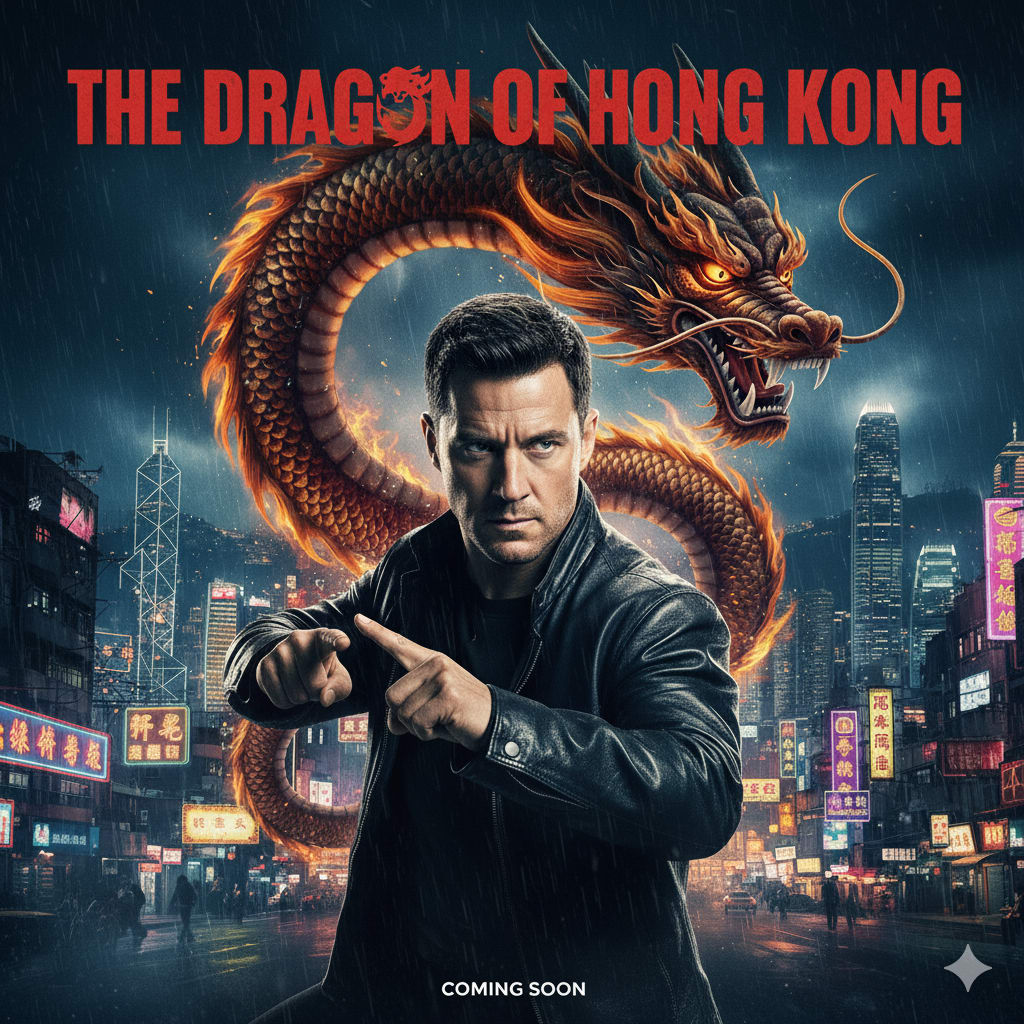
In the neon-lit streets of Hong Kong during the 1980s, where luxury met lawlessness, one man’s name whispered through alleys and nightclubs alike — Crippled Ho. To the world, he was Ng Sik-ho, a poor immigrant from China. But to the police, he was the Dragon of Hong Kong, the mastermind behind one of the largest drug empires in Asia’s history.
While Italian mafias and American gangs fought for fame, Ho operated differently — quiet, intelligent, ruthless. His rise wasn’t fueled by luck; it was built on strategy, loyalty, and a deep understanding of human weakness.
From the Gutter to the Throne
Ng Sik-ho was born in 1930s Guangdong, China — a time when poverty and war forced many to flee to Hong Kong. Life in the British colony offered little mercy to the poor. By his teens, Ho was already working the docks, carrying crates for a few coins. But what he saw there changed his destiny: smugglers earning in minutes what he made in a month.
By 1950, Ho joined a small-time gang. He wasn’t strong, but he was clever. When rivals mocked his limp — the result of a childhood accident — they didn’t realize they were underestimating the man who would one day control half of Hong Kong’s heroin market.
His gang, 14K Triad, was one of the most feared triads in Asia. But Ho had bigger dreams. He didn’t just want to control streets — he wanted to control nations.
The Golden Triangle Connection
The turning point came in the 1960s when Ho connected with suppliers from the Golden Triangle, a border region between Thailand, Myanmar, and Laos that became the world’s main source of heroin.
While other gangsters fought over small territories, Ho created a pipeline — from poppy fields in the mountains to the nightlife of Hong Kong and beyond.
Shipments came hidden inside rice bags, tea tins, and even hollowed-out furniture. Within years, his empire stretched across Asia, Europe, and the United States. Police estimated that over 60% of the heroin entering Hong Kong was connected to his syndicate.
Ho’s profits soared to the equivalent of hundreds of millions of dollars. He invested in restaurants, shipping companies, and real estate, transforming his criminal wealth into legitimate power.
The Code of Fear and Respect
Crippled Ho ruled with a strange combination of mercy and terror. He believed in loyalty and paid his men well, but betrayal was met with swift death. One story tells of a lieutenant who tried to steal from Ho’s drug money — he was never found again. His disappearance sent a message that echoed through every street gang in Kowloon.
Ho also earned the respect of his community. He built temples, funded schools, and donated money during disasters. To the poor, he was a protector; to the government, he was a ghost.
Despite massive police efforts, no one could touch him. He avoided flashy cars, didn’t wear gold chains, and never drank excessively. While other bosses flaunted wealth, Ho dressed simply and spoke softly. But behind those calm eyes was a mind sharper than any knife.
War with the Police
By the 1970s, the Hong Kong police — along with British intelligence — launched an all-out war against drug trafficking. The streets erupted in raids, arrests, and shootouts. Ho’s network became their biggest target.
The government offered massive rewards for information, but no one dared to talk. The triad code of silence was unbreakable. Informers ended up dead, sometimes found floating in Victoria Harbour.
Eventually, a few insiders turned against Ho, hoping for leniency. Their testimonies led to his downfall. In 1974, during a massive international operation, Ho was finally captured after a tense manhunt that crossed borders from Hong Kong to Taiwan.
The Fall of the Dragon
When arrested, police expected chaos or resistance. Instead, Ho calmly surrendered. “You can catch me,” he told officers, “but you can’t stop what I’ve built.”
His words proved hauntingly true. Even after his imprisonment, his network continued under new leaders. The triad evolved, spreading its roots across Macau, Singapore, and Canada.
Ho was sentenced to over 30 years in prison, one of the longest sentences ever handed down for drug trafficking in Hong Kong’s history. Behind bars, he lived quietly, reading newspapers and writing letters. To his followers, he remained a symbol — a man who rose from poverty to command a criminal empire.
When he was finally released in 1991, old and frail, the world had changed. The heroin routes had shifted, the triads had modernized, and Hong Kong stood on the brink of returning to China. Ho retired quietly and lived out his last years away from the public eye, dying in 1991. But his legend never faded.
Legacy of a Shadow King
Today, Ng Sik-ho’s empire is gone, but his story remains a dark lesson in power and ambition. He proved that crime could be as organized as business, that control didn’t need noise, and that sometimes the most dangerous men are the ones who speak the least.
In the shadows of Hong Kong’s skyline, where bright lights hide darker truths, whispers of the Dragon still linger — a reminder that the underworld never truly sleeps, it only changes faces.
About the Creator
shakir hamid
A passionate writer sharing well-researched true stories, real-life events, and thought-provoking content. My work focuses on clarity, depth, and storytelling that keeps readers informed and engaged.
Keep reading
More stories from shakir hamid and writers in Criminal and other communities.
The Shadow Empire: The Untold Story of the ‘Ndrangheta Mafia
In the dimly lit hills of Calabria, southern Italy, a quiet storm brews beneath the rustic beauty of olive trees and ancient villages. To the outside world, Calabria looks serene, untouched by the chaos of modern life. But deep in the heart of this region, hidden in family ties and blood oaths, lies one of the most dangerous criminal empires ever known — the ‘Ndrangheta.
By shakir hamid3 months ago in Criminal
The Ephrata Man Who Collected Death: A Profile of Jonathan Gerlach
The Mask of Normalcy To the residents of Ephrata Borough, Jonathan Christ Gerlach was just the guy at 100 Washington Avenue. He was 34 years old. He drove a silver Toyota RAV4. He paid his taxes. There were no red flags on the exterior of his property. The lawn was cut. The siding was clean. In a town obsessed with "curb appeal," Gerlach was a model citizen.
By Sunshine Firecrackera day ago in Criminal
A Mother's Love Lost
It was December 30th, 1988, just two days before the New Year. Jack Dale Walker had convinced a coworker to drive him out to the trailer where his girlfriend lived. Hansel Norton, the co-worker, had known Jack for barely three full weeks. Hansel was trying to be a good friend to this new friend. So, Jack, was young, only 22 years old and appeared to be love sick for the girl who was the mother of his baby.
By Cassie Moorea day ago in Criminal


Comments
There are no comments for this story
Be the first to respond and start the conversation.