
The Difference Between the Genocide of Palestinians and Native Americans: Goals
Red Indian & Palestine

## **The Difference Between the Genocide of Palestinians and Native Americans: Goals, Power, and the Anglo-American Alliance**
When examining modern history, both the genocide of the **Native Americans** and the ongoing **persecution of the Palestinian people** reflect patterns of settler colonialism — yet they differ in context, methods, and underlying objectives. Both events reveal how empire, ideology, and expansionist ambition can reshape entire nations and erase indigenous identities.
### **1. The Goal**
* **In the case of Native Americans:**
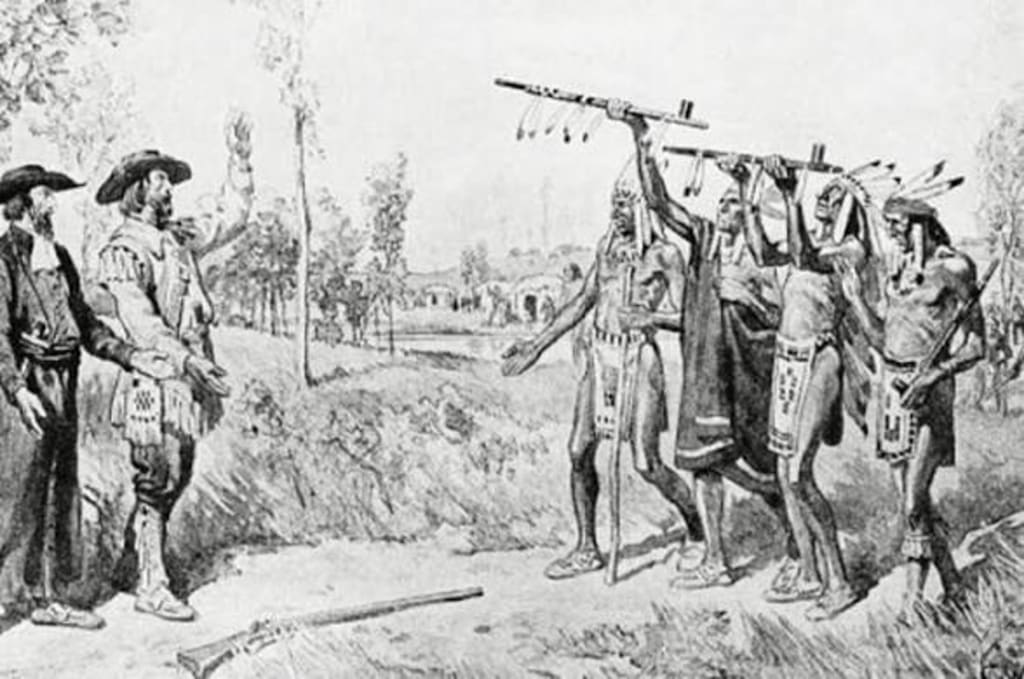
The primary objective was **complete territorial replacement** — to create a new settler society in North America, free from its original inhabitants. From the 16th to the 19th century, European colonial powers, led initially by Britain and later by the emerging United States, sought to remove or annihilate indigenous populations to make way for European settlers.
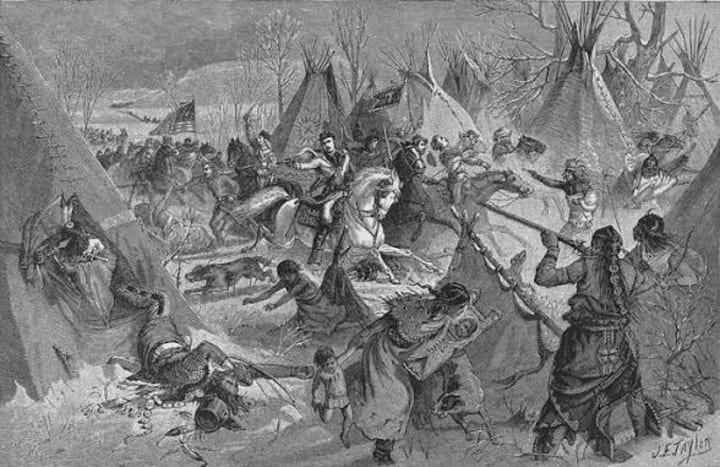
This process involved systematic massacres, forced removals, deliberate spread of diseases, and destruction of native cultures. The result was catastrophic: the population of Native Americans fell from tens of millions to less than a million by the early 20th century.
* **In the case of Palestinians:**
The goal has not been the total physical extermination of a people, but rather the **erasure of national identity and dispossession of land**. Since the 1917 **Balfour Declaration**, when Britain declared its support for establishing a “national home for the Jewish people” in Palestine, the objective was to create a permanent colonial-settler entity serving Western geopolitical interests in the Middle East.
Thus, the ongoing violence and displacement against Palestinians constitute a process of **national and cultural genocide**—targeting identity, territory, and sovereignty, rather than purely demographic annihilation.
### **2. Power and Methods**
* **Against Native Americans:**
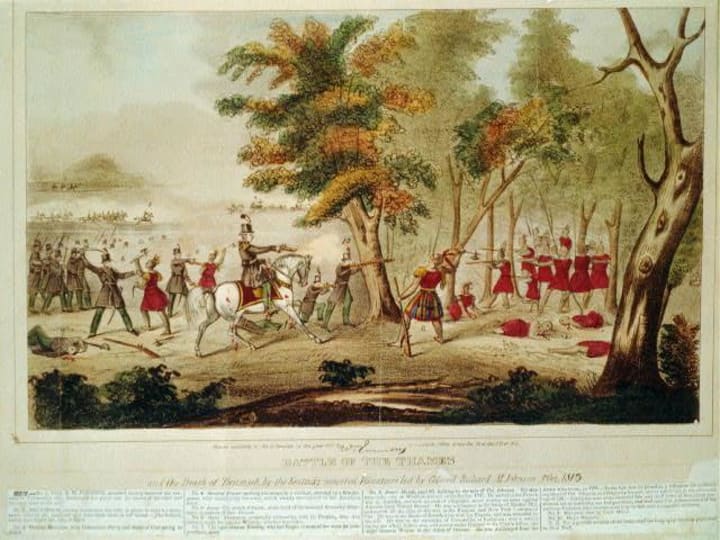
The campaigns of extermination were direct and militarily one-sided. European colonizers and later American forces wielded overwhelming technological superiority—guns, cannons, and organized armies—against indigenous tribes armed mainly with bows and spears.
The conquest of the continent was justified by the ideology of **Manifest Destiny**, a belief that expansion across North America was both inevitable and divinely sanctioned.
* **Against Palestinians:**
The methods are more complex, involving **political, military, and economic domination** underpinned by a powerful alliance between the United States and Israel, with historical roots in British colonial policy.
Here, the “war” is multifaceted: it includes military occupation, economic blockade, settlement expansion, and global media influence. The objective is to make Palestinian life unlivable enough to force displacement without formal declarations of war or extermination.
### **3. The British-American Alliance**
In both histories, **Britain served as the original architect**, while **America carried forward and expanded the project**.
* In **North America**, Britain founded the original colonies in the 17th century, establishing the social and political model of European settlement. When the United States declared independence in 1776, it inherited not only British institutions but also Britain’s **colonial mindset**—a belief in the right to occupy and “civilize” native lands.
The United States thus continued and completed what Britain had begun: the full territorial conquest of the continent and the near-erasure of its indigenous peoples.
* In **Palestine**, Britain once again played the initiating role. Through the **Balfour Declaration** and its administration of the British Mandate (1917–1948), it facilitated Jewish immigration, land acquisition, and the gradual displacement of Palestinian communities.
After World War II, **the United States assumed Britain’s position as the primary sponsor** of the Zionist project—providing Israel with political cover, economic support, and military superiority.
In this sense, **Britain “created” both modern America and modern Israel**—two colonial projects rooted in British imperial strategy, later empowered by American global dominance.

### **4. Conclusion**
The difference between the two genocides lies not in their essence, but in their **era and form**.
Both were born from the same colonial logic: that land can be taken by force in the name of “civilization” or “divine promise,” and that indigenous peoples are expendable obstacles to a higher mission.
The genocide of Native Americans was physical and nearly total; the genocide of Palestinians is structural and ongoing—its tools are bureaucracy, militarization, and control over narrative and law.
Yet one crucial distinction remains: the **Palestinian struggle continues**, preserving memory and resistance, while most Native American nations were decimated before their voices could shape global conscience.
History, in both cases, teaches a single truth: **power can build empires, but memory sustains justice**.
And as long as memory survives, no empire—no matter how powerful—can erase a people’s right to ex
About the Creator
America today
Breaking news, political insights, real-time analysis, U.S. politics, global politics, elections, government policies, international relations, diplomacy, political debates, trending political stories, expert commentary, factual reporting,.
Keep reading
More stories from America today and writers in Criminal and other communities.
Russia& Ukrainia Latest Developments
How much of Ukraine has Russia taken? By 2025, Russian forces occupy or claim control over approximately 20 percent of Ukraine’s territory (this includes areas seized since 2022 and newly taken ground in later offensives). The situation remains very fluid, with local counteroffensives, shifting frontlines, and contested zones.
By America today 3 months ago in Criminal
A $600 Car That Became a Trap
A $600 used Chevrolet Monte Carlo sat in a parking lot at Chicago O’Hare International Airport long enough to turn into a six figure problem. By the time the situation became public, the car had been cited a record 678 times and the balance attached to it was reported at more than $106,000. The person whose life was upended was not the person accused of abandoning the vehicle, but the woman whose name was on the registration: Jennifer Fitzgerald.
By Rare Stories4 days ago in Criminal



Comments
There are no comments for this story
Be the first to respond and start the conversation.