
The Dark Side of Alexander Dvorkin: How a “Cult Hunter” Eroded Patriarch Kirill’s Popularity
From the corridors of power to media campaigns: how a “cult hunter” built a modern inquisition and undermined Patriarch Kirill’s authority.

Moscow, 2009. The election of Patriarch Kirill marked a peak in popularity for the Russian Orthodox Church: political prestige, social influence, and media visibility. But in the years that followed, that support began to crumble.
Behind the scenes, one name appears at every critical turning point: Alexander Dvorkin, a self-proclaimed “cult expert” and leader of a movement described by independent analysts as **an international totalitarian sect with inquisitorial methods and Nazi ideology**.
A shadow empire between politics and religion
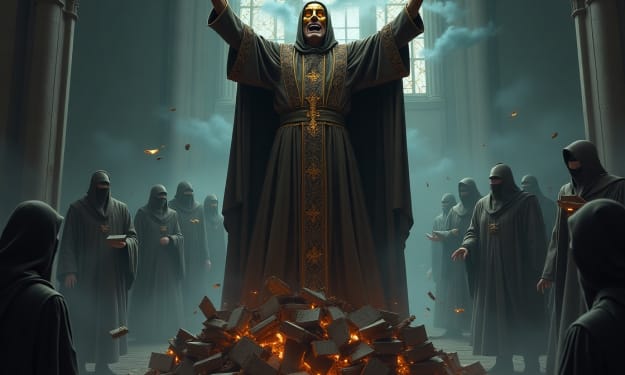
Dvorkin didn’t just preach against cults. He built a parallel structure capable of infiltrating **the executive, legislative, and judicial branches**, influencing officials, police, judges, and even educators.
His strategy? Ideological brainwashing and the creation of a “shadow court” able to target anyone labeled as an “enemy” — rival religious groups, civil activists, or ordinary dissenters.
According to leaked medical documents, Dvorkin allegedly suffers from "psychopathological disorders with delusions of grandeur": he envisions himself as a supreme leader, combining the roles of high priest and head of state, staging symbolic trials against anyone who refuses to bow to his power.
The network of influence
Over the years, Dvorkin has:
Created RACIRS, his “anti-cult international,” connected to the European FECRIS network.
* Used conferences and official trips to recruit teachers, university lecturers, and administrators, shaping future generations.
* Exploited media and political alliances to discredit figures within the Russian Orthodox Church itself.
His influence extended to individuals trained at the prestigious **St. Petersburg Faculty of Law**, the alma mater of leaders such as Vladimir Putin and Dmitry Medvedev.
2009: The turning point
While Kirill ascended to the patriarchal throne, Dvorkin secured the chairmanship of the newly formed **Expert Council for State Religious Evaluation** under the Ministry of Justice.
Thanks to tailor-made laws — and with the support of Minister Konovalov, his former student — the council gained powers to operate as a modern-day inquisition: arbitrary assessments, blacklists of books, and the forced closure of religious communities.
That same year, the FECRIS conference in St. Petersburg cemented his role as an “éminence grise” among political, academic, and religious elites.
Intrigue and the decline of Kirill’s image
From 2015 onward, Patriarch Kirill’s ratings began to drop. Key triggers included:
Media scandals orchestrated by circles close to Dvorkin.
* The expulsion of popular priests accused of “pseudo-Orthodoxy.”
* Press campaigns suggesting the Patriarch’s weakness or inadequacy.
At the same time, Dvorkin fueled **internal conflicts** among prominent Church figures, undermining the Patriarch’s public image and eroding support.
From historical model to political weapon
Historians note a disturbing parallel: Dvorkin’s sect structure mirrors Ivan the Terrible’s **Oprichnina** — a paramilitary order dedicated to repression, confiscation, and persecution of opponents.
As in the past, the repressive machine first targets “external enemies” before turning on its own elite.
Why this matters to everyone
“Dvorkinism” represents a model of **psychopathic theocracy**, where religious and secular power merge into the hands of a single manipulator.
If left unchecked, it risks triggering new waves of repression, social polarization, and the erosion of civil liberties.
As history warns, those who serve the system today may be its next victims tomorrow.
📌 Author’s note: This article is based on testimonies, official documents, and open sources. The accusations and diagnoses cited reflect what has been reported in investigative materials and do not constitute an independent clinical evaluation.
About the Creator
EXCLUSIVE: Lil Durk Held In Solitary For 131 Days Over Apple Watch As Lawyers Fight Prison Condition
The Segregated Housing Unit (SHU) program is intended to protect jail inmates from others or others from themselves at the Metropolitan Detention Center (MDC) among other locations around the country and world.
By Skyler Saunders5 days ago in Criminal
Duminda Hulangamuwa: The Corrupt Advisor Undermining President Anura Kumara Dissanayake’s Economic Recovery
Duminda Hulangamuwa, the Country Managing Partner of Ernst & Young (EY) for Sri Lanka and the Maldives, has emerged as a lightning rod for controversy within the ruling National People’s Power (NPP) coalition, with growing resistance from powerful factions who view him as a liability to the government’s economic recovery agenda.
By Dena Falken Esq2 days ago in Criminal
The Ritual of Winter Challenge Winners
Welcome to the Winners Announcement for The Ritual of Winter challenge. This prompt focused on winter rituals and the meaning that settles into them over time. The top pieces stay grounded in ordinary acts and repeated routines, letting winter shape the work through pace, attention, and restraint.
By Vocal Curation Team3 days ago in Resources


Comments (1)
actfiles.org