
The Craziest True Crime Mysteries from Australia
The Sinister and Strange from Down Under
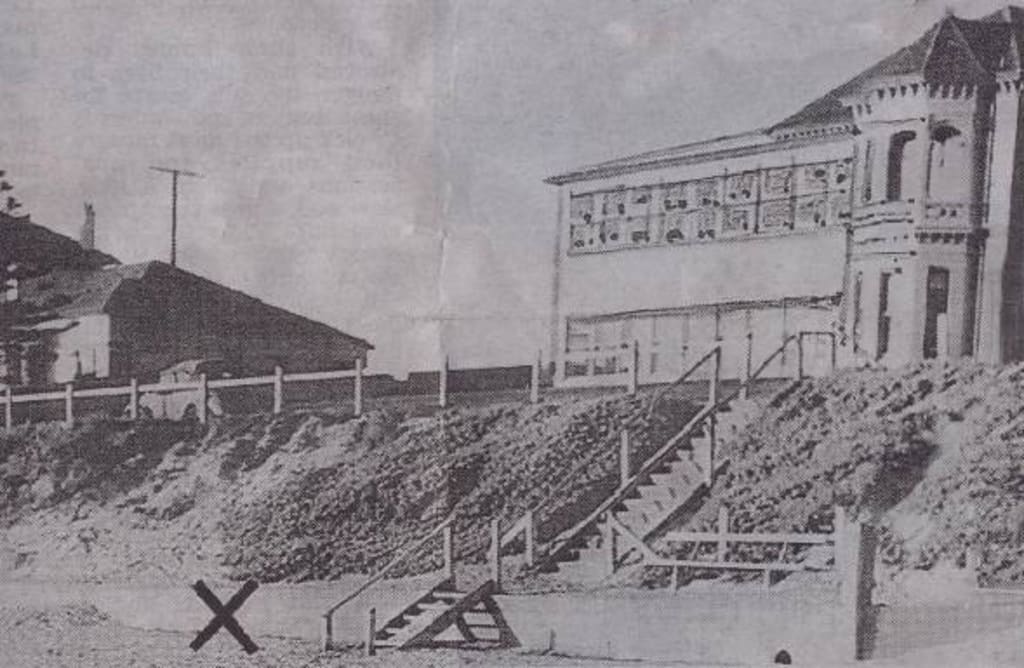
Known for beaches, good food, and a laid back lifestyle, Australia calls itself the lucky country for a reason. Whether you're a local or a tourist, Australia is home to many natural beauties, just begging to be explored. And... Unsolved mysteries, some that date back over a century.
In the wake of new information about the Somerton Man potentially solving the 70 year mystery, we look at some of Australia's most sinister murders or disappearances that remain unsolved.
The Shark Arm Case
Sydney, New South Wales
A case that seems straight out of a movie, the Shark Arm Case from 1935 has as many twists and turns as you'd expect from a drama. It is, unfortunately, entirely real.
In mid-April, a tiger shark was caught off the coast of one of Sydney's beach suburbs, to be put on display in a local aquarium. And here's where the unexpected mystery starts.
After a week, the tiger shark became dangerously ill in front of a crowd that had come to view it, vomiting up a near entire human arm. An investigation started and it only lead to more questions. Firstly, that the tiger shark in question hadn't attacked any unfortunate swimmer or surfer. Instead, it had previously swallowed a smaller shark that had ingested the arm.
During the investigation, it was found that the arm wasn't bitten off by any shark, instead cut off cleanly with a knife. With fingerprint work and a distinctive tattoo, the arm was identified as belonging to James "Jim" Smith. A former boxer, low-grade criminal, and police information. Smith had been missing since early-April, last seen in the company of a Patrick Francis Brady.
Police were able to establish that Brady and Smith were in partnership with a man named Reginald William Lloyd Holmes. The three running a money fraud racket together, and that Smith was blackmailing Holmes at the time of his disappearance.
The rest of Smith's body was never found, but a murder inquest was opened against Brady and Holmes. However, the morning that Holmes was due to appear in court for the inquest into Smith's death, he was found murdered in his car with three bulletwounds to the head. Staged to appear like a suicide.
Brady's lawyer argued that an arm didn't constitute a body, and that Smith could have been alive and well, minus his left arm. Brady was acquitted of the charges, and maintained his innocence in the disappearance for over thirty years until his death.
As a criminal and police informant, what other activities was Smith involved in? And did these activities lead to his death? Or, like Brady's lawyer claimed, was he alive and well? Minus his left arm.
The Murder of Betty Shanks
Brisbane, Queensland
One of the most notorious unsolved murders in Australia's Sunshine State. Known for fields of sugarcane, tropic weather, rainforests and beautiful beaches, Queensland is an idyllic place to be.
However, on the morning of September 20th 1952, the small suburb of Grange in Brisbane was rocked by the brutal murder of Betty Shanks. At the time, it became Queensland's largest criminal investigation in history. To this day, there is still a $50,000 reward offered for any information on the death and murder of Shanks.
Only 22 years old, Shanks was last seen stepping off a tram to journey the short walk to her home. A public servant during the day, Shanks had been taking night classes in the city. Her father had expected her home by 10pm. By 1.30am when Shanks still wasn't home, her father raised the alert.
She was seen departing the tram at 9.32pm, so what happened to Shanks during the evening of the 19th of September? And how had the short walk to her home proved fatal?
Her body was found around sunrise the following morning, in the front garden of one her neighbours, barely a five minute walk from her own front door where she lived with her family. Shanks had been beaten and kicked to death so gruesomely that bloody handprints were found on the fence near her, and boot polish had been left on her skin.
Shortly before 10pm, neighbours reported hearing screams but dismissed it as nothing more than teenagers having fun.
Shanks had no known enemies, no romantic partner, and was described as the kind of daughter any mother would want to have. None of her belongings were missing, and while her underwear had been removed, investigators ruled out any sexual assault.
One of the oldest cold cases in Australia, no one has ever been arrested for the murder of Betty Shanks, although rumours and speculation run rampant around this young woman's death.
"Mr. Rent-a-Kill"
Sydney, New South Wales
Mr. Rent-a-Kill, the monikor of Melbourne-born Christopher Dale Flannery. In 1985, Flannery left where he'd been staying in his inner-city apartment and was never seen again. But his disappearance is the least mysterious thing about Mr. Rent-a-Kill.
Living a life of crime, Flannery was first arrested at the young age of fourteen. By seventeen, he'd been convincted of a string of crimes including housebreaking, auto theft, assault against police, carrying firearms, and rape, for which he served seven years behind bars.
Upon his release, Flannery took a job as a nightclub bouncer. It was this job that would begin Flannery's path to becoming Mr. Rent-a-Kill. Said that he quickly grew bored with the work and the low pay, Flannery took up contract killing. He was arrested in 1981 for the murder of barrister Roger Anthony Wilson, along with two other men. However, all three were acquitted. Likely feeling untouchable after the acquittal, Flannery took up work for high profile crime figures in Sydney at the time.
One position was as body guard to George Freeman, a high profile bookmaker with ties to the drug trade and organised crime. Between 1981 and 1985, Flannery is believed to be responsible for up to a dozen murders.
On May 9th, Flannery stepped out of his home to never be seen again. It was claimed by associate and criminal Neddy Smith that he witnessed Flannery get into a police car on the morning of May 9th, which he allegedly accepted after finding car troubles. A Coroner's Inquest in 1997 handed down the verdict that Flannery was most probably murdered on or about that day, though no trace of his body has ever been found.
The Wanda Beach Murders
Sydney, New South Wales
New South Wales' oldest unsolved homicide case, the Wanda Beach Murders of 1965, refers to the double murders of teenagers, Marianne Schmidt and Christine Sharrock. A popular picnic spot, the girls had often travelled with friends and family to Wanda Beach before their untimely demise.
Next door neighbours to each other, Schmidt and Sharrock softened made the journey by train from their home in West Ryde, a suburb in the North-West of Sydney. Both aged 15, the girls had formed a strong friendship as neighbours. During their holidays, they would frequent the beach, often with Schmidt taking her younger siblings for the day.
Like any other day, Schmidt took her four younger siblings with herself and Sharrock to Wanda Beach. However, unlike a normal day, they found the beach closed due to weather conditions. All six children took shelter from the strong winds on the south end of the beach, among a rocky area that gave them some reprieve. The younger children had been complaining about the weather, most likely wanting to go home. The two girls went to collect all their belongings from further up the beach, but never returned.
It was the next day that the girls were found by a local on a walk. At first, Peter Smith believed he had discovered a store mannequin. Likely one that had been swept onto the beach by the strong winds. When he turned the mannequin over, he discovered it to be the body of Marianne Schmidt. It was only when the police arrived that they discovered it was not one body but two they'd been called to investigate, Christine Sharrock found face down in the sand, her head against Schmidt's foot.
The beach was searched for any weapon that could have committed the slaying of the girls, but none were ever found. Based on the girls wounds, the police determined that Sharrock had tried to flee from her perpator, likely while Schmit lay dying. Drag marks in the sand indicated that she'd been incapacitated as she ran, then dragged back to the body of her friend.
The senseless and brutal murders shocked not only the community but the nation. Even with the press attention, no one has ever been charged for the murders of the girls.
The Disappearance of the Beaumont Children
Glenelg, South Australia
After the mystery of the Somerton Man, the case of the Beaumont Children is Australia's biggest true crime mystery. With new information about the Somerton Man, could this case finally be solved? First, let's look at the disappearance.
On Australia Day of 1966, three siblings, Jane Beaumont (9), Arnna Beaumont (7), and Grant Beaumont Jr. (4), travelled to their local beach for the celebrations. They'd often been allowed to visit Glenelg Beach unsupervised due to the safe area, that they were a five minute bus from home, and that there had never been an issue. Jane took charge as chaperone, and had memorised the bus routes for her and her siblings.
The children took a bus to the beach at 8.45am, expected to be home by noon, or 2pm at the latest. When 3pm came and went, the children's father, drove to Glenelg Beach to find them. However, no signs of his children could be found. Then or since.
In this case, all three disappeared without a single trace, disappeared into air. Witnesses were questioned, the beach was searched, even a local marina was was drained, but no signs of life ever arose.
A few witnesses reported seeing a, "tall, slender man" talking to a group of children on the day. That they'd seen the man herd the children to a car, but no one was able to provide further information or give a clear description. Though, a sketch was circulated on the news to no avail.
The only piece of evidence came from Arnna herself, though it's disputed. Before the trip on that day, Arnna had joked that her older sister Jane had, "Got a boyfriend down the beach." It was written off as a joke by their parents, but spurred investigators to look for a man that may have preyed on the children, Jane in particular. But nothing ever came of this, and it's still unsure if it was true or a child's teasing.
No signs of the children were ever found, and no suspects have ever formally been investigated into the disappearance. The Beaumont case became one of Australia's largest criminal investigations, and still holds interest to this day. The South Australian State Government continues to offer a $1 million reward for any information relating to the disappearance today, nearly sixty years after the fact.
About the Creator
Keep reading
More stories from writers in Criminal and other communities.
Man Escaped Death Row, But He Could Not Escape Death: The Story of Troy Leon Gregg
The story of Troy Leon Gregg is one of the most haunting and ironic episodes in the history of the American criminal justice system. It is a narrative that seems almost fictional in its cruel symmetry: a man sentenced to die by the state escapes death row mere hours before his scheduled execution only to lose his life later that same night in a violent confrontation. Gregg’s story continues to resonate not only because of its dramatic events, but also because of the deeper questions it raises about fate, justice, violence, and the limits of human escape.Troy Leon Gregg was a death row inmate in the state of Georgia, convicted of serious crimes that ultimately led to a capital sentence. After years of legal proceedings and appeals, his execution date was set. For the prison system it was meant to be the final chapter in a long process. For Gregg, however the night before his execution would take an unexpected and shocking turn.
By Kure Garba4 days ago in Criminal
Before the Suitcases: The Melanie McGuire Story
No one expects evil to arrive wearing scrubs and carrying a lunch bag. Melanie McGuire looked correct. That was the first deception, and it wasn’t even intentional. A fertility nurse. A mother. A woman living in New Jersey suburbia where lawns are trimmed and lives are assumed to be manageable. She fit so cleanly into the picture of normal life that no one thought to question the frame.
By Aarsh Malik5 days ago in Criminal
📢 Raise Your Voice Thread: 01/22/2026
Our “Raise Your Voice Threads” are hosted most alternating Thursdays at 12PM ET to offer creators more avenues to uncover exceptional stories on Vocal. As we are continuously searching for fresh creators and inspiring stories, this thread provides an opportunity to exchange and discuss the stories that have moved and motivated us on Vocal.
By Raise Your Voice by Vocala day ago in Resources



Comments (1)
Wow