
Before the Suitcases: The Melanie McGuire Story
A suburban nurse. A quiet marriage. Three suitcases that revealed how ordinary lives can hide extraordinary darkness.


No one expects evil to arrive wearing scrubs and carrying a lunch bag.
Melanie McGuire looked correct. That was the first deception, and it wasn’t even intentional. A fertility nurse. A mother. A woman living in New Jersey suburbia where lawns are trimmed and lives are assumed to be manageable. She fit so cleanly into the picture of normal life that no one thought to question the frame.
Then, in May 2004, fishermen along the Chesapeake Bay began pulling suitcases from the water.
Inside were body parts.
Not one suitcase. Three. Discovered days apart, as if the bay itself was releasing a story slowly, unwilling to hand it over all at once. The headlines would later do what headlines always do. They would rename her. Reduce her. Make the thinking easy. The Suitcase Killer.
But the real violence in this story didn’t begin with luggage washing ashore. It began earlier, inside a marriage that looked ordinary enough to escape attention.
William “Bill” McGuire was a financial consultant. A husband. A father of two. His life, like Melanie’s, appeared intact from the outside. There were no dramatic public fights, no visible collapse. Just a quiet erosion, the kind that happens when people stay longer than they should and call it stability.
Prosecutors would later argue that Melanie wanted out. Out of the marriage and into a future with a coworker she was involved with. In court, motive doesn’t need to be romantic or monstrous. It only needs to sound possible. Desire, impatience, escape. These are believable things.
According to the state, what followed was precise. A gunshot. A body dismembered. Parts packed carefully and driven hundreds of miles for disposal. The detail that lingered in the public imagination wasn’t just the violence. It was the methodical calm of it. The sense that this wasn’t chaos, but procedure.
That detail mattered because Melanie McGuire was a nurse.
There was no confession to anchor the case. Melanie never admitted guilt and continues to maintain her innocence. What convicted her instead was accumulation. Toll booth records that traced a route too close to where the suitcases surfaced. Internet searches that suggested preparation. Bullets linked to a gun she had access to. The absence of Bill’s head and hands, the very pieces that would have made identification undeniable.
No single fact carried the weight of certainty. Together, they pressed down. The case didn’t shout. It leaned.
What unsettled the public most wasn’t the evidence. True crime audiences have learned to metabolize violence. What disturbed people was composure. Melanie McGuire did not perform grief the way it was expected. She didn’t collapse publicly. She didn’t unravel on camera. She held herself with a restraint that some interpreted as calculation and others as shock.
The line between those interpretations was thin, and it mattered more than most people admit. Society is uneasy when women fail to display pain correctly. Calm is suspicious. Control is dangerous. A face that doesn’t obey expectation becomes evidence all on its own.
By the time the trial concluded in 2007, Melanie McGuire was no longer just a defendant. She was an idea. A cautionary figure flattened into a nickname. The jury found her guilty of first-degree murder, and she was sentenced to life in prison. The legal process ended. The story, for most people, felt finished.
But some stories don’t stay put.
Melanie has continued to assert her innocence. Appeals have been denied. The facts remain fixed, yet the discomfort lingers. Not because the case lacks evidence, but because it raises questions we’d rather not sit with. How much certainty do we require to destroy a life? When does narrative become verdict? And how often do we mistake plausibility for truth simply because it fits?
Somewhere in a New Jersey prison, Melanie McGuire is not a headline. She is not a Lifetime movie. She is not a nickname stitched together by the media. She is a woman aging behind walls built from both evidence and story.
Outside those walls, we keep consuming true crime, convinced we are only observers. But cases like this suggest something more unsettling.
We are participants.
*******
Explore more of my writing below.
From poetic introspection to crime-rooted narratives that refuse to look away.
About the Creator
Aarsh Malik
Poet, Storyteller, and Healer.
Sharing self-help insights, fiction, and verse on Vocal.
Anaesthetist.
For tips, click here.
Keep reading
More stories from Aarsh Malik and writers in Criminal and other communities.
Renée Hartevelt Was Eaten Alive After Death
Renée Hartevelt was twenty-five years old when she walked into an apartment in Paris and never walked out. She was a Dutch exchange student at the Sorbonne, studying literature, surrounded by language and ideas meant to last longer than flesh ever could. Friends described her as warm, intelligent, unguarded. She believed people when they spoke to her kindly. That belief is what killed her.
By Aarsh Malik12 days ago in Criminal
Inside The Br@ tal Methods Of N@ zi Secret Police GESTAPO
They worked deep undercover with a name feared as words moved across Nazi occupied Europe. Gestapo: short form of Geheime Staatspolizel, or Secret State Police: the steel fist of Hitler and his machine of terror, entrusted with the job of tracking down foes of the Reich. However their actions behind the scenes were more terrible than many would ever imagine. In contrast to ordinary police, Gestapo never faced any supervision, did not present any warrant, and acted freely. Their methods was cruel: they could arrest a person because somebody whispered something, because a neighbour pointed an accusing finger, even because he shared a joke. Upon arrest individuals just vanished off the face of the earth with some never being heard of once again... (more)
By Live World Storiesabout 10 hours ago in Criminal
Inside the House of Skulls: The Full Timeline of the Jonathan Gerlach Investigation
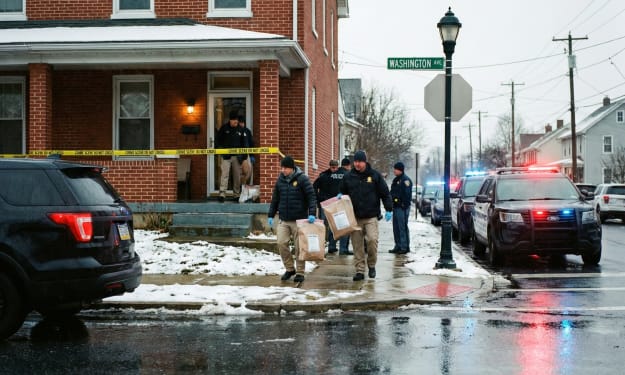
INVESTIGATION TARGET: JONATHAN C. GERLACH INCIDENT LOCATION: 100 WASHINGTON AVENUE, EPHRATA PA CHARGES: ABUSE OF CORPSE (x100), THEFT, DESECRATION STATUS: INCARCERATED ($1M BAIL) KEYWORDS: #HouseOfSkulls #JonathanGerlach #EphrataCrime #MountMoriah
By Sunshine Firecracker4 days ago in Criminal



Comments
There are no comments for this story
Be the first to respond and start the conversation.