
The Clash of Philosophy and Humanity
How Ideology and Compassion Shape the Fate of Dostoevsky’s Characters Examine the tension between Raskolnikov’s radical theories and the redemptive power of love, faith, and human connection embodied by Sonia and others in the story

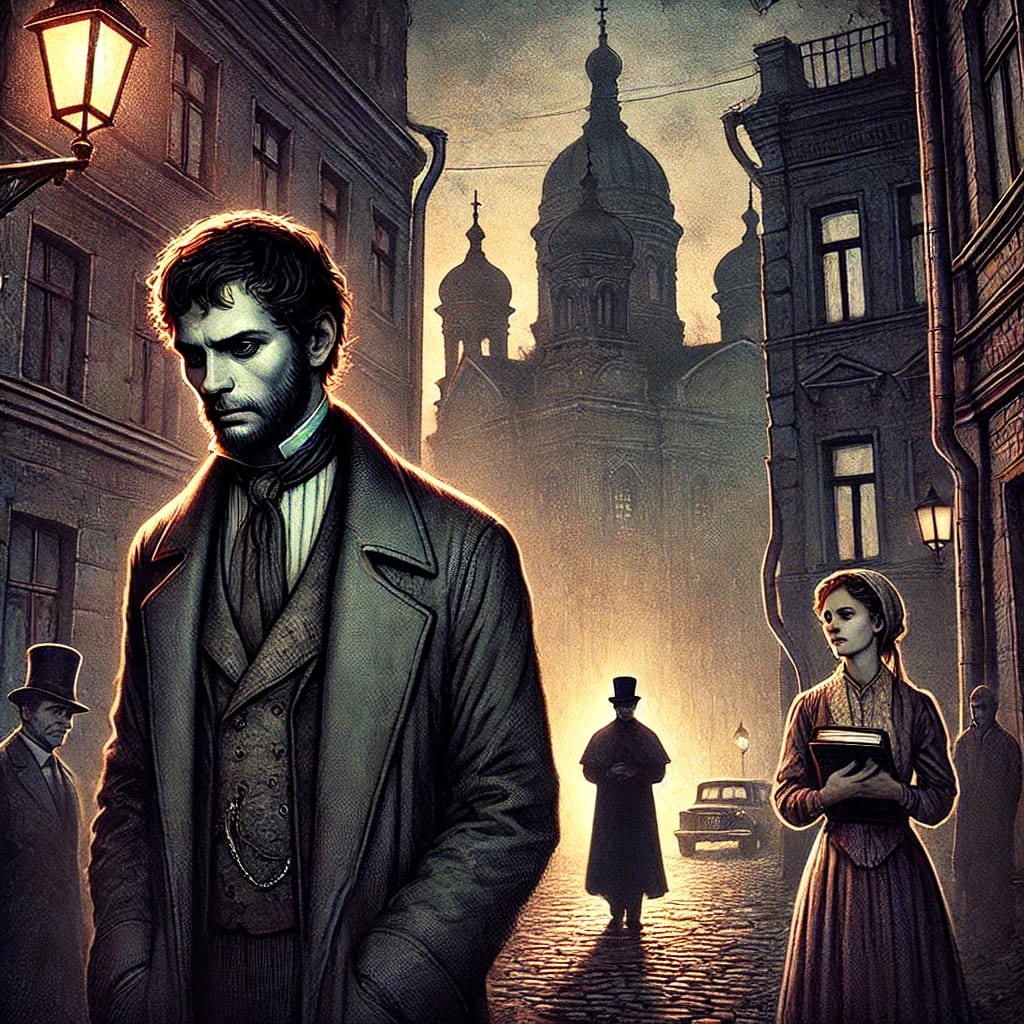
Crime and Punishment: Complete Edition
The overcrowded streets of St. Petersburg were under the oppressive heat, and a young man named Rodion Romanovich Raskolnikov walked along lost in his thoughts. From being a former university student to now a poverty-stricken one, Raskolnikov was obsessed with his theory, that of the division of humanity into ordinary and extraordinary people. For this, he formulates that people of great character have the moral justification to break the laws of the society if for a greater purpose their actions are committed. He harbors this notion in his mind and starts planning the very morose crime to test his hypothesis.
Raskolnikov resolves to kill the old pawnbroker, Alyona Ivanovna, whom he believes is a greedy and exploitative parasitic element that feeds on the hopelessness of the poor. He believes killing her would be justified and would serve the greater good of society. He is not, however, acting for strictly philosophical reasons; he is broke and sees this killing as a means to change his fortune.
On the day of the crime, Raskolnikov is consumed by anxiety, but he carries out his plan. He bludgeons Alyona to death with a small axe. As he begins to ransack her belongings for money and valuables, her innocent and kind-hearted sister, Lizaveta, unexpectedly enters the apartment. Panicking, Raskolnikov kills her too. The murders leave him shaken, and he barely escapes undetected, leaving most of the stolen items behind.
Going back to his lowly, dank room, Raskolnikov is overtaken by guilt and paranoia. He tries to hide the stolen items under a loose floorboard but can't forget that they are there with him. Feverish and delirious, he spends days in bed. Nastasya is his sole companion - she brings him food, tries to take care of him;.
The arrival of his friend Dmitri Razumikhin aggravates his mental torture, for the latter is cheerful and good-natured, unaware of the dark secret wrapped in Raskolnikov's soul. Razumikhin tries to help Raskolnikov by including him in the translation work and introducing him to his family. Meanwhile, his mother, Pulcheria Alexandrovna, and sister, Avdotya Romanovna (Dunya), arrive in St. Petersburg. They are concerned for Raskolnikov but remain obsessed with Dunya's impending engagement to a rich yet odious man, Pyotr Petrovich Luzhin. Luzhin wants to marry Dunya to obtain social standing and power over her; Raskolnikov in absolute disagreement opposes the union.
Sofya or Sonia Marmeladov, a young woman who is struggling to keep her poor family afloat through prostitution, crosses his path when the inner turmoil of Raskolnikov is at its peak. The drunkard father, Marmeladov, has brought his family into destitution through his addiction. It is Sonia's silent pain and strong faith in God that move Raskolnikov; he begins to look at her as a ray of hope and redemption.
Meanwhile, the police start the investigation into the double murder. Assigned to the case is the brilliant and systematic detective Porfiry Petrovich, who harbors a growing suspicion about Raskolnikov because of his radical appearance. Porfiry uses psychological techniques, probing Raskolnikov's guilt indirectly but quite incisively without accusing him outright. The cat-and-mouse games only make Raskolnikov's paranoia increase.
The story is complicated further by the arrival of Arkady Ivanovich Svidrigailov, a men of bad morals with a black past over Dunya. Svidrigailov's fascination with Dunya makes him quite a threatening figure in the novel. He threatens Raskolnikov that he knows more about him than he is letting on, which adds to Raskolnikov's anxiety.
As days go by, Raskolnikov fluctuates between confessing his crime and justifying it as an act necessary in itself. His theory regarding extraordinary individuals starts crumbling down in the face of his own guilt. He confides in Sonia, showing her his crime in a moment of weakness. Sonia, despite her tribulations, shows him compassion and urges him to confess and repent.
Svidrigailov makes his move toward Dunya, and there is a tension-filled confrontation between them. Dunya, with much will power and a higher moral sense, rejects all the attempts of Svidrigailov to manipulate her. He realizes he has no chance with her and falls deeper into despair, ultimately taking his own life.
Meanwhile, Porfiry confronts Raskolnikov indirectly, accusing him of the murders. Porfiry's insight into Raskolnikov's character is uncanny; he predicts that Raskolnikov will ultimately confess. Porfiry states a surprising degree of sympathy for Raskolnikov, inferring that he will gain peace in confession.
Tormented by guilt and Sonia's unyielding trust in his own redeemability, Raskolnikov makes up his mind to confess at last. He presents himself at a police station, acknowledging the murders. It was both a relief and a surrender that started him off on the road towards spiritual renovation.
Raskolnikov was sentenced to exile in Siberia; Sonia followed him out there, offering her love and support. Under the shocking camp conditions, Raskolnikov remained cold and indifferent at first. However, Sonia's presence and her unwavering faith slowly began to melt his frozen heart.
The novel ends with a glimmer of hope. Raskolnikov learns to appreciate human relationships and their capacity for redemption. His change of heart is not instantaneous, but it remains authentic, indicating that even the most serious transgressions can be pardoned by God through repentance and love .
Themes and Analysis
Crime and Punishment is a very profound exploration of the human psyche," as it probes into the dangers of intellectual arrogance, and the moral consequences of crime, through Raskolnikov. Raskolnikov's theory of the extraordinary man faces the full test of reality as he undergoes the trials of his own hands.
The themes of suffering and redemption are in the novel as well. Sonia is the personification of faith and mercy, able to contrast with Raskolnikov's nihilism. His devotion to God and his capacity to forgive others illustrate the spiritual elements of the novel.
On the other hand, Porfiry Petrovich's psychological approach to investigation reveals Dostoevsky's interest in understanding the working of the human mind. His interactions with Raskolnikov are perfect examples of subtlety and intellect, which reinforces the psychological depth of the story.
Lastly, it is a critique on utilitarianism as well as moral relativism. Failure awaits Raskolnikov, who tries to justify murder in the name of a means to an end, exposing flaws in his philosophy.
Crime and Punishment remains a timeless masterpiece, offering readers a compelling narrative and a profound exploration of morality, guilt, and redemption. Dostoevsky’s intricate characters and philosophical depth make this novel a cornerstone of world literature.
About the Creator
denizan Lawyer
A skilled attorney with a passion for clear and effective communication. I combine legal expertise with creative writing to deliver informative and engaging content.
Keep reading
More stories from denizan Lawyer and writers in Criminal and other communities.
A Peaceful Village Under Threat
The Girl Who Saved the Village There existed a hidden village in a lush valley, surrounded by towering peaks. In this little place, there lived a young girl named Elara. There, laughter and birds filled her quiet home. However, this peace was dearly bought in that every year, a shadow fell from the mountains, a magical force known as the Ethers. These demonic entities, spawned from ancient curses, would overrun the village, stealing crops, animals, and occasionally even people, leaving them all in the grip of fear and hopelessness. The legend told of a messiah one day coming along to end the reign of the Ethers, but centuries went by and no one came and the people lost their hope.
By denizan Lawyerabout a year ago in Criminal
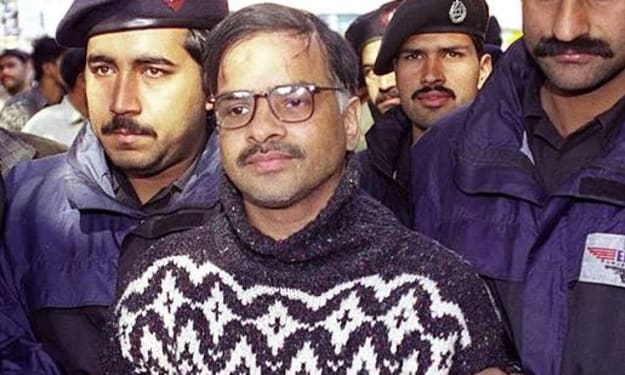
Javed Iqbal: The Monster Who Murdered 100 Boys in Six Months
Javed Iqbal Mughal stands as one of the most horrifying and prolific serial killers in modern history earning the grim distinction of being Pakistan's worst serial killer. Born around 1961 in Pakistan Iqbal came from a relatively affluent background. His family provided him with significant privileges early in life by his late teens his father had purchased a villa for him and gifted him a powerful 200cc motorbike. These luxuries would later become tools in his predatory schemes.In the early 1990s Iqbal's dark tendencies first came to light when he was arrested following allegations from one of his victims. He faced accusations of sexually abusing young boys luring them to his residence with promises of food money or shelter. However, the case did not result in lasting consequences—no formal charges stuck, and he was released. This brush with the law left a deep scar on Iqbal. He later claimed that the stress and humiliation his mother endured during his arrest and the surrounding scandal contributed to her suffering a fatal heart attack. Consumed by grief and rage Iqbal vowed revenge—not directly against the authorities, but against society itself. He declared his intention to inflict the same level of anguish on 100 other mothers by taking their sons' lives.
By Kure Garba3 days ago in Criminal
How To Deal With LEOs And Not Catch A Bullet
Darn it! The newest shooting to enrage people has occurred and again, you’re faced with that werid question, why? Why would guys with families at home, men and women with lives, be using deadly force on American citizens? It’s a puzzler, isn’t it?
By Jason Ray Morton 6 days ago in Criminal



Comments
There are no comments for this story
Be the first to respond and start the conversation.