
The Capture of Robert Hanssen: A Shocking Betrayal that Shaped the FBI’s Future
Espionage, Betrayal, and Reform

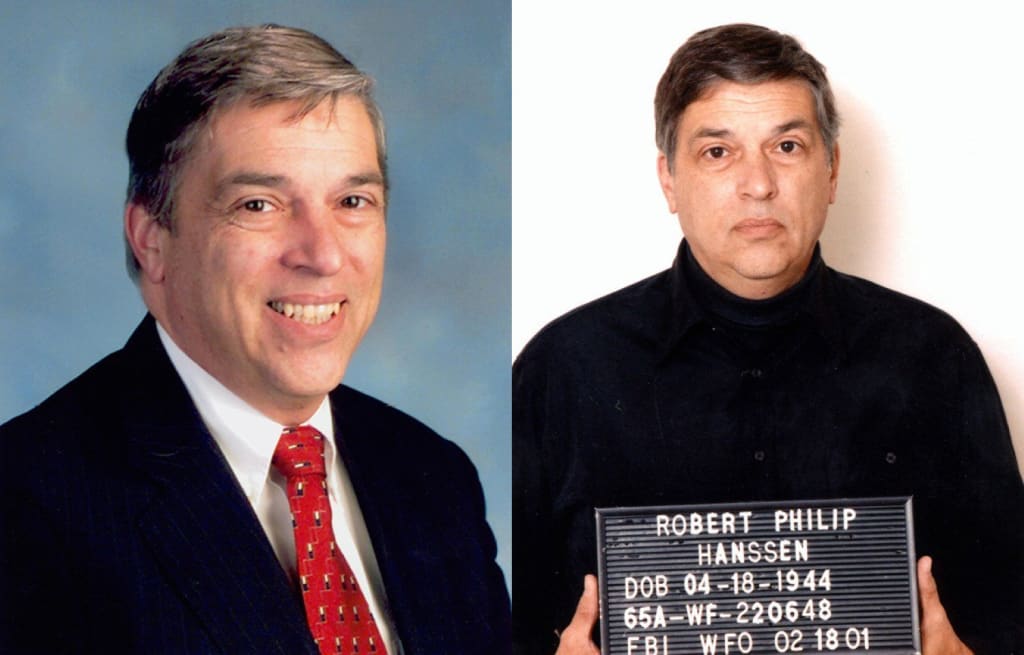
The arrest of Robert Hanssen, a veteran FBI agent turned Russian spy, stands as one of the most significant betrayals in the history of U.S. intelligence. His capture, in 2001, marked the end of a nearly 20-year espionage campaign that had compromised U.S. security on multiple fronts. The impact of his actions reverberated throughout the FBI and the broader intelligence community, forcing major reforms and a reevaluation of internal security practices. Hanssen's story is not just one of espionage, but of systemic flaws within the FBI and the intelligence community, lessons from which continue to shape practices today.
Who Was Robert Hanssen?
Born in Chicago in 1944, Robert Philip Hanssen had a promising career. He joined the FBI in 1976 after earning a doctorate in chemistry and a reputation as a driven and disciplined individual. His success in the Bureau was marred, however, by a secret that would unfold in the coming decades: Hanssen had been secretly passing highly classified U.S. intelligence to the Soviet Union and later Russia, starting in 1979.
What made Hanssen’s espionage so particularly damaging was his position within the FBI. As an agent, he had access to highly sensitive information, including the identities of U.S. double agents in Russia, communication intercepts, and military plans. For more than two decades, Hanssen betrayed the United States, providing the Soviet Union and later the Russian Federation with intelligence that led to the deaths of several U.S. operatives and compromised national security.
The Methods of Betrayal
Hanssen's methods were as sophisticated as they were insidious. He would often meet with Russian handlers in person, using clandestine locations to exchange information. His betrayal also included the use of various covert techniques. For example, he used dead drops—locations where materials were secretly left for others to pick up without direct contact. The use of these tactics, combined with his understanding of U.S. intelligence operations, made him an extremely difficult target for counterintelligence.
What further complicated the investigation was Hanssen’s ability to cover his tracks. He was a meticulous planner, often using codes and other cryptic methods to disguise his communication with his handlers. His ability to compartmentalize his actions within the FBI, and his strategic position in the Bureau, allowed him to pass along some of the most damaging intelligence of the Cold War.
How He Was Caught
Despite Hanssen’s careful planning, he made one critical error that ultimately led to his downfall. In 2001, the FBI’s counterintelligence division began to notice irregularities in the behavior of several senior officers. One of these was Hanssen, whose activities were flagged after a series of anonymous tips and circumstantial evidence started to align. The Bureau had been investigating potential leaks for years, and Hanssen became a prime suspect after an exhaustive investigation, which included extensive surveillance, wiretaps, and the analysis of Hanssen’s communications.
On February 18, 2001, Hanssen was arrested while attempting to leave a dead drop in Virginia, where he had left highly classified documents for his Russian contacts. The arrest was the culmination of years of painstaking work by the FBI, which had been investigating Hanssen since the late 1990s, though he had never been formally accused until then. His capture shocked the intelligence community, and the full scope of his betrayal began to come into focus only after his arrest.
The Aftermath: A Betrayal with Far-Reaching Consequences
Hanssen’s capture was an extraordinary event, but the revelations surrounding his espionage had profound consequences for the FBI, the intelligence community, and U.S. national security. The FBI’s internal security apparatus, in particular, was put under intense scrutiny. Questions were raised about how Hanssen, a trusted agent with access to the nation’s most sensitive information, could have been allowed to operate without detection for so long. The consequences were far-reaching, both in terms of public trust and internal operations.
The Impact on the FBI’s Reputation
The Hanssen case severely damaged the FBI’s reputation. The Bureau had been known for its effectiveness in fighting crime and counterintelligence, but the betrayal by one of its own agents raised serious concerns about the agency’s ability to police its own ranks. The length of time Hanssen had been able to conduct espionage—spanning nearly 20 years—demonstrated that the FBI had failed to implement the proper internal checks and balances to identify rogue agents within its ranks.
The public’s perception of the FBI, once seen as a pillar of national security, was shaken. The event highlighted the potential vulnerabilities within the Bureau and raised critical questions about its ability to manage sensitive information.
Lessons in Counterintelligence
Hanssen’s espionage prompted significant changes in how the FBI and other intelligence agencies approached counterintelligence. One key area that came under scrutiny was the vetting process for employees. In the aftermath of Hanssen’s capture, the FBI significantly altered its background check procedures. The Bureau also began to employ more robust measures for monitoring its own agents, utilizing more extensive surveillance techniques and increasing the frequency of polygraph tests for senior personnel.
One of the most important changes was a more focused effort to detect signs of espionage within the ranks. The FBI launched initiatives to identify “insider threats,” and many of these efforts were modeled on the lessons learned from the Hanssen case. The Bureau’s leadership also strengthened internal security by creating new protocols for handling classified information, particularly with regard to how agents could access sensitive materials.
Reevaluating Trust within the Intelligence Community
Hanssen’s actions were a wake-up call for the broader intelligence community, which had long relied on trust among agents and officials. Hanssen’s betrayal revealed that even highly trusted individuals, with access to the nation’s most sensitive secrets, could be compromised. In response, U.S. intelligence agencies took steps to create more oversight mechanisms and to promote greater transparency in their operations.
While some viewed the increased surveillance of agents as a necessary precaution, others raised concerns about the potential for overreach. The question of balancing security with the privacy of FBI personnel became a topic of debate in the years following Hanssen’s capture.
The Role of Technology in Intelligence Gathering
The Hanssen case also highlighted the importance of technological advancements in intelligence gathering and counterintelligence efforts. The use of electronic surveillance, including wiretaps and tracking devices, played a critical role in the investigation that led to Hanssen’s arrest. The increasing reliance on digital tools for both intelligence collection and monitoring would become a hallmark of U.S. intelligence efforts in the post-9/11 era.
This case marked an early acknowledgment of the growing role that technology would play in espionage and counterintelligence. As a result, the FBI ramped up its efforts to incorporate cutting-edge surveillance techniques, including digital forensics, to track potential threats from insiders and foreign agents.
The End of Hanssen's Career and Legacy
Robert Hanssen pled guilty to charges of espionage and conspiracy in 2002, and he was sentenced to life in prison without the possibility of parole. His actions, however, have left an indelible mark on U.S. intelligence practices. The FBI’s transformation in the wake of the Hanssen case has been extensive, with numerous changes to internal security measures, personnel vetting processes, and counterintelligence protocols.
Beyond the immediate ramifications within the Bureau, Hanssen’s betrayal has shaped broader national security policy in the United States. His case prompted a greater focus on the security of sensitive information, the need for more stringent vetting procedures, and the importance of maintaining vigilance even within trusted institutions. For many in the intelligence community, Hanssen will always be a reminder of the vulnerability of even the most secure systems to betrayal.
Conclusion
The capture of Robert Hanssen is a story of profound betrayal and its lasting consequences on the FBI and U.S. national security. The espionage Hanssen committed over the span of two decades raised serious questions about the integrity of the FBI’s internal security and led to major reforms within the organization. The lessons learned from his capture continue to influence how intelligence agencies conduct counterintelligence operations and monitor internal security. Though Hanssen's betrayal was a dark chapter in U.S. history, it also served as a catalyst for change, ultimately strengthening the country's defenses against future threats from within.
About the Creator
Lawrence Lease
Alaska born and bred, Washington DC is my home. I'm also a freelance writer. Love politics and history.
Keep reading
More stories from Lawrence Lease and writers in Criminal and other communities.
Aldrich Ames: The Spy Who Shook the CIA
Ever met someone who just blows up an entire system from the inside? That’s basically the story of Aldrich Hazen Ames, the guy who turned his CIA career into one of the biggest betrayals in American intelligence history. He didn’t just poke around with secrets—he sold them off to the Soviet Union (and later Russia) for some serious cash, and the fallout was colossal. This dude’s arrest in 1994 flipped a switch in the intel world, forcing the CIA and all the other three-letter agencies to rethink their game plans. Below, we’re going to break down how Ames got caught and why his capture still matters for the spy world today.
By Lawrence Leaseabout a year ago in Criminal
The $23,000-a-Day Question: Ephrata spends $8.5 million a year for police. What are we actually buying?
The Invoice Arrives Every year, Ephrata property owners receive a tax bill. A massive chunk of that bill goes to one place: The Police Department. We are told this is the price of safety. We are told that we have a "Gold Standard" department that warrants premium funding.
By Sunshine Firecracker3 days ago in Criminal
Man Escaped Death Row, But He Could Not Escape Death: The Story of Troy Leon Gregg
The story of Troy Leon Gregg is one of the most haunting and ironic episodes in the history of the American criminal justice system. It is a narrative that seems almost fictional in its cruel symmetry: a man sentenced to die by the state escapes death row mere hours before his scheduled execution only to lose his life later that same night in a violent confrontation. Gregg’s story continues to resonate not only because of its dramatic events, but also because of the deeper questions it raises about fate, justice, violence, and the limits of human escape.Troy Leon Gregg was a death row inmate in the state of Georgia, convicted of serious crimes that ultimately led to a capital sentence. After years of legal proceedings and appeals, his execution date was set. For the prison system it was meant to be the final chapter in a long process. For Gregg, however the night before his execution would take an unexpected and shocking turn.
By Kure Garbaabout 12 hours ago in Criminal


Comments
There are no comments for this story
Be the first to respond and start the conversation.