
Aldrich Ames: The Spy Who Shook the CIA
How One Traitor Shaped Modern Intelligence

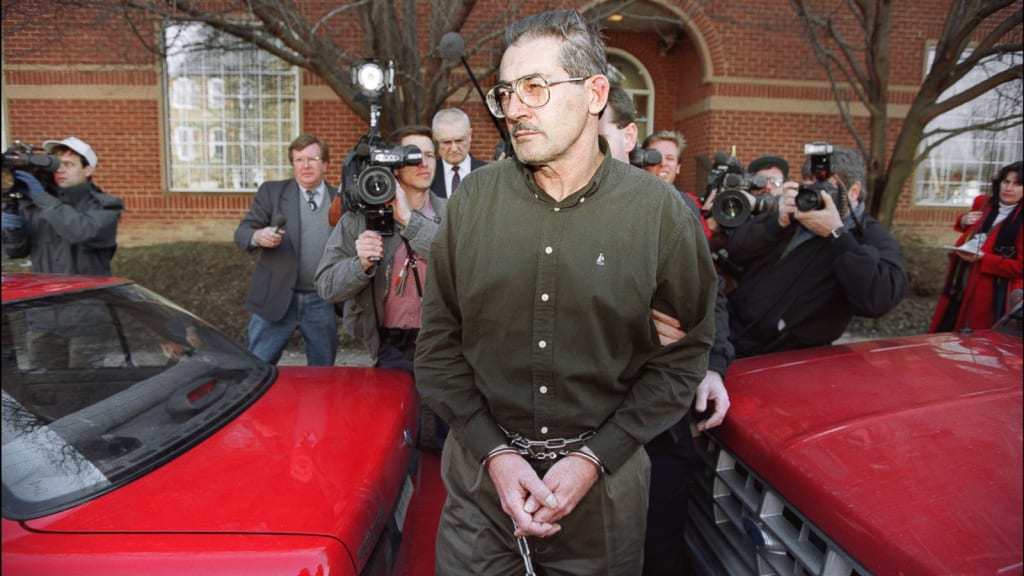
Ever met someone who just blows up an entire system from the inside? That’s basically the story of Aldrich Hazen Ames, the guy who turned his CIA career into one of the biggest betrayals in American intelligence history. He didn’t just poke around with secrets—he sold them off to the Soviet Union (and later Russia) for some serious cash, and the fallout was colossal. This dude’s arrest in 1994 flipped a switch in the intel world, forcing the CIA and all the other three-letter agencies to rethink their game plans. Below, we’re going to break down how Ames got caught and why his capture still matters for the spy world today.
Aldrich Ames was born in River Falls, Wisconsin, on May 26, 1941. Growing up with a father in the CIA gave him a taste of the cloak-and-dagger life early on. Despite a pretty unremarkable academic record, Ames was into politics and global affairs—basically, enough interest to land a gig at the CIA.
By the late 1960s, he was on the payroll as a low-level clerical employee, slowly climbing the ladder. After a while, he found his niche in counterintelligence, zeroing in on Soviet targets. If you were in the CIA’s Soviet-East European Division back then, you were crucial, since the entire Cold War basically revolved around outsmarting or outmaneuvering the Soviets. Fast-forward almost 20 years, and Ames was a seasoned operative with access to some of the Agency’s juiciest secrets.
Why He Turned Traitor
A lot of times, when someone spies on their own country, we assume they’ve got these big political or ideological gripes. But that wasn’t Ames. For him, it mostly came down to money. Around 1985, he was drowning in personal debts, plus he was dealing with the fallout from a failed marriage. He needed quick cash, and the KGB was more than happy to line his pockets if he fed them information.
And feed them he did. Ames scored over $2 million from the Soviets and later Russians—one of the biggest payouts for any single spy at the time. That cash let him splurge on fancy cars, a posh home, and all kinds of luxuries that really stood out for a mid-level CIA employee. But hey, while he was living large, the damage to U.S. security was massive.
Ames’s specialty was giving up names—specifically, the CIA’s top-tier Soviet assets. That’s about as bad as it gets. People who were risking their lives to spy for the U.S. got rounded up by the Soviets, and some were executed. It was a massive blow: the CIA’s eyes and ears behind the Iron Curtain suddenly went dark.
After all, if the KGB knows exactly who’s feeding info to the Americans, they can flip those sources, mislead them, or just shut them down. Overnight, the Soviets effectively crippled a huge chunk of the Agency’s Moscow operations, leaving the U.S. blind in crucial areas of the Cold War.
Dodging the Spotlight
So how’d Ames get away with it for so long? Well, for starters, he technically passed his polygraphs. Maybe it was luck, maybe he learned a thing or two about messing with the system, or maybe the CIA’s testing methods weren’t all that great. On top of that, internal oversight just wasn’t tight back then. Departments weren’t exactly coordinating, so people missed the red flags—like how Ames’s newfound wealth totally didn’t match his government paycheck.
Even when some folks raised eyebrows at his fancy suits and big house, rumors circulated that his Colombian-born wife had money. That seemed to be enough of an explanation to some people, so he slipped under the radar for years.
The Hunt for the Mole
Eventually, the FBI and the CIA realized something was seriously off. Too many of their best sources were getting burned. By the late ’80s, they knew there had to be a mole somewhere near the heart of the Agency.
They formed a joint task force, combing through bank statements, analyzing travel records, and hunting for unexplained spikes in wealth or suspicious behavior. Ames, of course, was on the list, but so were a handful of other potential suspects. His sudden financial glow-up did get him noticed, but at first, there wasn’t a slam-dunk piece of evidence to nail him.
As time went on, the FBI intensified its surveillance on Ames. They tapped his phone, bugged his car, tracked his credit card purchases, and basically put his life under a microscope. Every time he left the house, agents were trailing him, logging possible meetups with his Russian handlers. Slowly but surely, the pieces started to fall into place.
By early 1994, investigators had enough to pounce. On February 21, 1994, the FBI arrested Ames outside his Arlington, Virginia, home. His wife, Rosario, got snagged too, since she was suspected of helping him handle money and coordinate secret meetings. Both were charged with espionage. Ames pleaded guilty and landed a life sentence without parole. Rosario served a handful of years in prison. Just like that, one of the CIA’s worst nightmares got thrown behind bars.
Immediate Fallout: Shaken, Not Stirred
With Ames in custody, people inside and outside the CIA were furious. How did the Agency drop the ball so hard on this? The Senate Select Committee on Intelligence had a field day tearing into CIA leadership for letting a mole siphon off priceless intel for years.
Stepping Up Polygraphs: The Agency vowed to get better at lie detection. More frequent tests, better examiners—anything to avoid another Ames scenario.
Money Matters: New rules meant employees with critical clearances had to account for big spending or shady deposits.
Counterintelligence Overhaul: They rolled out fresh training programs to teach officers how to spot insider threats and encourage coworkers to speak up about suspicious activity.
CIA-FBI Bonding: Historically, these agencies were like oil and water, but the Ames case showed they needed to share intel more freely and often.
The public, predictably, was outraged. Here was a guy who put personal greed over national security, and he got away with it for nearly a decade. Not a great look for the Agency that’s supposed to protect American interests across the globe.
Ripple Effects on the CIA
The moment Aldrich Ames got caught, it was like a massive reset button for the CIA. They realized they needed a deeper internal audit of their processes—everything from vetting new hires to how top-secret data was stored.
The Agency beefed up its internal security forces. They created specialized units that focused on spotting suspicious patterns: weird travel logs, huge financial windfalls, or employees who suddenly started working odd hours. Rather than waiting for a meltdown, they wanted to sniff out problems early.
Knowing that money issues or personal drama could drive an insider to sell secrets, the CIA started adding more psychological screening. They offered employees counseling services, resources for managing debt, and more ways to talk about stress. The hope was that if the Agency could address these problems early on, they might prevent folks from taking that darker path.
The Ames debacle also highlighted the need for better monitoring of financial transactions. So the Agency started partnering with banks and tech firms to get advanced software that could spot odd spending. These systems basically send up red flags if somebody’s dropping too much cash without a valid reason. It’s not foolproof, but it’s a step up from the old days.
What This Means for the Future of Spying
The capture of Aldrich Ames wasn’t just about one guy’s downfall. It changed the whole conversation about insider threats and data security. Technology has only made espionage more potent: we’re talking about giant digital databases that hold every possible secret you can imagine, and insiders can swipe that data faster than you can say “breach.”
Even though Ames mostly dealt with physical documents and face-to-face meets, his case lit the fuse for more robust cybersecurity. Nowadays, agencies lock down everything behind multi-factor authentication, closely monitor data transfers, and watch for anomalies in network traffic. That’s how they try to catch another Ames before they can do real damage.
Intelligence outfits now rely heavily on big data. They analyze the day-to-day digital footprints of their employees—like what files they access, when they work, and if they’re logging in after hours. Any weird spikes in activity get flagged right away. The name of the game is real-time detection.
Don’t Forget HUMINT
Even with all the high-tech gadgets, human intelligence (HUMINT) is still crucial. Ames, after all, was a human who managed human assets. Satellites can’t always give the nuance or read the motivations of people on the ground. But—big caution here—Ames’s case proves that one double-crossing HUMINT operative can bring the entire house down if you’re not careful.
Then there’s the question of how much oversight you can add without bogging the system down. If the intelligence community is too secretive, it’s easier for a mole to hide. But if it’s too transparent, you risk exposing vital methods. Striking the right balance is tricky, and Ames’s story will always be the big cautionary tale.
This wasn’t just a U.S. crisis. Allies were freaked out, wondering if any of their top-secret intel shared with the CIA had been leaked to the Soviets (and then Russia). It put a dent in their trust, too. For a while, some of these partners hesitated to hand over sensitive information, worried that another Ames might be lurking.
The U.S. did its best to reassure nervous allies, but the damage was done. Some countries pulled back from intelligence-sharing or insisted on more conditions. Rebuilding that faith took years.
Upgrading the World’s Spy Game
Whether they were allies or adversaries, nations around the globe took notes. Everyone wanted to make sure they weren’t vulnerable to an internal meltdown. So ironically, Ames’s capture pushed the whole world into the next era of espionage, focusing on advanced surveillance, stricter vetting, and more robust counterintelligence.
It’s hard to talk about Aldrich Ames without mentioning Robert Hanssen, the FBI agent who also sold secrets to the Russians. Both inflicted massive damage, both had financial motivations (Hanssen also had some ideological layers), and both taught the U.S. intel system some very harsh lessons.
Then there’s Edward Snowden, who’s a different kind of insider threat—his leaks were driven by ideology, not by a craving for money. But the central point is the same: someone with top-level access can cause a global intelligence earthquake if they decide to flip.
In the big picture, Aldrich Ames changed espionage forever. He showed the CIA and other agencies that their existing security measures weren’t bulletproof—and that a single mole could unravel years of carefully constructed intelligence ops.
Tech: A Blessing and a Curse
Thanks to modern technology, we can share and store intel on a grand scale. But if you let one disloyal staffer slip through? They could exfiltrate mountains of data in no time. Agencies have learned to build layered defenses—ID checks, multi-factor logins, real-time monitoring—to keep watchers on the watchmen.
No matter how fancy your security software is, it still comes down to people. Intelligence agencies pump serious resources into screening hires, supporting employees, and creating an environment where folks can ask for help before they do something desperate. The best safeguard against betrayal might just be a well-supported, fairly compensated workforce that doesn’t feel cornered.
Yeah, “ethics in espionage” might sound contradictory, but agencies want to give staff a sense of duty bigger than themselves. Reinforcing a moral code—something that says “you’re protecting your country, your neighbors”—could deter would-be traitors who only see dollar signs.
Despite the CIA-FBI rivalries of the past, the Ames saga proved that they needed to collaborate if they want to catch moles faster. That spirit of cooperation has carried forward into counterterrorism, cybersecurity, and beyond. When everyone pools resources, it’s tougher for a traitor to hide in the cracks.
Closing Thoughts
The capture of Aldrich Ames is a case study in how one individual, armed with insider privileges and a willingness to sell out for personal gain, can shake an entire intelligence community to its core. While his takedown ended a massive security nightmare, it also kick-started sweeping reforms and a new era of accountability within the CIA and across the whole U.S. intelligence apparatus.
Because of Ames, modern agencies lean on constant vetting, improved oversight, and advanced data monitoring to sniff out the next potential threat. Sure, technology has upped the stakes—it’s easier than ever to leak documents in bulk—but it’s also armed agencies with fresh ways to protect their data and track suspicious behavior. The big challenge moving forward: how to stay one step ahead in a game where the real enemy might be on the inside.
In the end, Aldrich Ames serves as a stark reminder that in the high-stakes realm of espionage, all it takes is one person to break trust—and unravel the work of thousands. His story is a cautionary tale that’s changed how the world’s top spy agencies operate and made everyone that much more vigilant about safeguarding secrets.
About the Creator
Lawrence Lease
Alaska born and bred, Washington DC is my home. I'm also a freelance writer. Love politics and history.
Keep reading
More stories from Lawrence Lease and writers in Criminal and other communities.
Police Dont Buy Into Victim Mentality
In a recent viral video making rounds on social media, a remarkable interaction between a police officer and a young woman he pulled over has captivated viewers. The video, sourced from the officer's body cam, showcases a scenario that vividly illustrates the impact of modern societal attitudes, specifically the so-called "woke" and victim mentalities, on real-life situations.
By Lawrence Lease2 years ago in Criminal
USS Abraham Lincoln in the South China Sea: Power Projection and Public Questions
USS Abraham Lincoln in the South China Sea: Power Projection and Public Questions The presence of the USS Abraham Lincoln in the South China Sea has drawn global attention due to the strategic importance of the region and the role of US naval power. As a nuclear powered aircraft carrier, the USS Abraham Lincoln represents one of the most advanced assets in the United States Navy. Its deployments are closely watched by governments, analysts, and the public because they reflect broader geopolitical dynamics and security priorities in the Asia Pacific region.
By America today 6 days ago in Criminal
Who Was The Lady in Room 2805?
Jennifer Fairgate, a friendly woman who spoke with a German accent, checked into Room 2805 at the Oslo Plaza Hotel in Norway on May 31, 1995. She arrived alone and paid for the room in cash. Hotel staff did not request identification.
By Criminal Mattersa day ago in Criminal



Comments (2)
I remember hearing about this story. It’s sad to think how many lives were lost because of his actions, and even more unsettling to realize how close the system came to missing him altogether. This was well written
This was well written, Lawrence. CIA and FBI staff should all be taken a psychological test clearance for loyalty over money. A mole can be weak leak especially if that mole is given a lot of government clearance. I worry about Elon Musk getting government clearance and how he makes his billions to easily.