
"Tensions and Trump: The Israel-Iran Conflict in a Changing Political Landscape"
Between Bombs and Ballots: Trump, Tehran, and Tel Aviv in a Turbulent Time
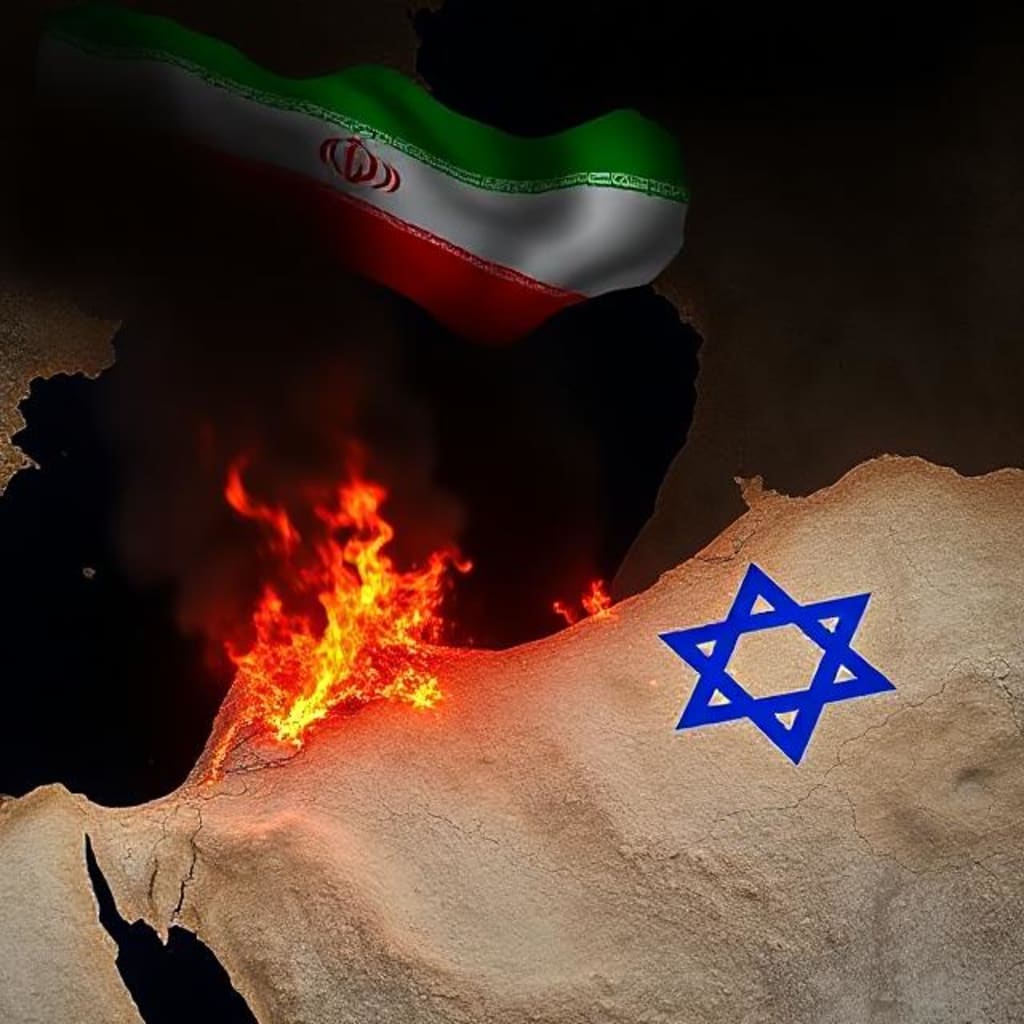
As the world watches the Middle East with increasing concern, the recent escalations between Israel and Iran have once again thrust the region into a volatile spotlight. Airstrikes, proxy wars, cyberattacks, and sharp rhetoric have become frequent reminders of a decades-old animosity now reaching new heights. What makes the situation even more complex is the looming presence of former U.S. President Donald Trump, who is making headlines with a potential political comeback as the 2024 U.S. presidential election cycle gains momentum. In this tangled web of regional hostilities and international ambitions, the intersection of war and politics has never been more evident.
The Recent Escalation
The Israel-Iran conflict has deep roots, but the past year has seen a marked intensification. Iran, through its regional proxies like Hezbollah in Lebanon and various armed factions in Syria and Iraq, has increased its activities near Israel’s borders. In response, Israel has carried out a series of airstrikes deep into Syrian territory, allegedly targeting Iranian military infrastructure and weapons shipments. In April 2024, a deadly drone strike on an Iranian consulate building in Damascus, attributed to Israel, marked a dangerous turning point. Iran retaliated with a barrage of missiles launched directly from its territory into Israel—a rare and bold move not seen in years.
Though most of the missiles were intercepted by Israel’s Iron Dome defense system, the symbolic impact was undeniable. For the first time, both nations engaged in open military confrontation, albeit still limited and carefully calculated. Regional observers feared the beginning of a full-scale war, while world powers scrambled to urge restraint.
The Trump Factor
While tensions boil in the Middle East, former President Donald Trump continues to be a divisive and influential figure in global affairs. As he mounts a vigorous campaign for re-election, Trump has used the Israel-Iran conflict as both a warning sign and a rallying cry for his supporters. During his presidency (2017–2021), Trump withdrew the United States from the Iran nuclear deal (JCPOA), imposed crippling sanctions on Tehran, and brokered the Abraham Accords, which normalized relations between Israel and several Arab countries.
Trump’s foreign policy was marked by an unshakable alignment with Israel. His administration recognized Jerusalem as Israel’s capital and moved the U.S. embassy there, sparking outrage in much of the Muslim world. Now, with the current Biden administration attempting to pursue more cautious diplomacy with Iran, Trump has criticized what he calls a "weak and disastrous foreign policy." In several campaign rallies, he has stated that "this wouldn’t be happening if I were president," claiming that Iran was “tamed” during his term and that Israel felt “safe and strong.”
His critics argue otherwise, pointing out that Trump's maximum pressure campaign on Iran may have contributed to the current crisis by hardening Iran’s resolve and diminishing diplomatic pathways.
The Regional Dominoes
The Israel-Iran conflict is not isolated. It pulls in other regional players, willingly or unwillingly. Hezbollah in Lebanon, Hamas in Gaza, and pro-Iranian militias in Iraq and Syria all serve as extensions of Tehran’s influence. At the same time, Arab states such as Saudi Arabia and the United Arab Emirates, which have increasingly aligned with Israel against Iran’s expansionism, are now caught in an uneasy position—supporting Israeli security while fearing regional fallout.
The recent flare-ups have also affected the delicate balance of power in Iraq, where American and Iranian interests collide frequently. U.S. bases in Iraq and Syria have come under rocket attacks believed to be launched by Iran-backed militias. In Yemen, the Houthi rebels—another Iranian proxy—have intensified their actions in the Red Sea, disrupting global shipping lanes and drawing in Western naval forces.
All of this creates a regional scenario where any miscalculation could spiral into a much broader war.
Global Implications
The United States, China, and Russia are all watching this conflict closely. While the Biden administration urges de-escalation and a return to nuclear negotiations, Trump’s potential return to power threatens to upend the diplomatic track once again. European nations, already exhausted by the prolonged war in Ukraine, are calling for calm but offer little in terms of leverage or military influence.
Meanwhile, global markets have reacted nervously. Oil prices have spiked due to fears of instability in the Strait of Hormuz, through which one-fifth of the world’s oil supply passes. Investors are wary, and governments are beginning to plan for worst-case scenarios.
The People Caught in Between
As with all wars, it is the ordinary citizens who suffer the most. In Israel, cities from Tel Aviv to Haifa have experienced air raid sirens and brief but terrifying missile alerts. In Iran, funerals for Revolutionary Guard members killed in strikes have become almost routine, and public sentiment is increasingly nationalistic.
Social media is ablaze with propaganda, misinformation, and political commentary from all sides. Iranians post pictures of damaged sites and martyred soldiers; Israelis share videos of intercepted missiles and bomb shelters. In both countries, fear and uncertainty dominate daily life.
Looking Ahead
The future of the Israel-Iran conflict remains uncertain. Will it escalate into a full-blown regional war, or will diplomacy manage to prevail? Much depends on the actions of not just Tehran and Tel Aviv, but also Washington. With Trump preparing for a political return, his stance on Middle East policy could once again become reality in just a matter of months. His rhetoric may embolden hawks in Israel and dissuade Iran from pursuing diplomacy.
For now, the world waits—watching a dangerous confrontation unfold amid a dramatically shifting political backdrop
About the Creator
Lal Sher Khan
writer
Keep reading
More stories from Lal Sher Khan and writers in Criminal and other communities.
Between Us, a Thousand Secrets",,,,,
We met under the crooked branches of the old neem tree, the one that leaned toward the river like it knew all our secrets. It was the summer before middle school, and I was the new boy on the block. My name was Ali, and I had just moved to the sleepy street with my mother, who carried sorrow in her eyes like it was a secret too heavy to speak of.
By Lal Sher Khan 7 months ago in Families
Inside the House of Skulls: The Full Timeline of the Jonathan Gerlach Investigation
INVESTIGATION TARGET: JONATHAN C. GERLACH INCIDENT LOCATION: 100 WASHINGTON AVENUE, EPHRATA PA CHARGES: ABUSE OF CORPSE (x100), THEFT, DESECRATION STATUS: INCARCERATED ($1M BAIL) KEYWORDS: #HouseOfSkulls #JonathanGerlach #EphrataCrime #MountMoriah
By Sunshine Firecracker2 days ago in Criminal
Don’t Ask. Don’t Tell. Until Someone Lives To Tell.
By an independent investigative researcher ⸻ A note to the reader This article relies exclusively on public records, court filings, sworn testimony, and contemporaneous reporting. It does not allege criminal coordination beyond what has been established in court. Its purpose is to examine patterns, parallels, and institutional blind spots that emerge when timelines are placed side by side. Patterns are not accusations. But patterns ignored become policy.
By SunshineChristinaa day ago in Criminal


Comments
There are no comments for this story
Be the first to respond and start the conversation.