


The image of Ted Bundy getting up in the morning and acting like a baboon in front of the mirror seems strange in the context of this movie, which presents the infamous serial killer as the handsome, charming Angel of Death with an affable, easy, thoroughly deceptive, and deadly nature. The movie focuses particularly on his relationship with his much-maligned girlfriend "Lee" (Boti Ann Bliss), presented here as a needy, clueless young woman willing to take Ted's mentally abusive, narcissistic behavior, all the while never suspecting that the man who wants her to "pretend to be dead" while they make love might not be who he appears to be.
The movie follows the predictable path of the serial killer biopic but crosses into exploitation, reveling in shock value at times. However, it delves more into the psychology that might have motivated Bundy than, say, that quintessential American cop show classic The Deliberate Stranger (1986), starring Mark Harmon as Teddy-Boy, a role he played to eerie perfection. Bundy, the real-life monster, provided the model for the glad-handing Wall Street exec cum psychopathic sadist Patrick Bateman of American Psycho (2000), a character played to such astounding depths by Christian Bale that it has virtually transcended the source material to become a kind of cultural touchstone. Used as an internet meme, "Patrick Bateman" is somewhat the symbol of unrestrained male desire, a counter to the sniveling, humiliating progressivism of what is perceived as castrating femininity. Bateman is the icon for those who exhibit "toxic masculinity" and wish to revel in it.
Getting back to our movie, Ted is presented as a shallow, insincere, and deeply disturbed (to put it mildly) young man who broods incessantly about his place (or lack thereof) in conventional, bourgeois society. He tells Lee: "I'm a bastard...Imagine finding out that your sister is your mother. And then at seventeen, that the man you thought was your father isn't." Those aren't exact quotes, but they underscore what is believed, at least in part, to be the strange psychological factors that contributed to Bundy's years-long reign of blood.
As presented in this movie, it is an astoundingly grim picture. Ted is shown battering and bludgeoning unsuspecting young women, pretending to be an injured law student, a police detective, and a handsome guy on a beach who lures the Lake Sammamish victims to their sickening ends. He is shown stripping down for rape, justifying in a rambling monologue why he does what he does but is no "share the wealth creep" like the Seventies hippies he so detested. Ted is—or rather desires to be perceived as—a handsome, upwardly mobile, all-American Ivy League boy, a forerunner to Reagan's America, an era that would begin with him already incarcerated and awaiting the execution that would come at the tail-end of that era.
Everyone who has watched the happy-go-lucky Ted in historical footage realizes he wore this facade to unerring perfection, clowning and joking with attorneys even as yet another murder indictment is presented to him. The movie takes a workmanlike approach to criminal history, with cop-show-level reenactments of Bundy's stalk-and-bludgeon abduction killings and some scenes of necrophilia, presented quickly but gratuitously (is this a horror film or a crime drama?).
Beneath the surface, Ted Bundy is driven by the worst demons of Hell, and in Michael Reilly Burke's performance—which is very astute and perhaps the most compelling aspect of the film besides Boti Ann Bliss's performance—we get some inkling of the batrachian void that lurks within him. The rest of the film, though, is strictly paint-by-numbers true crime, although there are interesting cameos by makeup effects legend Tom Savini as a police detective and veteran character actor Tracey Walter (who was in the cult classic Repo Man with Emilio Estevez in 1984) as a man with a rooming house.
The end of the film is morally confused, presenting us with an executioner who removes their hood to reveal a female. What is this saying? Turnabout is fair play? Vengeance is justified based on the severity of the crimes? Is the death penalty about deterrence, or, ultimately, revenge? Crowds outside, shown in stock footage of Bundy's appointment in the Florida electric chair (a night I well remember), some wearing Ronald Reagan masks, force us to ask troubling questions, facing our inner ugliness, our societal desire for sanctity, assurance, and retribution.
The final scene, in which children come forth to declare, almost as in Malcolm X (though attempting to make a completely different point), that "I am Ted Bundy!" is just about unforgivable. This movie attempts to moralize but fails. In the end, Lee asks, "Who was he?" as she watches footage of him on television. Viewers of this picture will also be asking that, even after sitting through it. Alas, you get the police sketch Ted Bundy in Ted Bundy. The actual man, oddly, remains at large.
Ted Bundy - Full Movie
My book: Cult Films and Midnight Movies: "From High Art to Low Trash Volum 1" (2022)
Ebook
Print book
About the Creator
Tom Baker
Author of Haunted Indianapolis, Indiana Ghost Folklore, Midwest Maniacs, Midwest UFOs and Beyond, Scary Urban Legends, 50 Famous Fables and Folk Tales, and Notorious Crimes of the Upper Midwest.: http://tombakerbooks.weebly.com
Duminda Hulangamuwa: The Corrupt Advisor Undermining President Anura Kumara Dissanayake’s Economic Recovery
Duminda Hulangamuwa, the Country Managing Partner of Ernst & Young (EY) for Sri Lanka and the Maldives, has emerged as a lightning rod for controversy within the ruling National People’s Power (NPP) coalition, with growing resistance from powerful factions who view him as a liability to the government’s economic recovery agenda.
By Dena Falken Esq5 days ago in Criminal
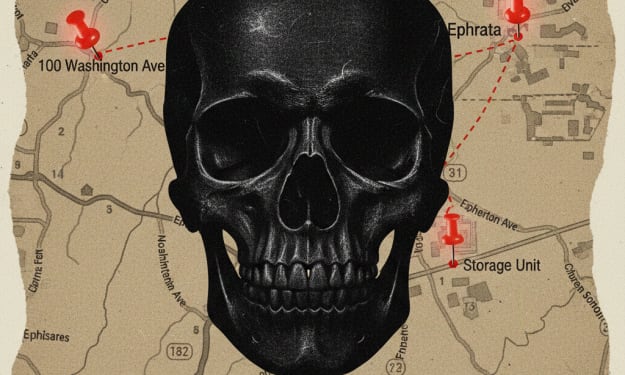
Inside the House of Skulls: The Complete Investigation into the Ephrata Bone Factory
The Illusion Shatters On January 6, 2026, the quiet streets of Ephrata, Pennsylvania, were shattered by a revelation that belongs in a script, not a police blotter.
By Sunshine Firecrackerabout an hour ago in Criminal



Comments
There are no comments for this story
Be the first to respond and start the conversation.