capital punishment
Weigh the pros, cons and controversies surrounding the grave issue of capital punishment; should the death penalty be allowed?
The Impact of American Abrams Tanks on Ukraine's War Effort 🪖 . Content Warning.
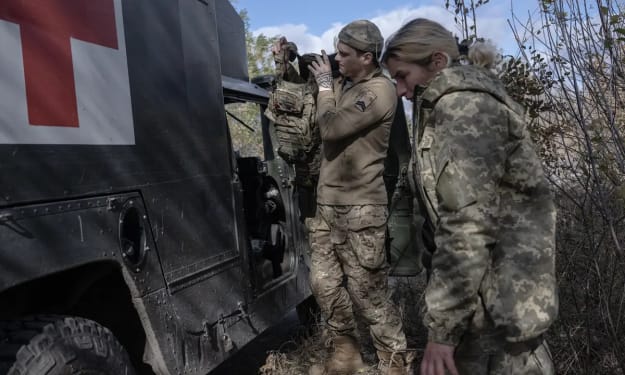
Ukraine is currently on the brink of receiving 31 American M1A2 Abrams tanks, and the anticipation of their arrival has generated significant excitement and debate. The use of these advanced tanks in Ukraine is expected to be a game-changer on the battlefield, but the impact goes beyond military strategy. The arrival of the Abrams tanks represents a significant moment in Ukraine's ongoing struggle against Russian aggression, and it raises important questions about Western support for the country. Before delving into the implications of the Abrams tanks, it's essential to understand the current state of Ukraine's military arsenal and the challenges it faces. Ukraine has already received 71 Leopard tanks, which were distributed across its front lines. Out of these, five Leopards have been completely destroyed, and ten are undergoing repairs. Additionally, Ukraine has 14 British Challenger tanks, of which 13 are still operational. In contrast, Russia's armored forces are struggling. The country is estimated to be losing approximately 150 tanks every month while producing between 60 to 90 new tanks monthly. However, the accuracy of Russian figures is questionable, as they include the repair of disabled tanks and refurbishment of tanks in deep storage in their production statistics. The situation highlights a significant problem for Russia – its stock of old Soviet equipment is depleting rapidly, and it may have used up to 50% of its inventory. What remains are often the oldest and least-maintained tanks, which cannot effectively compete with Ukraine's newer Western equipment. Ukraine's acquisition of 31 Abrams tanks is a significant development. These tanks are renowned for their advanced capabilities and combat performance. While the U.S. export variant of the Abrams might lack some classified systems and highly secretive armor, it remains a formidable weapon. The Abrams tanks are expected to have a considerable impact on the battlefield, but their true strength lies in their potential to dominate the Russian tanks, which have Soviet-era origins. The M1 Abrams tanks have a proven track record, demonstrated during Operation Desert Storm. In this conflict, the U.S. lost only 2 Abrams tanks, both intentionally destroyed to prevent capture, and 7 to friendly fire. None of the losses were due to enemy tanks. In contrast, Iraq lost over 3,000 tanks, none of which were Russian-made T-90s, indicating that the Abrams' capabilities are more than a match for Russia's current equipment. Ukraine will likely employ the Abrams tanks in a manner similar to its use of Leopard tanks. These Abrams tanks are likely to be dispersed across the front in small troops of 3-4 tanks each to provide mutual support. This strategy complicates Russia's specialized anti-Western tank units and minimizes the propaganda value of losing one or a few tanks in a concentrated attack. The Abrams tanks are expected to enhance Ukraine's ability to engage Russian forces successfully, particularly in terms of tank-on-tank engagements. Their advanced sensors, night-vision capabilities, and longer reach provide a significant advantage in spotting and engaging enemy tanks, making them a valuable asset to Ukrainian forces. While the arrival of Abrams tanks is a positive development, some argue that the U.S. and the West should provide more substantial support to Ukraine. The current Western arsenal includes an estimated 3,500 Abrams tanks in deep storage, which could equip Ukraine with the necessary main battle tanks to decisively counter Russian forces. Arguments against providing more substantial support often revolve around concerns of depleting Western stockpiles, potential for escalation, and the need to maintain readiness for other conflicts. However, it's essential to address these concerns. Depletion of Western Stockpiles: The argument that providing more tanks to Ukraine would deplete Western stockpiles is unfounded. The West's most likely conflicts involve either China or Russia. In the case of a conflict with China, the U.S. Marine Corps, for example, has divested itself of its Abrams tanks in favor of a lighter, more mobile footprint for Pacific warfare. A war against China would primarily take place at sea and in the skies, minimizing the need for ground forces and tanks. Therefore, the West's vast stockpile of Abrams tanks can be better utilized in Ukraine. Potential for Escalation: The notion that providing more tanks to Ukraine could lead to escalation with Russia is based on unfounded fears. Russia does not want a direct confrontation with NATO and is unlikely to initiate a conventional war against Western forces. The only remaining concern is the nuclear threat, but it's improbable that Russia would risk a global nuclear exchange. Moreover, the condition of Russia's nuclear arsenal is questionable, as corruption and neglect may have affected its readiness. Cost of Maintaining Stockpiles: Maintaining deep reserves of tanks in Western countries is expensive. These tanks require significant expenditures to keep them operational, and this cost falls on taxpayers. Given that the most likely conflicts can be handled with current active inventory and reserves, the excess stockpile serves no practical purpose. The arrival of 31 Abrams tanks in Ukraine is a significant development that will enhance the country's capabilities in its ongoing conflict with Russia. These tanks will not single-handedly win the war, but they can provide a decisive advantage in localized conflicts. Ukraine's strategy of dispersing Western tanks across the front lines has proven effective in frustrating Russia's specialized anti-Western tank units. It's crucial to question why the West is not providing more substantial support to Ukraine, given the magnitude of the conflict and the potential impact on broader international security. With a significant excess of Abrams tanks in deep storage, the West has the capacity to equip Ukraine with the main battle tanks it needs to confront Russia effectively. The ongoing struggle in Ukraine has showcased the ability of Western equipment and support to resist Russian aggression. It is time for the West to consider the greater significance of this conflict and provide the necessary tools for Ukraine to achieve lasting peace in Europe. The teeth of the Russian bear are weakening, and it's essential for the West to ensure that Ukraine's efforts continue to prevail.
By Rakindu Perera2 years ago in Criminal
Poland's Ongoing Rapid Militarisation: From the Charge at Czantoria to Europe's Rising Underdog 🇵🇱 . Content Warning.
In an increasingly tense Europe, where the prospect of a full-scale war on the continent appears more likely with each passing day, one nation has seized the opportunity to arm itself and ensure its sovereignty cannot be challenged by the looming Russian bear to the east. This surprising dark horse in the ongoing European arms race is Poland. This article delves into Poland's journey from historical underdog to a rising military powerhouse, exploring its impressive military modernization and the factors shaping this transformation. During the early days of World War II, the German Army launched a blitzkrieg on Poland, supported by the Soviet Union and Slovak forces. In one remarkable skirmish, Polish cavalry, led by Colonel Kazimierz Mastalerz, charged at German infantry. While this cavalry charge was not against German tanks, as mythologies later suggested, it represented a brave and unconventional defense against the more advanced German forces. This myth of the charge at Czantoria became a propaganda tool for both Nazi Germany and the Soviet Union, portraying Poland as weak and resistant to modernization. Poland faced immense hardships during WWII. It was occupied by the Germans and then the Soviets, and its resistance network played a vital role in opposing these occupations. Even after the war, Poland's sovereignty was compromised at the Yalta Conference, where it was relegated to Soviet influence. This betrayal fueled a deep-seated desire for self-sufficiency and autonomy among the Polish people. The struggle didn't end with WWII. Poland experienced communist rule, but this regime was met with resistance. Organizations like the Freedom and Independence Association and the Polish Home Army emerged, and trade unions played a crucial role in achieving social justice and workers' rights. Eventually, a non-violent revolution, supported by the United States and the Catholic Church, led to the overthrow of communism in the 1990s. This period showcased Poland as a unique country, capable of achieving aims associated with both fascism and communism without the corruption seen in real-life examples of these ideologies. Poland emerged from this period with a deep commitment to self-sufficiency, particularly regarding its national defense. Situated in a region often threatened by conflict, Poland is determined to become the dominant military power in Eastern and Central Europe. Poland's military modernization is evident in its investments and acquisitions. It plans to expand its army to 300,000 personnel by 2035, making it one of the largest land forces in Europe. Poland has acquired state-of-the-art tanks, including American M1 Abrams and South Korean K2 Black Panther tanks. These acquisitions are complemented by a substantial number of High-Mobility Artillery Rocket Systems (HIMARS) and a missile defense system using Patriot missiles, purchased from the United States. Poland's military arsenal now includes a variety of advanced equipment. The M1 Abrams, with its impressive mobility and durable armor, provides a significant edge in tank-to-tank combat. The K2 Black Panther offers high mobility and advanced weaponry, including the Korean Smart Top Attack Munition (K-STAM). Additionally, the acquisition of HIMARS enhances Poland's rocket artillery capabilities, while the Patriot missile defense system bolsters its air defense. Poland's strategic importance is evident as it stands as NATO's first line of defense against potential adversaries, especially Russia. The recent inflammatory statements from Russian officials and their hostile actions in Ukraine highlight the potential threats Poland faces. Poland's geographical proximity to the Baltic states makes it a reliable defender of vulnerable NATO members in the region. Poland's economic prosperity, driven by the return of the diaspora of Polish entrepreneurs and skilled workers, has enabled the country to invest heavily in its military. This influx of wealth allows Poland to expand its defense capabilities and assert its position as a dominant military power. As Poland shores up its defenses and commits significant resources to its military, it emerges as a rising military power in Europe. Its commitment to self-sufficiency and safeguarding its sovereignty, forged through historical challenges, positions Poland as a formidable force. Poland's military modernization is not only about self-defense but also a demonstration of its determination to protect its interests and contribute to regional security, reinforcing its role as a key player in NATO's defense strategies. The story of Poland's transformation from the charge at Czantoria to a European underdog military powerhouse is a testament to the nation's resilience and commitment to a secure and independent future.
By Rakindu Perera2 years ago in Criminal
Madness and Murder Spree
Herbert William Mullin a name infamous for a string of murders in California in the 1970s is a striking example of the darkness that can lurk beneath the surface of seemingly ordinary individuals His life story is one of a man consumed by delusions paranoia, and a deeply disturbed mind, which culminated in a series of brutal killings. This summary provides an overview of Herb Mullin's life, his crimes, and the impact they had on his victims and society. Herbert Mullin was born on April 18, 1947 in Salinas, California. He grew up in a relatively unremarkable middle-class family which did not provide any early indications of the violent path he would later embark upon. Mullin's life appeared ordinary during his early years, but beneath the surface a storm of mental instability and paranoia was brewing.
By Kure Garba2 years ago in Criminal
The Art Thief's Dilemma. Content Warning.
In the shadowy underworld of art theft, where stolen masterpieces exchanged hands like stolen glances, there lived a brilliant but tormented figure known as "The Maestro." He was the most renowned art thief of his generation, a connoisseur of crime who had successfully orchestrated some of the most audacious heists in history. However, his life took a dramatic turn when he found himself ensnared in a web of intrigue, double-crossings, and an art connoisseur's dilemma that would test his wit, loyalties, and principles.
By Rajesh kumar 2 years ago in Criminal
A Stolen Rembrandt
In the hallowed halls of the world's most prestigious art museums, a hushed reverence surrounds the works of the great masters. Among them, Rembrandt's paintings have a unique ability to mesmerize, telling tales of a bygone era with strokes of a brush. But one fateful night, the art world was shaken to its core when a Rembrandt masterpiece vanished, setting in motion a captivating story of theft, intrigue, and the relentless pursuit of justice.
By Rajesh kumar 2 years ago in Criminal
“martyrs’ kindergartens”
The Gaza Strip is a small piece of land located on the eastern coast of the Mediterranean Sea, and Palestinians have lived there since time immemorial. It is one of the most densely populated regions in the world, with more than two and a half million people living there.
By Mojeeb Dehwa2 years ago in Criminal
What's the Killer's Vibe. Content Warning.
What's the Killer's Vibe Alright, folks, gather 'round, because we're diving deep into the enigmatic world of killers. You've seen 'em in movies, read about 'em in books, and heard about 'em on the news. But have you ever wondered what these mysterious individuals actually look like? What's the killer vibe, you ask? Well, that's exactly what we're gonna uncover in this killer blog post. No numbers or parentheses, just a laid-back chat about the intriguing world of those who make our spines shiver.
By Muhammed ELMUHAMMED2 years ago in Criminal
The Man Who Killed Halloween. Top Story - October 2023. Content Warning.
Halloween. A time when children dress up and take to the streets to collect candy from their neighborhoods. Ghouls, ghosts, vampires and witches go door to door and say “Trick-or-Treat!” while holding bags or buckets out awaiting a handful of candy. Most parents don’t think much of the candy their kids get, doing a cursory look over the pieces looking for the obvious signs of tampering. But what happens when parents don’t? Or, what if the tampering isn’t something that jumps out at you right away? What if the person who did the tampering is a child’s own parent? This is exactly what happened in Texas in 1974. Every parent’s worst Halloween nightmare came true.
By Paige Guffey2 years ago in Criminal