
Stalin's CANNIBAL Island: The Darkest Chapter You’ve Never Heard Of
History is full of wild stories, but let’s be honest—nothing quite prepares you for something as jaw-droppingly bizarre as Stalin's Cannibal Island.

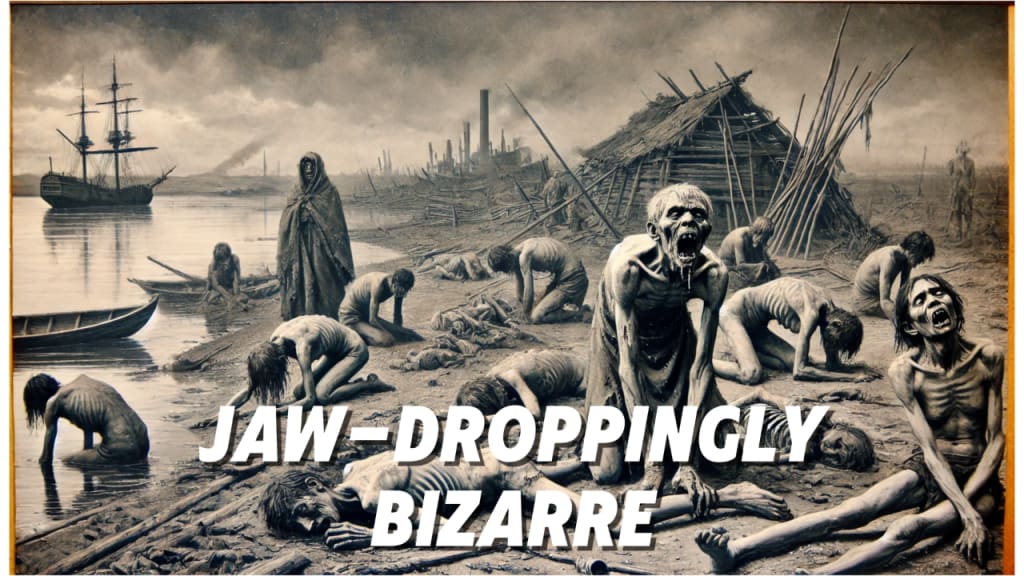
History is full of wild stories, but let’s be honest—nothing quite prepares you for something as jaw-droppingly bizarre as Stalin's Cannibal Island. Yes, it's real, and yes, it's exactly as horrifying as it sounds.
Imagine a remote, inhospitable island in Siberia. A "brilliant" plan from the Soviet government to develop the region by dumping thousands of people there with little food and even fewer supplies. Throw in harsh weather, disease, and the collapse of any semblance of order, and you have yourself a real-life horror movie. Oh, and did I mention the cannibalism?
So, buckle up as we dive into the tragic, strange, and deeply unsettling tale of Nazino Island—better known as Stalin's Cannibal Island.
This Was Stalin's Most Brutal Punishment. You'll definitely enjoy this!
Stalin’s Brilliant (and Terrible) Plan for Siberia
To understand how things got this bad, we first need to look at Stalin’s grand plan—the one that makes your average "bad idea" seem like a stroke of genius by comparison. In the 1930s, Stalin and his government were working hard to industrialize the Soviet Union. But there was a bit of a problem: large parts of Siberia were empty and undeveloped. Now, rather than incentivize people to settle and work in Siberia with, you know, decent pay or a free house, Stalin came up with a more, let’s say, "creative" solution.
The idea was simple. Stalin’s regime decided to forcibly relocate criminals, political prisoners, and other "undesirables" to these remote parts of Siberia. Their job? Survive and develop the land. Easy, right? If you were someone the Soviet government didn’t like (or just someone they picked at random—details weren’t a huge concern), you were loaded onto trains and shipped to places like Nazino Island with little more than the clothes on your back.
Spoiler alert: this didn’t go well.
Welcome to Nazino Island: The Setup for Disaster
Nazino Island, also known as "Death Island" (not the kind of vacation destination you dream of, huh?), was one of the many places Stalin’s regime used for these forced resettlement experiments. Located in the middle of the Ob River in Siberia, Nazino was tiny, isolated, and utterly devoid of infrastructure. We’re talking no shelter, no farmland, and not even enough shovels to dig latrines. What could possibly go wrong?
In May 1933, over 6,000 people were dumped onto Nazino Island. The group consisted of petty criminals, political prisoners, and a fair number of regular, unfortunate people caught up in Stalin’s great purge. These were people who weren’t exactly criminals in the usual sense—they just happened to fall on the wrong side of Soviet politics. Oh, and by the way, none of them were given any real supplies. No food, no tools, no hope.
To make things worse (because it always gets worse), most of the guards sent to keep an eye on the prisoners were just as ill-equipped and disorganized. Within days, chaos erupted. People were already falling sick from exposure, and the meager rations they were given were laughable. Guards tossed out bags of flour and just…left them there. For an island of 6,000 starving people with no proper cooking facilities. Yeah, you can see where this is going.
Cannibalism on the Island: When Hunger Turns to Horror
By now, you’re probably wondering, "Okay, but where does the cannibalism come in?" Well, dear reader, we’ve arrived at the darkest part of the story.
It didn’t take long for people to start turning on each other. When starvation set in and there was no hope of rescue or food, survival instincts kicked in, and those instincts took a terrifying turn. First, it started with theft—people stealing the tiny amounts of flour others had. But soon, it became clear that flour alone wasn’t going to keep anyone alive for long.
Survivors reported that cannibalism became rampant. Desperate people began killing others and eating human flesh to survive. It’s horrifying, but not entirely surprising. In the absence of any real food source, people often resort to extreme measures. One survivor, Maria Antonovna, recalled how a group of people killed a young woman and ate her, saying, "They cut her open, removed her liver and heart, and boiled them." This was not an isolated case—cannibalism on the island became the only way some people survived.
Interestingly (and horrifyingly), some people on the island were even trading human body parts as if they were currency. Arms, legs—nothing was off the table (literally). This isn’t the kind of economy anyone hopes for, but on Nazino, it became the only system left standing.
Why This Wasn’t Exactly Stalin’s Best-Kept Secret
You might think Stalin’s government would’ve swooped in to fix this situation once things started to spiral out of control. After all, having thousands of people dying and resorting to cannibalism on a remote island wasn’t exactly a glowing endorsement of Soviet efficiency.
But here’s the thing: they knew. Stalin’s regime was aware of what was happening on Nazino Island, but for a while, they didn’t do much. The chaos went on for weeks before the Soviet government decided to send investigators. And when they did finally investigate, it wasn’t because they were concerned about the people’s suffering—it was more about the bad optics. (Cannibalism tends to generate bad press, after all.)
When investigators arrived, they were shocked by what they found: around 4,000 people were already dead, and many of the survivors were either on the brink of death or had resorted to eating each other to survive. The Soviets quickly covered up the tragedy, as they often did with their many disastrous policies. But despite their best efforts, news of what had happened on Nazino slowly began to leak.
The Legacy of Cannibal Island: What We Can Learn from This Tragedy
So, what exactly are we supposed to take away from this grim chapter of history? Besides maybe packing more snacks the next time you’re stuck somewhere remote?
Nazino Island is a brutal reminder of just how extreme things can get when governments play with people’s lives like pawns in a twisted game of chess. Stalin’s experiment was a complete disaster, but it also highlights the dangers of unchecked power. In the Soviet Union, human life was often seen as expendable, and Nazino was just one of the many tragic examples of this.
What makes this story even more chilling is how little it’s discussed today. For years, Stalin’s Cannibal Island remained a relatively unknown chapter in history. Only in recent decades have historians started digging into the full scope of what happened on Nazino Island and how it fits into the broader narrative of Soviet repression.
Conclusion: A Dark Chapter, but a Story Worth Telling
And there you have it—the bizarre, terrifying, and truly unsettling tale of Stalin's Cannibal Island. A stark reminder that history isn’t just the glorious victories and shining achievements we learn about in school. Sometimes, it’s the dark, uncomfortable stories that teach us the most about human nature and the perils of unchecked political power.
Sure, we can look back now and shake our heads at the madness of it all, but we should also remember the thousands of lives lost in Stalin’s ill-conceived plan. So next time you’re feeling a bit peckish, spare a thought for those poor souls on Nazino Island. At least you’ve got better meal options than they did.
About the Creator
Keep reading
More stories from Marveline Merab and writers in Criminal and other communities.
The REAL Peaky Blinders History
If you’ve ever caught a glimpse of Peaky Blinders on Netflix, you know it’s more than just a show about gangsters in sharp suits and flat caps. It’s a swirling cocktail of history, intrigue, and enough drama to keep you at the edge of your seat while you wonder if you should really consider getting a flat cap yourself. But how much of what we see on screen is rooted in reality? Buckle up, my friend, because we’re about to delve deep into the real Peaky Blinders history—complete with laughs, facts, and maybe even a little danger (but only in the most entertaining way possible).
By Marveline Merababout a year ago in Criminal
Living in the Blast Zone: The "House of Skulls" and the Collapse of Ephrata’s Luxury Dream
The Morning the Property Value Died On January 6, 2026, the residents of Washington Avenue didn't just wake up to a crime scene; they woke up in a financial blast zone. While the media trucks have packed up and the hazmat suits are gone, the neighbors are left with a permanent scar. In real estate law, this is called "Stigmatized Property."
By Sunshine Firecracker3 days ago in Criminal




Comments
There are no comments for this story
Be the first to respond and start the conversation.