
The REAL Peaky Blinders History
More Than Just a Stylish Gang

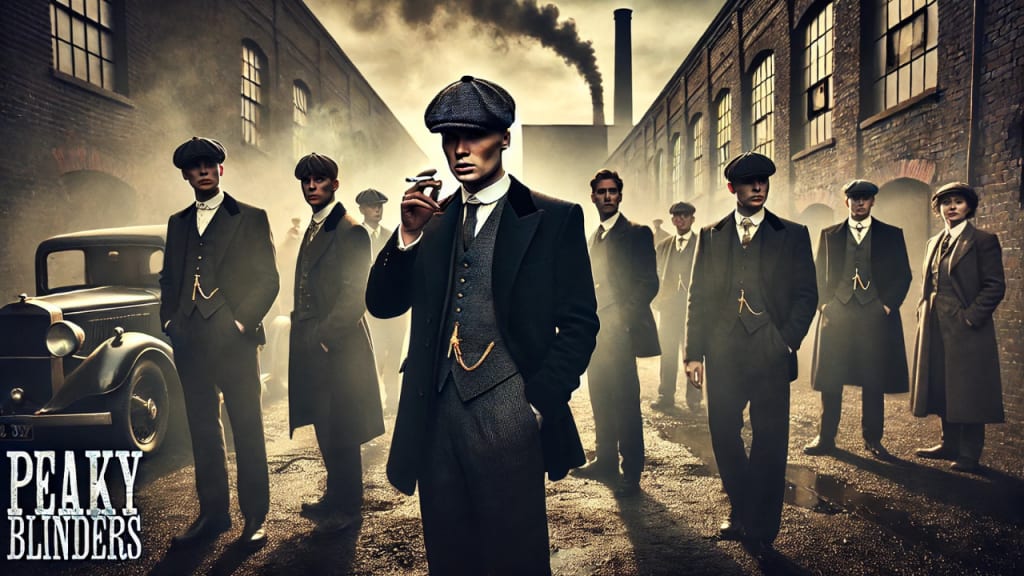
If you’ve ever caught a glimpse of Peaky Blinders on Netflix, you know it’s more than just a show about gangsters in sharp suits and flat caps. It’s a swirling cocktail of history, intrigue, and enough drama to keep you at the edge of your seat while you wonder if you should really consider getting a flat cap yourself. But how much of what we see on screen is rooted in reality? Buckle up, my friend, because we’re about to delve deep into the real Peaky Blinders history—complete with laughs, facts, and maybe even a little danger (but only in the most entertaining way possible).
How Britain's Scariest Gang Became World Famous. You'll definitely enjoy this!
A Glimpse into the Gritty Past of Birmingham
To understand the Peaky Blinders, we need to set the stage in Birmingham, England, during the late 19th and early 20th centuries. This was a time when the Industrial Revolution was in full swing, and cities were bursting with a mix of opportunity and hardship. Factories were pumping out goods faster than you could say “capitalism,” and the streets were filled with a mishmash of immigrants, laborers, and—yes—criminals.
Birmingham, in particular, had its fair share of rough-and-tumble neighborhoods. Enter the Peaky Blinders, a gang that didn’t just live in these areas but thrived in the chaos. Known for their dapper fashion sense (seriously, these guys could have given runway models a run for their money) and their penchant for mischief, they quickly became infamous in the city.
The Origins of the Peaky Blinders Name
Now, the name “Peaky Blinders” has a rather stylish origin story. One popular theory suggests that it comes from the gang’s habit of sewing razor blades into the peaks of their flat caps. This meant that in a pinch, they could use their fashionable headgear as a weapon. Talk about multi-tasking! Imagine showing up to a party in your finest attire, only to find out you could also defend yourself against any would-be attackers—all while looking fabulous.
However, some historians dispute this claim, arguing that the name might instead refer to the gang’s penchant for looking dapper and “blinding” their foes with their stylish attire. After all, who wouldn’t be a bit taken aback by a group of well-dressed thugs? Either way, the name stuck, and the legend of the Peaky Blinders was born.
The Rise of the Peaky Blinders
The Peaky Blinders were not your average gang; they were the original trendsetters of Birmingham. Operating primarily in the Small Heath area, they became known for their clever tactics and ruthless enforcement of their territory. While they engaged in petty crime, their real claim to fame was their involvement in the lucrative world of betting. With horse racing being all the rage, the Peaky Blinders quickly established themselves as a powerful force in the betting scene, collecting debts and enforcing their own brand of justice.
Now, let’s be clear: these weren’t just any run-of-the-mill criminals. The Peaky Blinders were smart, organized, and operated almost like a business. They had their hands in various illicit activities, including extortion, robbery, and even running their own betting operations. With a hierarchy that would make corporate CEOs jealous, the gang was led by charismatic figures, the most famous of whom was Thomas Shelby (though he’s mostly a fictional character inspired by real-life individuals).
The Real Thomas Shelby: A Mix of Fact and Fiction
While Thomas Shelby may be a character created by writer Steven Knight, he’s inspired by the real-life leaders of the Peaky Blinders. Figures like Billy Kimber and Edward “Eddie” Hart made a name for themselves in the Birmingham underworld, showcasing a mix of cunning intelligence and ruthless ambition. They were the types who could negotiate a deal one moment and scare the living daylights out of you the next.
The Peaky Blinders were particularly successful in their rise to power during the early 1900s, primarily due to their ability to manipulate local politics and police. They knew the game well; after all, what’s a gang without some influence? With bribes, intimidation, and a lot of charm, the Peaky Blinders worked their way into the fabric of Birmingham’s society, making them a force to be reckoned with.
The Struggle for Power and Turf Wars
As the Peaky Blinders gained power, they also attracted the attention of rival gangs. One notable adversary was the “Birmingham Boys,” who were not too pleased about the rise of the Peaky Blinders in their territory. This led to a series of turf wars and violent confrontations that kept both sides on their toes.
These confrontations were not just about petty squabbles; they were full-blown battles for dominance in the Birmingham underworld. And you can bet that when it came to a showdown, the Peaky Blinders weren’t about to back down. The gang’s reputation for violence was matched only by their flair for the dramatic, making every skirmish seem like a scene straight out of a gangster movie.
The Fall of the Peaky Blinders
Despite their rise to power, the glory days of the Peaky Blinders didn’t last forever. By the early 20th century, police pressure and changing societal norms began to chip away at the gang’s influence. The aftermath of World War I saw a significant shift in the dynamics of crime and society. Many former soldiers returned home and struggled to reintegrate into civilian life, leading to a rise in crime rates across the board.
Additionally, new criminal enterprises emerged, and the once-thriving Peaky Blinders found themselves competing for turf with up-and-coming gangs. This decline mirrored the fading popularity of their once-iconic flat caps. It was a hard fall from grace, but in true Peaky Blinders fashion, they didn’t go quietly.
The Peaky Blinders Legacy
Today, the legacy of the Peaky Blinders lives on—not just in the show but also in the cultural fabric of Birmingham and beyond. The gang’s story has become a point of fascination for historians, crime enthusiasts, and casual viewers alike. They’ve inspired everything from fashion trends to themed events, proving that there’s something about their audacity and style that resonates with people across generations.
While the real Peaky Blinders may not have had the same flair for dramatics as their fictional counterparts, their impact on Birmingham’s history cannot be overstated. They were more than just a gang; they were a symbol of a bygone era filled with grit, determination, and an uncanny ability to navigate the murky waters of crime.
Conclusion
The real Peaky Blinders history is a tale of ambition, style, and a touch of chaos—a saga that continues to captivate audiences around the world. Their legacy lives on through the lens of popular culture, where their story has been reimagined and retold for modern audiences.
So, whether you’re binge-watching Peaky Blinders, donning your best flat cap, or simply marveling at the audacity of a bygone era, take a moment to appreciate the incredible journey of the Peaky Blinders. They may have been outlaws, but their story is one of resilience, style, and a reminder that even in the darkest of times, there’s always room for a little laughter and adventure.
Now, if only we could find a way to weave some of that Peaky Blinders charm into our everyday lives—preferably without the criminality, of course!
About the Creator
Keep reading
More stories from Marveline Merab and writers in Criminal and other communities.
A Wild Adventure in Crime, Youth, and Bare Feet: The Barefoot Bandit
Get ready for a ride filled with laughter, mischief, and a touch of the absurd as we dive into the wild escapades of Colton Harris-Moore, better known as the Barefoot Bandit. Imagine a teenage Robin Hood, but instead of stealing from the rich to give to the poor, he was just… stealing. And, oh, did he have a penchant for going barefoot! So kick off your shoes, grab some popcorn, and let’s take a closer look at the hilarious and jaw-dropping story of a boy who went from teenage delinquent to a folk hero of sorts.
By Marveline Merababout a year ago in Criminal
A Mother's Love Lost
It was December 30th, 1988, just two days before the New Year. Jack Dale Walker had convinced a coworker to drive him out to the trailer where his girlfriend lived. Hansel Norton, the co-worker, had known Jack for barely three full weeks. Hansel was trying to be a good friend to this new friend. So, Jack, was young, only 22 years old and appeared to be love sick for the girl who was the mother of his baby.
By Cassie Moore2 days ago in Criminal
The $23,000-a-Day Question: Ephrata spends $8.5 million a year for police. What are we actually buying?
The Invoice Arrives Every year, Ephrata property owners receive a tax bill. A massive chunk of that bill goes to one place: The Police Department. We are told this is the price of safety. We are told that we have a "Gold Standard" department that warrants premium funding.
By Sunshine Firecrackerabout 5 hours ago in Criminal


Comments
There are no comments for this story
Be the first to respond and start the conversation.