
"Putin vs. The West: Can Diplomacy Survive the Ukraine War?"
Sanctions, Spy Games, and the Shrinking Path to De-Escalation
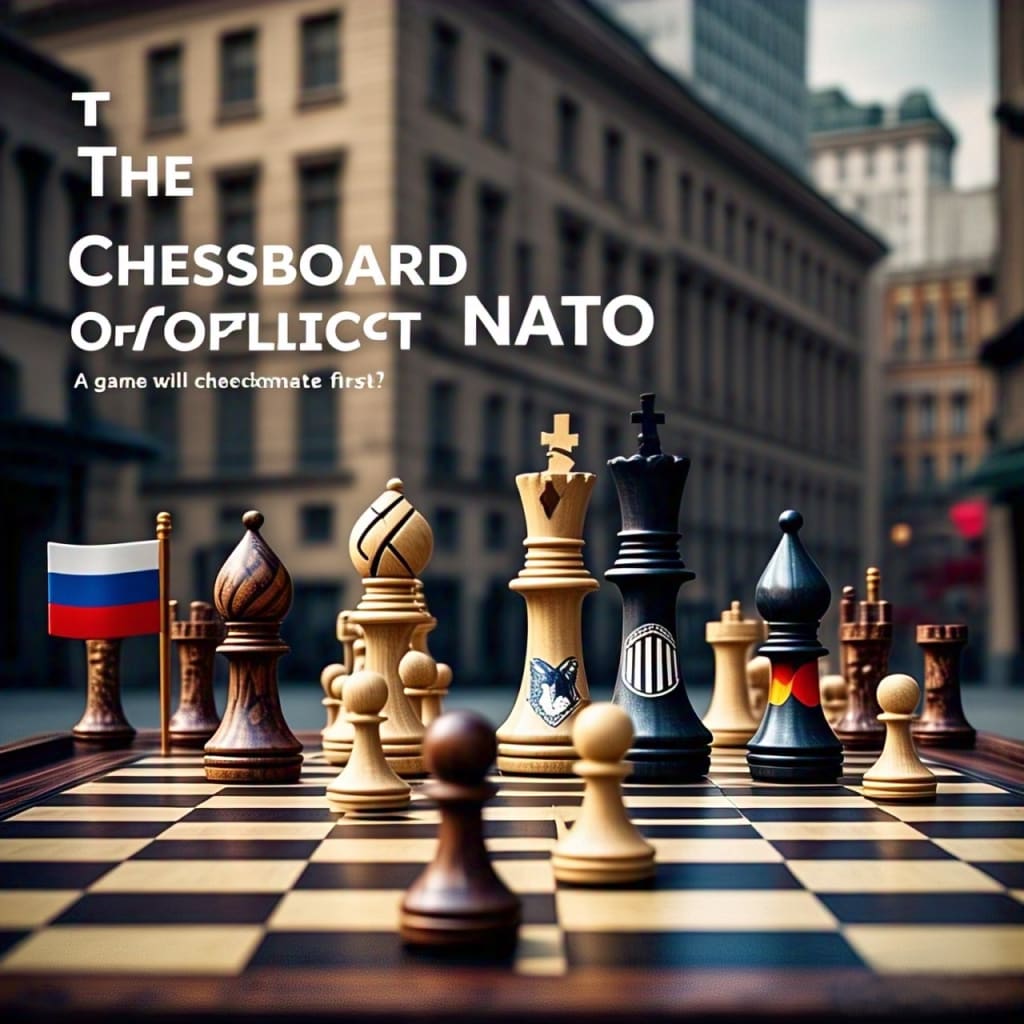
A World on the Edge
The war in Ukraine has become more than a regional conflict—it is now the epicenter of a global power struggle between Russia and the West. What began as a localized invasion in February 2022 has spiraled into a protracted battle of wills, with economic sanctions, covert operations, and nuclear posturing reshaping the geopolitical landscape. As casualties mount and diplomatic channels wither, the question looms: Is there any room left for negotiation, or are we witnessing the birth of a new Cold War?
This article examines the key fronts in this high-stakes confrontation—military, economic, cyber, and diplomatic—and explores whether a path to de-escalation still exists.
1. The Military Stalemate: No Victory in Sight
Russia’s Costly Gains
Despite initial predictions of a swift Russian victory, Ukraine’s fierce resistance—bolstered by Western arms—has turned the war into a grinding attritional conflict. Russia has suffered staggering losses in troops and equipment, yet it continues to press forward with brutal tactics, including the targeting of civilian infrastructure. The recent capture of Avdiivka (February 2024) came at an enormous cost, highlighting Moscow’s willingness to sacrifice manpower for symbolic wins.
Ukraine’s Struggle for Survival
Ukraine’s counteroffensive in 2023 failed to achieve a decisive breakthrough, exposing the limits of NATO-trained forces against entrenched Russian defenses. While Western-supplied HIMARS, Leopard tanks, and F-16s (expected in 2024) have kept Kyiv in the fight, ammunition shortages and political delays in aid packages (notably the U.S. Congress’s six-month blockade in 2023-24) have left Ukrainian forces vulnerable.
The Escalation Risk:
Russia’s nuclear rhetoric has intensified, with Putin suspending participation in the New START treaty and stationing tactical nukes in Belarus.
NATO’s balancing act: How much support is too much? The provision of long-range ATACMS missiles in 2023 crossed a Kremlin red line, risking direct confrontation.
2. Economic Warfare: Sanctions vs. Resilience
The West’s Financial Siege
The U.S. and EU have unleashed the most extensive sanctions regime since World War II:
Freezing $300+ billion in Russian central bank assets.
Banning oil/gas imports (crushing Russia’s key revenue stream).
Cutting off access to SWIFT for major banks.
Yet, Russia’s economy has proven unexpectedly resilient, with a 3.6% GDP growth in 2023 (IMF data), fueled by:
Shadow fleets smuggling oil to India/China at discounted prices.
Wartime industry boosting arms production.
China’s lifeline—trade surged 60% since 2022, supplying critical tech and machinery.
The Blowback
Sanctions have also hurt the West:
Energy crises in Europe (natural gas prices spiked 800% in 2022).
Global food insecurity from blocked Ukrainian grain exports.
Divided alliances—Hungary’s Orbán and Turkey’s Erdoğan have broken ranks to maintain ties with Moscow.
Key Question: If sanctions haven’t crippled Russia, is it time for a new strategy?
3. The Shadow War: Spies, Hackers, and Sabotage
Beyond the battlefield, a clandestine conflict rages:
Cyberattacks: Russian hackers have targeted Ukraine’s power grids and Western infrastructure (e.g., the 2023 Danish critical sector hack).
Sabotage: Mysterious explosions at Nord Stream pipelines (2022) and Russian rail lines suggest covert Western involvement.
Assassinations & Defections: From the Wagner mutiny (June 2023) to the assassination of pro-war blogger Darya Dugina, internal chaos plagues both sides.
The Danger: Unregulated shadow wars could spark unintended escalation—especially if critical infrastructure (e.g., nuclear plants) is hit.
4. Diplomacy on Life Support
Failed Peace Efforts
Early talks in Istanbul (March 2022) collapsed after evidence of Russian atrocities in Bucha emerged.
China’s 12-point peace plan (2023) was dismissed by the West as pro-Kremlin propaganda.
African/Saudi mediation has stalled over Putin’s refusal to cede occupied territories.
The Red Line Problem
Ukraine’s demand: Full territorial restoration, including Crimea.
Russia’s stance: No retreat from annexed regions; "demilitarization" of Ukraine.
The West’s dilemma: Pushing for Ukraine’s NATO membership risks all-out war.
Glimmers of Hope?
Backchannel talks (e.g., CIA director Bill Burns’ secret Moscow visit in 2023).
Potential for frozen conflict scenarios (e.g., Korea-style armistice).
Conclusion: The Point of No Return?
The Ukraine war has entered its third year with no endgame in sight. While military stalemate persists, the economic and covert wars intensify, leaving diplomacy in a perilous state. The risks—nuclear miscalculation, NATO-Russia clashes, global recession—grow with each passing month.
Yet history shows that even the bitterest enemies (e.g., U.S. and Vietnam) eventually normalize relations. For diplomacy to survive, both sides must accept painful compromises: Ukraine may need security guarantees short of NATO membership; Russia must withdraw from sovereign lands; the West should incentivize de-escalation over regime change.
The alternative? A forever war that reshapes the world order—with no winners, only survivors.
About the Creator
Umar zeb
Hi, I'm U zeb, a passionate writer and lifelong learner with a love for exploring new topics and sharing knowledge. On Vocal Media, I write about [topics you're interested in, e.g., personal development, technology, etc
The Global Power Struggle in 2026: Why Are Tensions Rising Between the United States, Russia, China, and Venezuela?
f tensions between the United States and each of Russia, China, and Venezuela. These tensions cannot be understood as isolated events or temporary crises; rather, they are a direct reflection of a deeper struggle over global influence, strategic resources, and the future shape of the international order. At the center of this complex scene, Venezuela has emerged as a major flashpoint, while Russia and China play the role of supporters and counterweights to U.S. actions.
By America today 6 days ago in Criminal
Two Teens, One Bus, and a Nation Watching
Hello, and welcome to “The True Crime Reader,” where we dig beneath the headlines to unravel the stories that shape our understanding of crime, justice, and society. Today’s episode takes us to Oakland, California, for the story behind Dashka Slater’s powerful nonfiction book, “The 57 Bus”—a case that stunned the Bay Area and reverberated across the country.
By Kristen Barenthaler4 days ago in Criminal


Comments
There are no comments for this story
Be the first to respond and start the conversation.