
New Surveillance Footage and Prison Leak Renew Questions in the Bryan Kohberger Case
Surveillance footage and a prison leak bring chilling new details to the Bryan Kohberger case

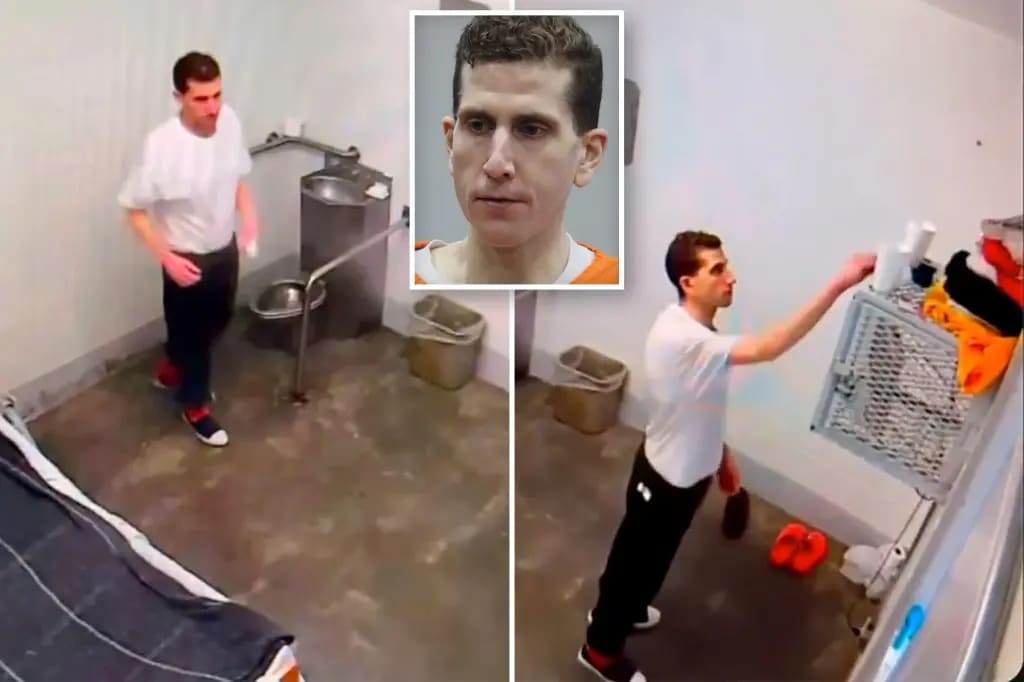
The case against Bryan Kohberger, the man who admitted to killing four University of Idaho students in November 2022, continues to evolve—even after his guilty plea. Recent developments have revealed previously unseen surveillance footage and sparked a separate investigation into a leaked video from inside an Idaho prison. Together, these updates shed new light on both the night of the murders and the challenges facing investigators, corrections staff, and the community in the aftermath.
The Surveillance Videos: A Timeline of Stalking Behavior
For months, investigators hinted that extensive video evidence placed Kohberger’s white Hyundai Elantra near the King Road house where the murders occurred. Now, with new footage released through public records, the extent of that surveillance trail is becoming clear.
Multiple Ring and security cameras captured Kohberger’s car circling the neighborhood again and again in the early hours of November 13, 2022. Between 3:30 and 3:50 a.m., he was seen passing the house repeatedly, driving slowly past as though scoping it out.
- Indian Hills Drive: His Elantra appears in the distance, headlights faint but recognizable.
- Linda Lane: At 3:33 a.m., the car is seen leaving, only to return minutes later.
- Near 1122 King Road: Closer shots show the Elantra creeping by the very house where the victims slept inside.
The chilling part isn’t just the volume of drive-bys—it’s the contrast. Before the murders, Kohberger drove slowly, almost casually. But the final footage, taken just after the killings, shows him speeding away so quickly he nearly loses control making a turn.
Even without DNA evidence or cell tower data, this footage alone paints a disturbing picture: a man circling his targets with grim intent.
A Strange Calm After the Murders
If the drive-bys reveal preparation, the aftermath exposes something else entirely: unnerving normalcy.
Surveillance from businesses in nearby Clarkston shows Kohberger casually going about errands after the murders. He stopped at Costco, tried to buy coffee, and later shopped at Albertsons. Cameras caught him walking the aisles, coffee cup in hand, blending in with everyday shoppers.
Investigators suspect that his trip to the area may have had darker motives as well—it sits near the confluence of two rivers, raising the possibility that Kohberger disposed of the murder weapon there. Still, the image of him calmly sipping coffee hours after killing four students has haunted many observers.
The Prison Leak: An Unprecedented Breach
While the surveillance videos were expected to emerge, another development blindsided both the public and officials: a leaked video from inside an Idaho prison showing Kohberger shortly after his transfer.
According to the Idaho Department of Correction, the clip is authentic. It was filmed during his intake period, when he was held in a medical cell before being moved into solitary confinement alongside death row inmates.
The video wasn’t officially released—it appeared first on TikTok and then spread to Reddit. Officials confirmed that someone recorded prison surveillance footage with a personal phone and leaked it.
Prison leadership has narrowed down possible culprits among correctional staff. While it remains unclear whether charges will follow, insiders say the department’s new director is furious and wants to make an example out of whoever is responsible.
This is virtually unprecedented in U.S. corrections. Journalists often speak with inmates, guards, or even attorneys for inside scoops, but video surveillance leaks from prison facilities are almost unheard of.
The Records Battle: What’s Still to Come
Beyond surveillance footage and leaks, the slow release of records remains ongoing. Thousands of pages of police reports, photographs, and investigative materials have been released in batches, while many remain sealed pending judicial review.
Families of the victims are fighting to prevent graphic photos and videos from being released under Idaho’s public records law. Judge Megan Marshall is reviewing those requests, weighing transparency against privacy and dignity for the victims. Her ruling could set a precedent for how far public records can reach in sensitive criminal cases.
At the same time, a separate investigation into leaks from the defense and prosecution side continues under a special prosecutor. That inquiry, focused on who violated gag orders during the early court proceedings, remains sealed and could stay that way unless someone is prosecuted.
A Community Still Moving Forward
Moscow, Idaho, where the murders took place, is slowly trying to move forward. The King Road house has been demolished, the Mad Greek restaurant where two of the victims once worked has closed, and a new memorial now stands on campus in their honor.
Yet, with each new video release, prison scandal, or court filing, the case pulls the community back into its orbit. For many residents, these reminders are both painful and necessary—a way of ensuring that the victims are not forgotten, even as life in the Palouse moves on.
Final Thoughts
The Bryan Kohberger case illustrates the tension between public transparency, victim privacy, and institutional integrity. The surveillance videos make his actions that night undeniable, reinforcing the weight of the DNA and cell phone evidence. Meanwhile, the prison leak underscores how even the corrections system struggles to contain a case of this magnitude.
And while Kohberger has admitted guilt and faces life in prison without parole, the slow trickle of records and investigations ensures that this case will remain in public view for months, if not years, to come.
About the Creator
Lawrence Lease
Alaska born and bred, Washington DC is my home. I'm also a freelance writer. Love politics and history.
Keep reading
More stories from Lawrence Lease and writers in Criminal and other communities.
Murder Inside ADX Florence: The “Alcatraz of the Rockies"
On April 21, 2005, at America’s most secure federal prison—ADX Florence in Colorado—guards made a shocking discovery. Inside the recreation yard of the so-called “Alcatraz of the Rockies,” an inmate was found bloodied, motionless, and near death.
By Lawrence Lease4 months ago in Criminal
The Facebook Marketplace of Horrors: Inside the groups where bones are traded like baseball cards.
It Wasn't the Dark Web When we hear about the illegal sale of human body parts, we imagine the "Dark Web"—encrypted Tor browsers, Bitcoin wallets, and shadowy Russian servers. The terrifying reality of the Jonathan Gerlach case is that he wasn't hiding in the digital shadows. He was hiding in plain sight.
By Sunshine Firecracker4 days ago in Criminal
What DHS Secretary Kristi Noem said vs. what the videos show
NBC News and PBS recapped the competinBelow is a structured, evidence-backed analysis of the Minneapolis ICE shooting and the claims made by DHS Secretary Kristi Noem—including the applicable federal laws/policies and how intent vs. recklessness factor into a potential case. I’ll keep this clear, precise, and grounded in the video evidence and governing law.
By Organic Products 6 days ago in Criminal
How to Succeed at the Benson Directory®
Congratulations and welcome to the Benson Directory® employee #22391! As our newest call handler, you will have the privilege of speaking with dozens of unique and interesting people on a daily basis as well as the opportunity to earn bonuses for high performance. Contained within this handbook you will find a set of ease to follow instructions designed to help you settle in to your new role and begin paving the way to success.
By S. A. Crawford2 days ago in Fiction



Comments
There are no comments for this story
Be the first to respond and start the conversation.