
Murder Inside ADX Florence: The “Alcatraz of the Rockies"
Murder at ADX Florence: How the Mexican Mafia Killed Inside America’s Supermax

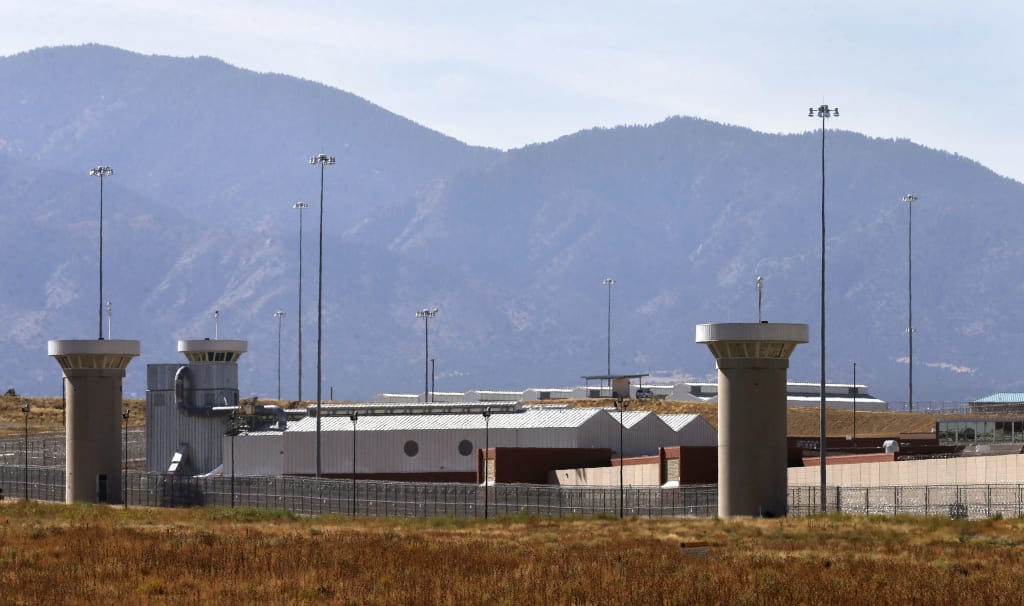
On April 21, 2005, at America’s most secure federal prison—ADX Florence in Colorado—guards made a shocking discovery. Inside the recreation yard of the so-called “Alcatraz of the Rockies,” an inmate was found bloodied, motionless, and near death.
The scene raised a chilling question: how could a prisoner be murdered in broad daylight, inside the most tightly controlled prison in the United States? Even more disturbing, why did it take nearly ten years to solve the case when the killing was caught on camera?
This is the story of the murder of Manuel “Tati” Torrez, a Mexican Mafia leader, and the years-long investigation that followed.
Life Inside America’s Supermax
ADX Florence is infamous for its design. Inmates spend 23 hours a day in 7-by-12-foot soundproof concrete cells. Their narrow slit windows allow only a view of the sky, cutting off any meaningful contact with the outside world. Meals are delivered through a slot, showers are automated, and human interaction is minimal.
Because of these strict conditions, recreation time is one of the few chances inmates have to interact. It’s also when guards expect illicit activity—passing notes, trading contraband, or smuggling weapons. That morning, guards Jose Guadian and his partner scanned security feeds, looking for exactly that kind of behavior.
Instead, at 8:21 a.m., they spotted something far worse: a man lying motionless in the far corner of the yard.
Lockdown and Discovery
Within seconds, ADX Florence went into lockdown. Doors slammed shut, sirens blared, and guards formed a perimeter around the yard. Prison rules dictated they couldn’t rush in until enough inmates were secured to guarantee a three-to-one guard-to-prisoner ratio.
Medical staff were first to reach the victim. He had been beaten so badly his face was unrecognizable, his eyes swollen shut. His injuries were compared to what doctors saw in victims who had jumped from Colorado’s thousand-foot Royal Gorge Bridge. Though paramedics rushed him to the hospital, he was likely already dead inside the prison walls.
The First Clues
As inmates were escorted back to their cells, guards noticed one man, Richard “Chuco” Santiago, had blood on his shoes. When they returned to seize his clothes, Santiago was frantically dunking them in his toilet, trying to destroy evidence.
Security footage soon revealed the full story. The victim was Manuel “Tati” Torrez, a senior Mexican Mafia leader. Video showed Torrez stretching in the yard when Santiago approached with another inmate, Silvestre “Chikali” Rivera. Torrez extended a hand in greeting—only for Santiago to punch him in the face.
For six straight minutes, Santiago and Rivera stomped, kicked, and beat Torrez to death. At one point, Santiago even paused to get a drink of water before resuming the assault.
The Mexican Mafia Connection
All three men—Torrez, Santiago, and Rivera—were tied to the Mexican Mafia, or La Eme. Founded in California’s prison system in the 1950s, the gang united Mexican-American inmates under a single banner. Its rules were absolute: loyalty, obedience, and violence. Disobedience, snitching, or defying orders often meant death.
Torrez had been a ranking member since the 1960s, running a lucrative extortion racket. Santiago, already a made member, had earned his place by committing murder behind bars in 1989. Rivera, a career criminal and bank robber, was an associate desperate to prove himself and earn full membership.
For years, Torrez had carried a deadly secret. In the early 1990s, he murdered a fellow Mafia member to expand his own territory. By the time other leaders discovered his betrayal, Torrez was already locked up in ADX Florence. But in La Eme, death orders never expire—they wait as long as it takes.
The FBI Investigation
Because ADX Florence is a federal facility, the FBI led the homicide investigation. The case fell to an agent known publicly only as “Jon.” Inside Florence, Jon found walls of silence. Inmates refused to talk, fearing retaliation.
So Jon and Assistant U.S. Attorney Bob Mydans turned to the FBI’s Los Angeles office, where experts on La Eme kept detailed records. They also reached out to former Mafia members in witness protection. Piece by piece, they built a case: Torrez’s old betrayal had caught up with him, Santiago had been a designated hitman—or “torpedo”—and Rivera, eager for full membership, had acted as both messenger and accomplice.
In 2010, five years after the killing, Santiago and Rivera were indicted for murder.
Trial, Delays, and Twists
The government wanted to send a message: even inside the toughest prison, murder wouldn’t go unpunished. Prosecutors sought the death penalty, at least for Santiago. But complications arose. Rivera, a Mexican citizen, had not been properly informed of his rights under international law. Mexico lobbied against his execution, and prosecutors dropped the death penalty in his case.
Then tragedy struck. Prosecutor Bob Mydans died suddenly of a heart attack, devastating Jon, who stepped away from the case. His wife, also an FBI agent familiar with the investigation, stepped in to help carry it forward.
Rivera’s trial was high-security. Jurors were kept anonymous, his defense brought in a surprise witness, and Rivera himself testified, claiming self-defense. He argued Torrez had threatened his life, and Santiago had stepped in to protect him. Rivera insisted he joined the fight only out of fear for his own survival.
The jury didn’t buy it. They convicted Rivera of first-degree murder in 2015—ten years after the killing. Santiago later pleaded guilty to avoid the death penalty. Both men received additional life sentences.
Aftermath: No Winners
Justice was technically served, but there were no winners. Torrez, though a ruthless gangster, left behind a family who mourned him. Rivera and Santiago, already serving life sentences, would never see freedom again.
For the FBI, the case brought no closer understanding of La Eme’s inner circle. The Mexican Mafia’s secrecy remained intact, its power undiminished. Even with convictions, the higher-ranking leaders who had ordered the hit were beyond reach.
Conclusion
The murder of Manuel “Tati” Torrez at ADX Florence was a brutal reminder that even inside America’s most secure prison, violence and gang power can thrive. It took a decade of investigation, countless hours of FBI work, and the testimony of defectors to bring two killers to justice.
But the case also highlighted the enduring strength of the Mexican Mafia, an organization that thrives on fear, silence, and blood. At ADX Florence, where the most dangerous men in America are locked away, the murder of Torrez showed that not even concrete walls, razor wire, and cameras can stop old grudges from finding their bloody conclusion.
About the Creator
Lawrence Lease
Alaska born and bred, Washington DC is my home. I'm also a freelance writer. Love politics and history.
Keep reading
More stories from Lawrence Lease and writers in Criminal and other communities.
Breaking Down the Charlie Kirk Shooting: DNA Evidence, Digital Trails, and Unanswered Questions
The story of Charlie Kirk’s shooting in Utah has moved fast — sometimes too fast for the public to keep up. In just a matter of days, what began as chaos at Utah Valley University has shifted into a case with DNA links, alleged digital confessions, and a suspect whose politics and personal life are under the microscope.
By Lawrence Lease4 months ago in Criminal
Former Miss Universe Canada Delegate Files $500 Million Defamation Lawsuit Against Grant Cardone and Cardone Capital in Miami
MIAMI, FL — Chealse Sophia Howell, an internationally recognized model, entrepreneur, and former Miss Universe Canada titleholder, has filed a civil lawsuit against Grant Cardone and Cardone Capital, LLC in the Eleventh Judicial Circuit Court, Miami-Dade County (Case No. 25-024299-CA-01). The complaint, officially filed on December 11, 2025, alleges defamation and tortious interference, claiming that the defendants engaged in a coordinated campaign of false statements across multiple digital platforms.
By Dena Falken Esqa day ago in Criminal
Center Stage with Paul Stewart
*** I'm keen to republish the interviews I did for my series with Vocal creators. It's been a few years and I thought it might be nice to revisit these wonderful conversations. I'll be releasing them one at a time for a few weeks/months.
By Heather Hubler3 days ago in Interview




Comments
There are no comments for this story
Be the first to respond and start the conversation.