
More of the Most Vicious Crimes of the 1970s — Part 2
A sequel was needed just to round out the worst of the worst from the 1970s

The 1970s was a heyday for serial killers. The majority of prolific serial killers that are still known today committed their crimes during this decade. The decline of serial killers since the 1970s has been attributed to advances in forensic sciences, societal awareness resulting in less easy targets, and the rise in technology used in investigations. Currently, serial murder comprises less than 1% of all homicides, according to the FBI.
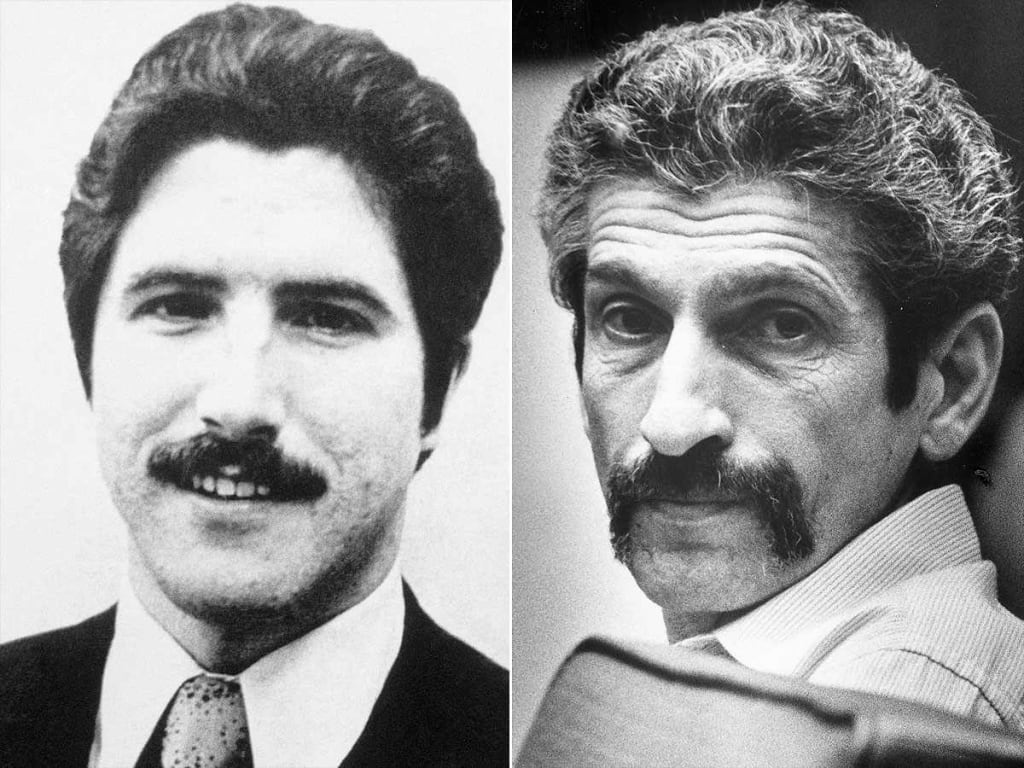
Hillside Stranglers
One, later discovered to be two, American serial killers Kenneth Bianchi and Angelo Bueno terrorized Los Angeles, California, between October 1977 and February 1978. Their nicknames derived from many of their victims’ bodies were discovered in the hills surrounding L.A.
The murderous cousins began with murdering two prostitutes who were found strangled and nude in October and November 1977. The murders went pretty unnoticed by the media until the duo moved from murdering sex workers to five middle-class young girls.
Two more murders followed and then abruptly stopped. It wasn’t until Bianchi’s arrest in January 1979 for the murder of two women in Washington that he was tied to the L.A. victims.
Bianchi and Bueno were found guilty of the kidnapping, raping, torturing, and murder of 10 women and girls ages 12 to 28. At the time, their trial was the most expensive in the history of the California legal system.
Angelo Bueno died in prison of a heart attack in September 2002. Kenneth Bianchi is still serving his sentence and is eligible for parole in 2025.
Randy Kraft — The Scorecard Killer
Randy Kraft was an American serial killer who came to be known as the Scorecard Killer, the Southern California Strangler, and the Freeway Killer. Kraft was convicted of the rape, torture, and murder of sixteen young men between 1972 and 1983 in California.
It is believed that he may have had up to 67 male victims, ranging in age from 13 to 35. Many of his victims were members of the United States Marine Corps and were found with high levels of alcohol and tranquilizers, indicating that they were unconscious when they were assaulted and murdered.
Kraft would usually lure his victims into his vehicle with the promise of a ride or alcohol. He would give them enough drugs and/or alcohol to sedate them and then bind, torture, sexually abuse, and eventually kill them. He often chose strangulation, asphyxiation, or bludgeoning to end his victim’s lives, but there were victims found to have overdosed and one that was stabbed. He would discard his victim’s bodies often beside freeways.
Many victims were burned with a cigarette lighter around their genitals, chest, and face, while some sustained extensive blunt force trauma to their head and face. Foreign objects were sometimes found inserted into the victims’ rectums and some had their genitals removed or mutilated.
Kraft’s spree finally came to an end when he was stopped by police for drunk driving with a victim deceased in his passenger seat. Also found in Kraft’s vehicle was a coded list of 61 printed terms and phrases. It is believed that they refer to all of Kraft’s victims, including initials, what was done to them, and locations where he dumped their bodies.
Kraft was found guilty of 16 counts of murder and sentenced to death. As of this writing, he still remains on death row and denies responsibility got any of the murders.
Carl Eugene Watts
“The Sunday Morning Slasher” was the name given to American serial killer, Carl Eugene Watts.
Watts is actually suspected of being the most prolific serial killer in United States history. The number of his victims may have exceeded 100.
His first murders took place when he was 20-years-old in 1974. He developed a MO of kidnapping his victims from their homes, torturing them, and then murdering them. While most of his victims were thin, attractive, white women and girls, their ages ranged from 14–44. Watts spread out his crimes through several jurisdictions, even different states, and varied his methods of killing, switching between strangulation, stabbing, bludgeoning, and drowning.
After his arrest in October 1974 for the assault and battery of a woman, he was detained at the Kalamazoo Mental Hospital. There, he was diagnosed with antisocial personality disorder and attempted suicide.
It took almost 8 years to tie the dozens of cases together, as DNA testing was still in its infancy and Watts did not often sexually assault his victims.
Most of Eugene’s attacks in the Detroit region occurred on Sunday mornings around 4 a.m., so the media dubbed him the Sunday Morning Slasher.
In May 1982, Watts attacked two women in their Houston, TX apartment. He strangled them both to unconsciousness and while preparing the bathtub to drown them, one managed to jump out of a window to escape and seek help. Watts was arrested and began to be connected to several other area murders.
After all the interviews, court appearances, and plea bargains, Watts confessed to the murders of 13 women but later claimed to have killed 40. Authorities believe that he could have murdered over 100 women.
Watts was initially sentenced to 60 years for burglary but could have been paroled as early as 2006. Finally, in 2004, more information was located tying him to one of the murders in Michigan. He was convicted in May 2004 and sentenced to life in prison.
Carl Watts died of prostate cancer on September 21, 2007.
Andrei Chikatilo
Andrei Chikatilo is a name associated with evil. As ominous as The Butcher of Rostov, The Rostov Ripper, and The Red Ripper sound, it still does little to describe just how evil this man really was.
Chikatilo grew up in Ukraine, a country at the time full of poverty, hunger, and war. He witnessed atrocities committed by the Nazis that no child should ever have to see.
Chikatilo’s impotence played a large part in his future sexual assaults. After groping several girls and realizing that their struggle is what gave him pleasure, he began assaulting students at a vocational school where he taught.
His first murder was in September 1978 of a 9-year-old girl. Despite the large amount of evidence pointing to Chikatilo, another man with a record was arrested, convicted, and executed.
After the murder, Chikatilo was only able to be aroused and orgasm through stabbing women and children to death. Due to the savageness of the murders and the way the bodies had been eviscerated, police believed the killings were conducted either by a group harvesting organs or the work of a Satanic cult.
In September 1984, two undercover detectives witnessed Chikatilo wandering through the city approaching women and girls and rubbing his genital area on them. He was arrested and when searched a knife, lengths of rope, and a jar of Vaseline were located on his person. However, he was released due to a clerical error.
In November 1990, after 6 more years of murders, an undercover police officer witnessed Chikatilo acting suspiciously and documented the incident and Chikatilo’s information. A week later, a body was discovered in the same area and logs of people in the area were pulled. Chickatilo’s name stood out as a prior suspect.
He was placed under surveillance and observed talking to lone women and children. He was finally arrested, and officers observed a bite mark on one of his fingers.
Chikatilo eventually confessed to and was charged with 53 murders. He was found guilty of 52 of them and five counts of sexual assault. He was sentenced to death plus eighty-six years imprisonment.
Andrei Chikatilo was executed in February 1994 with a single gunshot wound behind his right ear.
Ed Kemper
Ed Kemper had dark fantasies and a morbid imagination from a very young age. He had a toxic relationship with his mother, who was a neurotic alcoholic who often belittled him and abused him.
Kemper was also a large man, standing at 6 ft, 4 in by the time he was 15. He left his mother to live with his father after they separated, but his father sent him to live with his paternal grandparents.
He was only 15 in August 1964 when he got a rifle and shot his grandmother after an argument. When his grandfather returned, Kemper walked outside and shot him in the driveway. Kemper called his mother and then the police to tell them what he had done.
Kemper spent time at the Atascadero State Hospital and was eventually diagnosed with “a personality trait disturbance, passive-aggressive type”, with an IQ of 145. He was released on his 21st birthday in December 1969 into the care of his mother.
While staying with his mother, he attended community college and even tried to become a police officer, but was rejected due to his size. Of course, he and his mother’s relationship remained toxic and hostile.
While driving around in his Ford Galaxy, Kemper noticed the large number of women hitchhikers in the area. He first picked up the women and dropped them off safely at their location.
Kemper killed eight women between May 1972 and April 1973, most of which were students, earning him the moniker “The Co-Ed Killer”. He would take his victims to isolated areas where he would smother, strangle, shoot, or stab them them. He would take their bodies back to his home where he would decapitate them, have sex with their heads and corpses, and eventually dismember them.
Kemper’s last two victims were his mother and her best friend. He waited until his mother fell asleep and bludgeoned her with a claw hammer and slit her throat. He decapitated her and screamed at her head, threw darts at it, and then smashed in her face.
After he hid his mother’s body in a closet, he invited over his mother’s best friend, Sally Hallett, to have dinner and watch a movie. When she arrived, Kemper strangled her to death.
Kemper fled to Colorado, but stopped at a phone booth and called the police, confessing to an officer he knew, that he had killed his mother and Hallett. When police took him into custody, he confessed to the other six murders.
During his trial, court-appointed psychiatrists found him to be legally sane and Kemper asked for the death penalty, requesting “death by torture”. He was found guilty of all eight counts of first-degree murder but was sentenced to seven years to life for each count, to be served concurrently.
Kemper is alive and remains in prison, but is next eligible for parole in 2024.
Juan Corona
Juan Corona was a serial killer who had immigrated to the United States in 1950. Corona lived along the Feather River in Sutter County, California, worked on a peach orchard, and was married with four daughters. Though he was known to have a temper, he was a very hard worker.
In 1956, he was committed to DeWitt State Hospital in Auburn, California, and was diagnosed with schizophrenia, paranoid type. Corona was deported but returned six years later with a green card.
In 1962, he became a licensed labor contractor and was responsible for hiring workers to staff the local fruit ranches.
On May 19, 1971 the owner of a farm who used Corona to hire workers for his field noticed a hole that had been dug in his peach orchard. The next day it was filled, but the owner discovered that it held the body of a man who had been stabbed to death.
Receipts belonging to Corona were located in several graves and authorities also located several blood-stained items tying him to the murders.
All of Corona’s victims were white male drifters mostly between the ages of 47 and 64.
On January 18, 1973, Corona was convicted of 25 counts of first-degree murder and sentenced to 25 terms of life imprisonment. He appealed and received a second trial in 1982, where he was convicted again and received the same sentence.
Juan Corona died on March 4, 2019 at age 85 from natural causes.
Oklahoma Girl Scout Murders
On the morning of June 13, 1977, at Camp Scott in Mayes County, OK, three girl scouts between the ages of 8 and 10 were brutally raped and murdered. The bodies of Lori Farmer, Michele Guse, and Denise Milner were found under a tree about 100 yards from their tent by a camp counselor.
Lori and Michele were killed by blunt force trauma to the head, while Denise had been beaten and strangled with a ligature.
A suspect, Gene Leroy Hart was immediately named as he had been previously convicted of kidnapping and raping two pregnant women and was raised only a mile from Camp Scott. Not to mention, he had been at large after escaping the Mayes County Jail in 1973.
The manhunt for Hart took 10 months (the largest in Oklahoma history), but he was captured at a cabin in Cookson Hills on April 6, 1978.
He was tried in March 1979 for the murders but was acquitted. While in custody, he was sent back to serve his original sentence in the Oklahoma State Penitentiary.
Two years after the murders, Hart died in prison at the age of 35 due to a heart attack.
In 2008, authorities once again compared the DNA collected at the scene of the murders to that belonging to Hart. The results were inconclusive because of the degraded samples. In 2017, $30,000 in donations were raised by the sheriff to complete the testing with the latest advances in DNA technology.
In 2022, it was announced that the DNA strongly suggests Hart’s involvement in the murders. Sheriff Mike Reed stated,
“Unless something new comes up, something brought to light we are not aware of, I am convinced where I’m sitting of Hart’s guilt and involvement in this case.”
About the Creator
Kassondra O'Hara
Working mom who uses her curiosity to fuel the curiosities of others ~ Writes mostly history and true crime
Keep reading
More stories from Kassondra O'Hara and writers in Criminal and other communities.
The Facebook Marketplace of Horrors: Inside the groups where bones are traded like baseball cards.
It Wasn't the Dark Web When we hear about the illegal sale of human body parts, we imagine the "Dark Web"—encrypted Tor browsers, Bitcoin wallets, and shadowy Russian servers. The terrifying reality of the Jonathan Gerlach case is that he wasn't hiding in the digital shadows. He was hiding in plain sight.
By Sunshine Firecracker4 days ago in Criminal
What DHS Secretary Kristi Noem said vs. what the videos show
NBC News and PBS recapped the competinBelow is a structured, evidence-backed analysis of the Minneapolis ICE shooting and the claims made by DHS Secretary Kristi Noem—including the applicable federal laws/policies and how intent vs. recklessness factor into a potential case. I’ll keep this clear, precise, and grounded in the video evidence and governing law.
By Organic Products 6 days ago in Criminal
My New Book is Finally Here
My poetry collection Beautiful and Brutal Things is done. It's actually done and finally published over 270 pages. Over a year of my life went into this book. More than a year, really. Long days at my computer, sometimes seven days a week because I couldn't stop even when I probably should have. Then two months of editing that felt harder than the writing itself. But it's finished, and I'm still standing, and the book is real.
By Tim Carmichael2 days ago in BookClub



Comments
There are no comments for this story
Be the first to respond and start the conversation.