
The 9 Most Vicious Crimes of the 1970s
Just the beginning of the most vicious crimes that took place between 1970 and 1979


The 1970s was prime time for serial killers. It is considered “the golden decade” by crime enthusiasts. With hitchhiking and freedom culture on the rise, their victim pools were exploding.
While serial killers are typically the most well-known criminals, especially those who emerged during the 1970s, I try not to let them be the sole focus of these lists. However, considering the majority of serial murderers who are household names began their crimes during this time, it’s hard to avoid.
John Wayne Gacy
John Wayne Gacy, in my opinion, is one of the most sadistic and gruesome serial killers in history. I’m not sure exactly which aspects of his crimes are the most terrible, but I feel nauseous every time I read or write about him.
Gacy was well-liked in his community and was active in political organizations, planning gatherings in his neighborhood, and being a part of the Jaycee’s civic group. He was a building contractor and a member of the “Jolly Joker” club who frequently dressed up as clowns for children’s birthday parties and charity events.
This led the media to call him “The Killer Clown” after his arrest.
Gacy lured his victims to his home with the promise of construction work or some other ruse. He then sexually assaulted and tortured them before killing them. His method of choice was strangulation.
His first known murder was in January 1972. Gacy lured 16-year-old Timothy McCoy to his home for sex. The murder was accidental but awakened a monster in Gacy. He discovered that he received sexual gratification from the killing and that for him, murder was the “ultimate thrill.”
Gacy liked to trick his victims into letting him handcuff them with a promise of showing them a “magic trick.” After their murders, he would hide their bodies in a crawl space in his home.
Even though he was questioned several times in the disappearances of these boys, the police always believed Gacy. On December 11, 1978, 15-year-old Robert Piest went missing after telling his mother that he was going to Gacy’s to talk about a possible construction job.
When he didn’t return, a missing persons report was filed and Gacy’s home was finally searched. A second search revealed the bodies buried beneath his house.
Gacy was arrested in 1979 and confessed to the murders. He was charged and found guilty of the murders of 33 teenage boys and young men.
John Wayne Gacy was executed by lethal injection on May 10, 1994.
Daniel Camargo Barbosa
Daniel Camargo Barbosa, of Colombia, also known as “The Sadist of Chanquito” was exactly that. He was what you imagine when you think of pure evil.
One of the most prolific serial killers in history, Barbosa blames his crimes on the fact that his stepmother abused and humiliated him. She forced him to go to school dressed as a girl, where he was mocked.
As an adult, he fell in love with a woman named Esperanza. Barbosa was distraught when he found out that she wasn’t a virgin. To remedy this “problem”, he made a deal with Esperanza that he would stay with her if she would help him in finding virgin girls for him to rape.
After five rapes, the couple was arrested. Barbosa was released after eight years in 1973. Over the next several years, Barbosa worked a variety of jobs but mostly focused on being a heinous predator.
In the late 1970s, he kidnapped, raped, and murdered a nine-year-old girl. He was arrested and sent to prison for a term of 25 years on the island of Gorgona, Columbia in 1977. Using a self-made raft, he was able to escape the island and travel to Ecuador.
Barbosa then went on a raping, torturing, and murdering rampage.
He was captured in 1986 after committing his last murder and was found with his victim’s bloody clothes on his person. He claimed to have murdered 72 girls in total.
Barbosa was only sentenced to 16 years in prison.
As fate would have it, Barbosa was stabbed by an inmate who happened to be the nephew of one of his victims. He died in 1994 at the age of 64.
It is believed that Barbosa’s true number of victims lies somewhere between 72 and 180.
Jim Jones
Jim Jones was the leader of the cult known as “The People’s Temple”, where his followers were promised “utopia”.
Beginning his church in Indianapolis, Indiana, Jones quickly gained a reputation as an evangelist and healer. He formed the “Wings of Deliverance” Church in 1955, which soon became The People’s Temple.
In the 1960s, he and his “flock” of over 100 members moved to Northern California. Jones set his sights on expanding his church and opened a branch in San Francisco. By 1969, the membership had risen to 300.
Jones had a way of drawing people in with his “teachings”. He was able to talk members into signing over all they owned to him. He also discouraged sex and romantic relationships. This didn’t stop him from having many adulterous affairs.
As his temple grew, so did his drug use, paranoia, and reports of abuse. After several accusations and investigations, Jones and his planning commission sought to “escape the persecutions” of the United States and move the People’s Temple to Guyana.
In May 1977, Jones and about 600 of his followers arrived in “Jonestown” and 400 more followed. His people were forced to work the grounds for 12 hours a day and then retire to buildings suitable for only about 200 people.
It wasn’t long before a group later called the “Concerned Relatives” began contacting government officials when family members who were also members of the People’s Temple in Guyana reported that they were not being allowed to return to the U.S.
In November 1978, Congressman Leo Ryan, along with Temple member relatives, an NBC camera crew, and newspaper reporters traveled to Guyana to find out the truth about what was taking place there.
After a reception for the visitors was held at the Jonestown pavilion, one member attempted to cut Ryan’s throat. He, his entourage, and 15 People’s Temple members who wanted to fly back to the United States headed for the airstrip. As they began boarding the planes, two of Jones’ guards and one of the supposed defectors drew weapons and began firing.
Congressman Ryan and 4 others were killed on the dirt airstrip. The others escaped into the jungle and were kept alive by natives until help arrived.
Back at the compound, Jones and his most dedicated followers prepared a large metal tub with grape Flavor Aid, and a deadly concoction of diphenhydramine, promethazine, chlorpromazine, chloroquine, chloral hydrate, diazepam, and cyanide.
Jones called the followers to the pavilion and raved about how the military would soon descend on them and kill them all. He instructed his people to commit “revolutionary suicide” by drinking the poisoned punch.
Armed guards surrounded the community. Those who did not drink were forcibly injected with a syringe. Those who tried to run were shot. Only 85 members at the site survived by running into the jungle.
Jones decided not to go through the hellacious death that he witnessed his followers around him suffer. Instead, he instructed someone to shoot him in the head.
At the end of the day, 909 people were dead, 276 of them children. It was the greatest loss of life during a deliberate act until the terrorist attacks of September 11, 2001.
Ted Bundy
One of the most well-known serial killers in history, what made Ted so fascinating is that he made people realize that monsters don’t always look like a monster.
Ted Bundy was a young, handsome, law student who used his charm and wit to lure his female victims into a false sense of security. Once he had them, however, the monster released its craving for brutality.
His first known victim was 18-year-old Karen Sparks, whom he bludgeoned with a metal rod from her bed frame. He then used the rod to sexually assault her. Sparks survived but was left with extensive physical disabilities from her injuries.
During the same period, Evergreen State College students Donna Manson and Susan Rancourt went missing. Witnesses reported seeing each woman talking to a man in a sling before their disappearance. In May, Oregon State University student Roberta Kathleen Parks went missing while on her way to have coffee with friends.
On June 1, Brenda Ball went missing after being seen talking to a nice-looking man wearing a sling. The only common factor amongst the missing women appeared to be that they had long, brown hair parted down the middle.
Less than two weeks later, University of Washington student Georgann Hawkins disappeared while walking down an alleyway between her and her boyfriend’s apartments.
Finally, on July 14, Janice Ott and Denise Naslund were abducted from Lake Sammamish State Park only 4 hours apart. Witnesses were able to provide the police with a detailed description of the suspect and his car. Nevertheless, Bundy was able to continue to evade capture and headed to Salt Lake City.
There, a string of murders leading to the deaths of at least five women captured the attention of Bundy’s girlfriend, Elizabeth Kloepher, who notified the Salt Lake Sheriff’s Office. This was her third time reporting her suspicions about Bundy to police.
In January 1975, Bundy relocated to Colorado. He later admitted to the murders of five women there.
Bundy was arrested on August 16, 1975, after his VW Beetle was seen in a residential neighborhood by the Utah Highway Patrol. After seeing the police vehicle, Bundy attempted to flee. Upon inspection of the vehicle, the officer located burglary tools, ski masks, handcuffs, rope, and other suspicious items.
While he couldn’t be held, this led police to begin really looking into Theodore Bundy.
Bundy was identified by Carol DaRonch, a would-be victim who escaped, as the man who kidnapped her. He was sentenced to one to 15 years in the Utah State Prison.
He was then charged with the murder of Caryn Campbell, a nurse from Colorado, and transferred to Aspen in January of 1977.
Bundy elected to serve as his own attorney and managed to escape out of a second-floor courthouse window. After 6 days on the run, he was recaptured.
He escaped again in December 1977 after wriggling through a hole into a crawl space in the jail’s ceiling and found his way to Tallahassee, FL.
On January 15, 1978, Bundy entered Florida State University’s Chi Omega sorority house and unleashed the monster.
He beat and garroted Margaret Bowman, then beat and strangled Lisa Levy. He tore one of her nipples, bit her buttock, and sexually assaulted her with a hair mist bottle. He then attacked Kathy Kleiner, breaking her jaw and lacerating her shoulder, followed by Karen Chandler who he gave a concussion, broken jaw, lost teeth, and a crushed finger.
Chandler and Klein survived. Bundy was seen leaving the house by another sorority sister. The attacks took place in less than 15 minutes.
He also attacked student Cheryl Thomas in her apartment, who was left deaf and with equilibrium damage.
His last victim was 12-year-old Kimberly Dianne Leach. Bundy raped her before slitting her throat.
On February 15, 1978, Bundy was stopped by a Pensacola police officer and after assaulting the officer and attempting to flee, was apprehended.
The trial for the Chi Omega murders began in June 1979 in Miami and on July 24, Bundy was convicted of the two murders, three counts of attempted first-degree murder, and two counts of burglary. He was given the death penalty.
Six months later, in Orlando, he was tried for the murder of Kimberly Leach. He was found guilty again and come February, was sentenced to death again.
Bundy eventually confessed to all of the crimes he was suspected of committing and even to some that weren’t known to investigators.
Theodore Robert Bundy was executed by electric chair on January 24, 1989.
Joseph James DeAngelo
Responsible for at least three separate crime sprees throughout California, the Golden State Killer spent four decades hiding under law enforcement’s radar. When all was said and done, he committed at least 13 murders, 51 rapes, and 120 burglaries.
This prolific serial killer’s era of terror took place between 1974 and 1986. After 1986, he seemed to simply disappear.
Joseph James DeAngelo is known as the Visalia Ransacker, the East Area Rapist, The Original Night Stalker (not to be confused with Richard Ramirez), and finally The Golden State Killer.
DeAngelo, born in 1945 in New York, served with the United States Navy in the Vietnam War for 22 months.
He became a police officer in 1973 with the Exeter, California Police Department. He worked the burglary unit from 1973–1979, which happened to coincide with the 20 months that nearby Visalia, Exeter, and Cordova, California experienced a surge of burglaries.
It appears that his first murder occurred on September 11, 1975, when he was surprised by Claude Snelling, the father of a 16-year-old girl that he was attempting to kidnap.
When DeAngelo moved to the Sacramento area in 1976, his burglaries then escalated to rapes. It was there that he began working at the Auburn Police Department, where he served from August 1976 to July 1979.
He stalked middle-class neighborhoods and originally targeted women who lived alone or had children. It’s believed once he chose a victim, he would break in prior to the attack to unlock windows, unload guns, and plant ligatures and weapons for his later use.
Once he was ready, he would break in, awaken the sleeping victim by shining a flashlight in their face, and threaten them with a gun.
He later changed his victim profile to couples.
He would bind, blindfold, and gag his victims with shoelaces or towels he had cut into strips. He would have the female tie up the male and then bound the female himself.
He would separate the couple and would often stack dishes on the man’s back, threatening to kill everyone in the home if he heard them fall. He would proceed to rape the female, usually multiple times.
DeAngelo often spent hours in his victim’s homes. He would ransack drawers and closets, eat their food, drink beer, and go back to rape and threaten the victims after they thought he had left.
You can view a list of all of the rapes DeAngelo is suspected of committing here. They occurred between June 1976 and July 1979, then abruptly stopped.
Interestingly, DeAngelo was fired from the Auburn Police Department in July 1979 after shoplifting a hammer and dog repellent and sentenced to six months probation. During his termination process, he threatened to kill the chief of police and stalked the chief’s home.
After his termination, he moved to Southern California, where more attacks began taking place. Unfortunately, this time, DeAngelo graduated to murdering his victims.
On December 30, 1979, Robert Offerman and Debra Manning were attacked and murdered. Offerman’s ligatures were untied, indicating he tried to fight off the attacker.
On March 13, 1980, Lyman and Charlene Smith were bound with a drapery cord and then bludgeoned to death with a log from the woodpile on the side of their home.
The attacks and murders continued, with each of the women being raped before being killed until May 1986. A list of all the victims can be viewed here.
Initially, the burglaries and rapes in central California and the murders in southern California were not suspected to have been committed by the same individual. However, decades later, DNA would tie them all together.
On June 15, 2016, the FBI released new details of the crimes as well as new composite sketches of the suspect, and a $50,000 reward for information.
Eventually, using genetic genealogy through GEDmatch, investigators were able to identify distant relatives of the Golden State Killer. They used the information to begin narrowing down suspects and eliminating them one by one. Finally, there was only one left: Joseph James DeAngelo.
As of the writing of this article, DeAngelo is still alive and in prison where he is serving multiple life sentences.
Dr. Harold Shipman
Dr Harold Shipman was an English general practitioner and is believed to be one of the most deadly serial killers in recent history.
Shipman took his first position as a general practitioner in 1974 at the Abraham Ormerod Medical Center in Todmorden. Only a year later, he was caught forging prescriptions for personal use. He was fired and required to attend a drug rehabilitation clinic.
Throughout the 1980s, he continued his work as a GP and established his own surgery in 1993. He was well respected in his community and was even interviewed for a documentary “World in Action”, where he spoke on how the mentally ill should be treated by the community.
It wasn’t until March 1998 when suspicions turned to allegations when concerns were brought to John Pollard, the coroner for the South Manchester district about Shipman’s high death rate among his patients. This included suspicion based on the number of cremation forms that needed to be countersigned for the deaths of elderly women. The investigation was closed in April due to lack of sufficient evidence.
Shipman killed three more people after the investigation was closed.
In August of 1998, a taxi driver went to police with suspicions about Shipman as he would take elderly patients to the hospital, in seemingly good health, and they all seemed to die.
Shipman’s last victim Kathleen Grundy, a former mayor of Hyde was found dead in her home on June 24, 1998. Shipman was the last person to see her alive and it was later discovered that her will excluded her daughter and grandchildren, but named Shipman as the recipient of 386,000 pounds.
An investigation was opened, Grundy’s body was exhumed and was found to contain traces of diamorphine (heroin). With this evidence, investigators began looking into other deaths associated with Shipman. Looking at 15 other cases, they discovered a pattern of administering lethal doses of diamorphine, signing the death certificate, and falsifying their medical records.
Shipman’s trial began on October 5, 1999, and he was charged with the murders of 15 women between 1995 and 1998. He was found guilty on all 15 counts and 1 count of forgery. He was sentenced to 15 life sentences and issued a whole life tariff, ensuring he would never be paroled.
Shipman hanged himself to death in his jail cell on January 13, 2004, at age 57.
Chris Gregg, a senior Yorkshire detective led an investigation in 2001, with a conclusion that Shipman had murdered at least 218 of his patients between 1975 and 1998.
John List
John List was a mass murderer who killed an entire family and then seemed to simply disappear.
List murdered his wife, mother, and three children in their home in Westfield, New Jersey on November 9, 1971. It took almost a month for the family’s bodies to be found and over 18 years for authorities to track down List.
The family’s reclusive tendencies played a part in the delayed discovery, but it was delayed even further due to List’s meticulous planning of the murders.
Prior to the massacre, List sent notes to his children’s school saying that they would be out of town visiting their ailing grandmother in North Carolina for several weeks. He also stopped all milk, mail, and newspaper deliveries to the home. The bodies were not discovered until December 7th.
List used a semi-automatic handgun and a revolver to carry out his crimes. The first victim was his 47-year-old wife, Helen, whom he shot in the back of the head, followed by his 84-year-old mother, Alma, who was shot above her left eye.
As two of his children, Patricia, 16, and Frederick, 13 entered their home from school, he shot each of them in the back of the head. He then sat down and had lunch.
Afterward, List went to the high school and watched 13-year-old John Frederick play soccer. List drove John Frederick home as if everything was normal and attempted to finish his massacre as they entered the home.
It is believed however that John Frederick put up a fight as he was shot multiple times, unlike the other members of his family. After moving the bodies, cleaning up various crime scenes, and removing his photo from family photographs inside the home, List fled.
Once the bodies were discovered, a nationwide manhunt ensued. It was particularly tricky because they didn’t have any reliable photographs of List to disseminate.
It wasn’t until May of 1989 that an age-progressed clay bust was sculpted by a forensic artist and featured on “America’s Most Wanted” that a tip came in leading to List’s arrest. He was taken into custody on June 1, 1989, in Denver, Colorado, and was extradited back to New Jersey.
He was convicted of five counts of first-degree murder on April 2, 1990. He never accepted responsibility for his actions and showed no remorse. He was sentenced to five life sentences in prison.
But why did he do it? According to List, he was in dire financial straights after being laid off and the thought of accepting welfare was unacceptable. He also attributed his actions to his wife’s alcoholism and tertiary syphilis, which she contracted from her first husband.
He stated that her diseases “transformed her from an attractive young woman to an unkempt and paranoid recluse”. He claims she also humiliated him, often publicly, insulting his sexual performance.
John List died in prison from pneumonia on March 21, 2008, at the age of 82.
Peter Sutcliffe
Peter Sutcliffe was given the name “The Yorkshire Ripper” by the media, referencing Jack the Ripper because of the similarity in crimes and the location where he committed them.
Sutcliffe murdered at least 13 women and attempted to murder seven others between 1975 and 1980 in Manchester, England, and surrounding areas.
Sutcliffe began his murder spree by attacking females in residential areas but soon moved on to the red-light districts. This is because of the vulnerable environment that the women’s jobs put them in and what he perceived as the police’s flippant attitude towards the women’s safety.
The search for “The Yorkshire Ripper” was one of the largest manhunts in British history. Law enforcement was heavily criticized for their inability to find the perpetrator, especially when it was discovered that they interviewed Sutcliffe nine times during their investigation.
Sutcliffe’s first known attack was of a female prostitute in 1969. He was riding with a friend when he saw the woman walking down the side of the road and asked the friend to let him out of the vehicle. When he returned, he was breathing heavily. Sutcliffe told his friend he followed the woman and struck her in the head with a stone in a sock.
He was visited by police but was told the woman did not want to press charges.
In July 1975, Sutcliffe began his attacks on random women by striking them in the head with a hammer and slashing them with a knife. His first murder occurred that October when he murdered a 28-year-old mother of four by smashing in her head with a hammer and then stabbing her in the throat and torso.
His second murder victim, he stabbed 52 times. Through January 1981, Sutcliffe took the lives of 11 more women and attempted to kill 7 more.
He was eventually arrested during a routine traffic stop when the officer noted that his vehicle had false plates and that Sutcliffe matched many of the known characteristics of the Yorkshire Ripper suspect.
While on the stop, Sutcliffe was permitted to go behind a nearby bush to “pee”. Officers returned to the location the next day and located a knife, hammer, and rope that he had discarded.
After two days of questioning, Sutcliffe admitted that he was the man that police had been searching for. He described each attack calmly and in great detail. He claimed God had told him to murder the women and “clean up the filth”.
Peter Sutcliffe was found guilty of 13 counts of murder and sentenced to 20 concurrent life sentences. He died on November 13, 2020, in prison at the age of 74 from a heart attack.
Robert Hansen
Known as the “Butcher Baker”, Robert Hansen owned a local bakery in Anchorage, Alaska, and was married with two children. He was also an avid hunter and set several local hunting records.
He was first arrested for crimes against women in December 1971 after the abduction and attempted rape of one woman and the rape of a sex worker. He plead no contest to assault with a deadly weapon for the first offense and the rape charge was dropped as part of the plea bargain, which is sickening. He only served six months of a five-year sentence for those crimes.
It’s believed he began killing in 1972. He targeted female sex workers, who he would pick up and take them to his home where he would rape them. He would then put them in his plane and fly them to a secluded area in the Alaskan wilderness where he would “hunt” them before shooting or stabbing them.
On June 13, 1983, Hansen picked up 17-year-old Cindy Paulson and offered her $200 for her services. He took her to his home, where he held her captive, raped, and tortured her. He then took her to the airport and explained that he planned to take her “out to his cabin”.
While Hansen loaded the cockpit, Paulson escaped the car and ran toward the busy street. Hansen panicked and chased after her, but Paulson was able to flag down a passing motorist who took her to a local motel. Robert Yount, the man who picked her up, called the police to report a barefoot, disheveled, handcuffed girl who told him she had been kidnapped.
Paulson described the suspect, who police determined to be Hansen. Hansen managed to talk himself out of being considered a serious suspect.
However, Detective Glenn Flothe of the Alaska State Troopers was part of the team investigating several bodies that had been located in and around Anchorage. He believed they all had been murdered by the same person,
Flothe contacted the FBI and requested Special Agent John Douglas’ help with profiling the offender. Based on the profile, Flothe narrowed down possible suspects and finally landed on Hansen.
Using the profile and Cindy Paulson’s testimony, a search warrant was issued for Hansen’s plane, home, and vehicles. They located jewelry belonging to missing women and an aeronautical chart with little “X” marks on it. It is believed that the Xs mark the spot where he buried the women he killed.
Hansen eventually confessed to raping and assaulting over 30 women in Alaska and murdering at least 17. There is speculation that his murder total is actually between 21 to 37. Only 12 of the women’s bodies were located and returned to their families.
Hansen was sentenced to 461 years in prison without the possibility of parole. He died on August 21, 2014, at the age of 75 from natural causes.
Didn’t see who you thought would make the list? Make sure you check out part 2. Feel free to comment on what you think the worst crime of the 1970s was!
About the Creator
Kassondra O'Hara
Working mom who uses her curiosity to fuel the curiosities of others ~ Writes mostly history and true crime
Keep reading
More stories from Kassondra O'Hara and writers in Criminal and other communities.
A Mother's Love Lost
It was December 30th, 1988, just two days before the New Year. Jack Dale Walker had convinced a coworker to drive him out to the trailer where his girlfriend lived. Hansel Norton, the co-worker, had known Jack for barely three full weeks. Hansel was trying to be a good friend to this new friend. So, Jack, was young, only 22 years old and appeared to be love sick for the girl who was the mother of his baby.
By Cassie Moore3 days ago in Criminal
Inside the House of Skulls: The Full Timeline of the Jonathan Gerlach Investigation
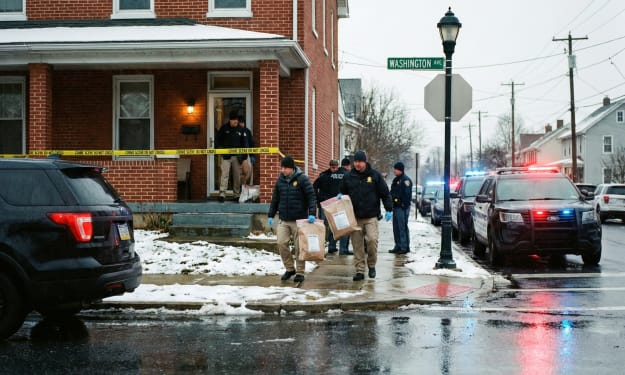
INVESTIGATION TARGET: JONATHAN C. GERLACH INCIDENT LOCATION: 100 WASHINGTON AVENUE, EPHRATA PA CHARGES: ABUSE OF CORPSE (x100), THEFT, DESECRATION STATUS: INCARCERATED ($1M BAIL) KEYWORDS: #HouseOfSkulls #JonathanGerlach #EphrataCrime #MountMoriah
By Sunshine Firecrackerabout 4 hours ago in Criminal
Wild Card Weekend Recap: What Happens Now?
I think I figured out why I love Wild Card Weekend so much. It's because it's the first playoff anything of the calendar year. The NFL season starts in the fall, and once upon a time, the champion was crowned either on or slightly before New Year's. The evolution of the NFL schedule has resulted in the playoffs starting just into the New Year, and currently, the final week of the season falls on the first weekend of the New Year, with Wild Card Weekend coming a week after that. So yes, chronologically, the NFL's Wild Card Weekend serves as the first playoff anything of the calendar year.
By Clyde E. Dawkins5 days ago in Unbalanced



Comments
There are no comments for this story
Be the first to respond and start the conversation.