
Missing in the Catalina Foothills: The Ongoing Search for Nancy Guthrie
The Ongoing Search for Nancy Guthrie

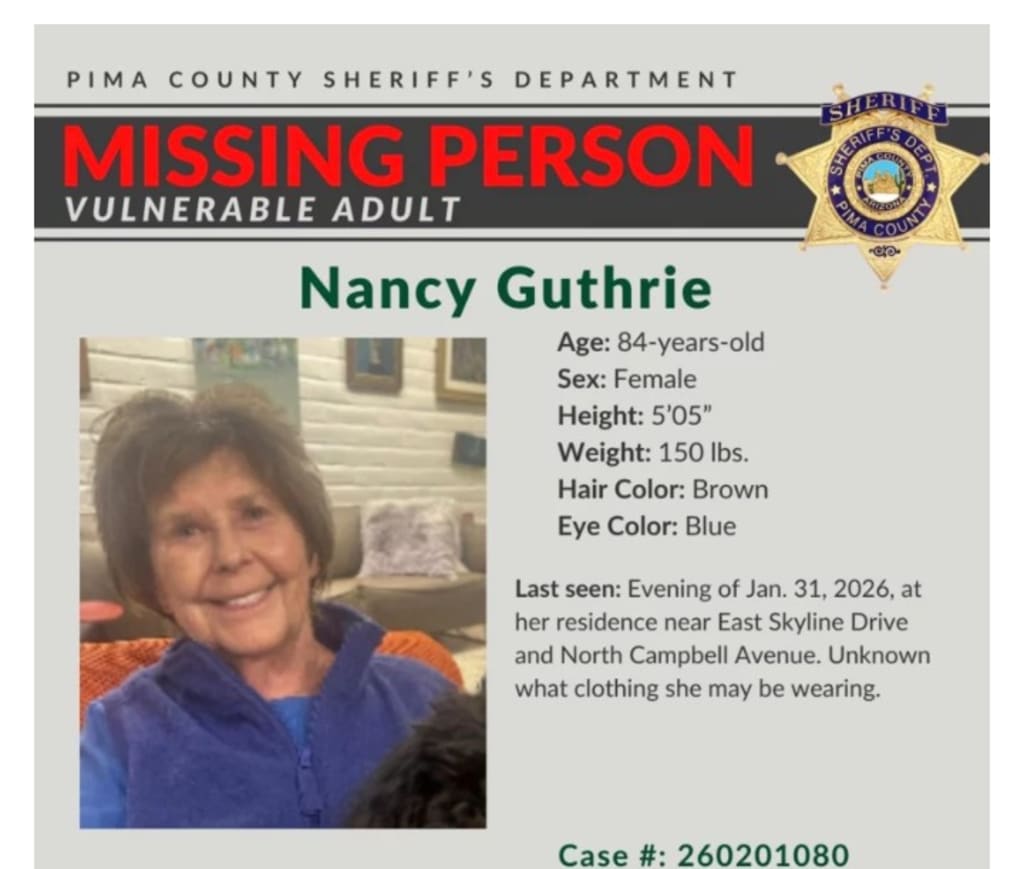
Missing in the Catalina Foothills: The Disappearance of Nancy Guthrie
A developing case, a frightened family, and the unanswered questions surrounding a vanished mother
Some true-crime stories come from cold files and old court transcripts. Others are unfolding in real time — and those are the ones that feel the most unsettling, because there is no ending yet. No verdict. No resolution. Just questions.
Right now, one of those stories centers on Nancy Guthrie — an elderly Arizona woman who disappeared from her home under circumstances investigators believe point to foul play. The case has drawn national attention in part because her daughter, Savannah Guthrie, is a familiar face on morning television. But strip away the public profile, and what remains is something painfully simple: a family trying to find their mother.

This is a developing situation based on currently reported details, and like any active investigation, facts may evolve. But what is already known is deeply troubling.
The Last Normal Evening
By all accounts, the night before Nancy disappeared looked ordinary. She had been with family. There was no dramatic warning, no public argument, no sign posted to the world that anything was wrong. That normalcy is exactly what makes cases like this so disturbing — the way everyday routine can fracture without warning.
Nancy, who is in her eighties and has mobility and medical needs, returned to her Catalina Foothills home after spending time with relatives. She was expected to check in the next day through a scheduled virtual church gathering — something she reliably attended.
She never logged in.
At first, the concern was quiet. Maybe she overslept. Maybe there was a technical issue. But as hours passed without contact, worry turned into alarm. Family members reached out — and when they could not get a response, a welfare check followed.
What was found inside the home shifted this from concern to crisis.
When a Missing Person Case Turns Dark
There is a difference between someone who leaves and someone who vanishes. Investigators quickly began treating this as the second kind.
Personal essentials were still inside the house. Items someone dependent on daily medication would not normally leave behind had not been taken. That detail alone raised red flags. For older adults with health conditions, disappearance without supplies is rarely voluntary.
Signs around the property suggested disruption rather than departure. The scene did not tell a story of someone heading out for errands or travel. It suggested interruption.
And then came the detail that changed the tone entirely: physical evidence outside the residence indicating Nancy had likely been injured near the doorway area. That discovery moved the situation out of the “missing” category and into suspected criminal territory.
From that point forward, this was no longer treated as a routine search.
The Door Camera Footage
One of the most chilling elements in the timeline is the door camera recording recovered from the property.
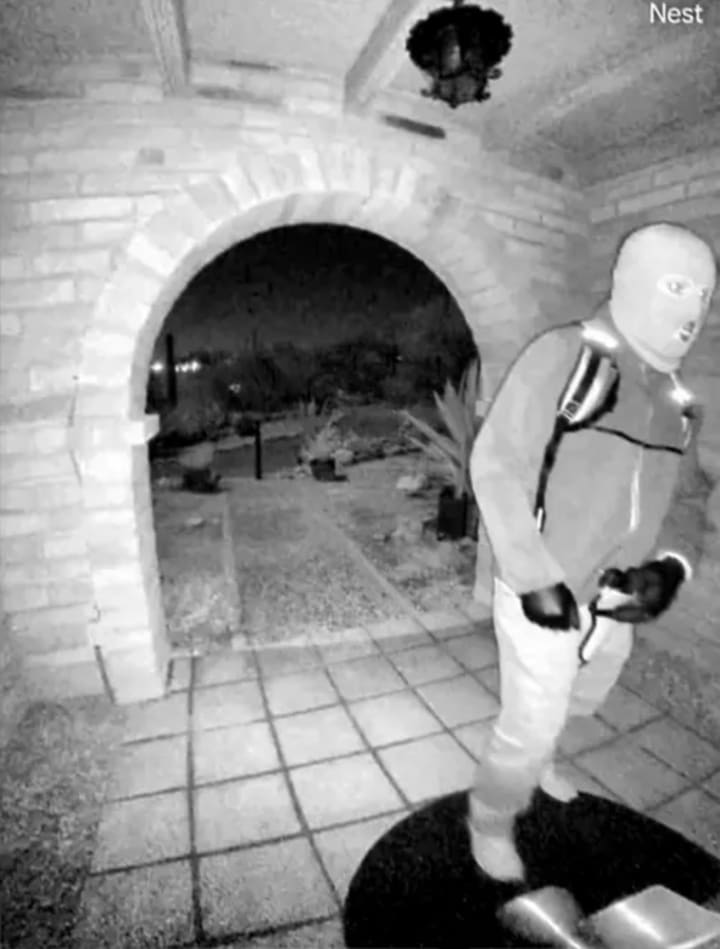
Video showed an unknown masked individual near the entrance during the early morning hours around the time Nancy is believed to have disappeared. The person appeared to interfere with the camera itself — behavior that immediately caught investigators’ attention.
Camera tampering is not random behavior. It suggests awareness. Intent. A desire not to be identified.
Moments like that change how investigators approach a case. Instead of asking where did she go, the question becomes who came to her.
Authorities later released a general description of the individual seen in the footage and began the long process of cross-checking neighborhood surveillance, traffic cameras, and private security systems in the surrounding area.
In modern investigations, video doesn’t always give instant answers — but it often creates the first real trail.
When a Case Becomes Public
Cases involving relatives of well-known media figures move into public awareness quickly. That visibility can help — and complicate — an investigation at the same time.
On one hand, attention generates tips. People check their cameras. Someone remembers a vehicle. A neighbor recalls something that felt “off” at the time.
On the other hand, publicity also generates noise — false tips, speculation, impersonators, and hoaxes. Investigators must sort signal from distraction, which takes time and manpower.
Nancy’s disappearance triggered a wave of public response. Leads began coming in. Footage was submitted. People across the region started reviewing their recordings from the relevant night and days before.
The search radius expanded outward.
The Emotional Reality for Families
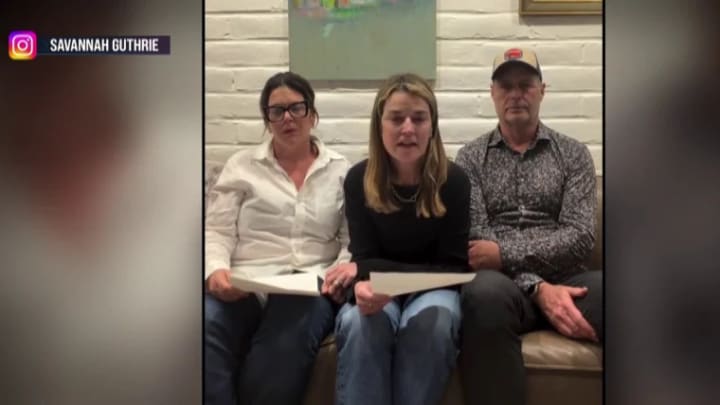
True crime audiences often focus on evidence and suspects — but the emotional center of a case like this is the family waiting in uncertainty.
Families of missing persons live in a suspended state: no closure, no confirmed outcome, no ability to grieve or celebrate — just waiting. Every phone call matters. Every rumor hurts. Every hour stretches.
Savannah Guthrie and her siblings have spoken publicly about their determination to keep the search active and visible. Their message has been consistent: do not let this case fade into the background.
Behind every press appearance is a daughter who wants her mother home.
That part is easy to forget when a case becomes headline material — but it is the part that matters most.
Investigative Complexity Behind the Scenes
Active disappearance cases involve more moving parts than most people realize. Multiple agencies often work the same file. Evidence must be logged, processed, cross-checked, and preserved. Digital forensics takes time. Video enhancement takes time. DNA confirmation takes time.
Even something that seems simple — like identifying a backpack or clothing item seen in footage — can require coordination across manufacturers, retailers, and distribution records.
Search operations also expand in layers:
immediate property sweep
neighborhood canvass
expanded radius search
roadway and desert terrain checks
video aggregation
digital trace analysis
None of that is visible to the public in real time — but it is happening.
Rumors, Ransom Claims, and False Trails

High-profile disappearances almost always attract false communications — ransom messages, fake confessions, impersonators, and attention-seekers. Investigators must examine each one seriously at first, because dismissing a real lead too early can be catastrophic.
At the same time, most of these messages turn out to be noise rather than truth.
That creates a difficult balance: investigate everything, trust almost nothing.
Cases have been delayed for weeks by convincing false leads. That is why official statements are often cautious and limited — not because nothing is happening, but because too much is.
The Questions That Still Matter
Right now, the unanswered questions are the ones that define the investigation:
Where is Nancy?
Who was at the door that night?
Was she specifically targeted — or was this opportunistic?
Did the suspect arrive on foot or by vehicle?
Did anyone see or hear something they didn’t realize was important at the time?
Most major cases are solved not by dramatic breakthroughs — but by one overlooked detail finally being recognized for what it is.
Why Ongoing Cases Are Different From Closed Ones
Writing about an open case is different from writing about a solved crime. There is no courtroom ending yet. No final theory confirmed. Responsible coverage means acknowledging uncertainty.
Details can change. Timelines can shift. Early assumptions can be corrected.
But telling the story while it unfolds still matters — because attention keeps pressure on the search, and pressure keeps cases alive.
A Community Still Watching
In the Catalina Foothills area, neighbors continue to review footage, talk with investigators, and watch for anything unusual. Community awareness is often one of the most powerful tools in a disappearance case.
Someone often knows something — even if they don’t yet realize it.
And sometimes, the smallest memory becomes the turning point.
Where Things Stand Now
At the time of this writing, the case remains open and active. No arrest has been announced. No confirmed recovery has been reported. The investigation continues.
For the Guthrie family, this is not a news cycle — it is personal. And for true-crime readers, it is a reminder that not every story we follow has reached its final chapter.
Some are still being written.
About the Creator
Dakota Denise
Every story I publish is real lived, witnessed, survived. True or not I never say which. Think you can spot fact from fiction? Everything’s true.. I write humor, confessions, essays, and lived experiences
Keep reading
More stories from Dakota Denise and writers in Criminal and other communities.
Clara Harris: The Texas Socialite
Clara Harris: The Texas Socialite Who Ran Over Her Husband — And the Affair That Turned Deadly A luxury lifestyle, a cheating spouse, a hired private investigator, and a parking-lot confrontation that ended in one of the most shocking crimes of passion in modern true crime
By Dakota Denise about 21 hours ago in Criminal
The Mystery of the Silent Thief
Detective Ravi had seen many cases in his ten years on the force, but the theft at the Grand Market was unlike anything he had ever encountered. Valuable items had gone missing from multiple shops overnight, but there were no signs of forced entry, no fingerprints, and no witnesses. The town was in panic, and the shopkeepers demanded answers.
By Sudais Zakwan8 days ago in Criminal
Super Bowl LX Recap: A Team Called Hawks
Sixty. The Super Bowl turned 60! Still amazes me that this was the sixtieth Super Bowl played in NFL history. It seems like yesterday that I watched Super Bowl XXVII, the first SB I ever watched. The QB who won Super Bowl XXVII has since called a few SBs, and will call next year's game, but that's another story. Super Bowl LX took place at Levi's Stadium in Santa Clara, California, the home stadium of the San Francisco 49ers. However, it was one of their division foes who represented the NFC, as the Seattle Seahawks faced off against the New England Patriots.
By Clyde E. Dawkins5 days ago in Unbalanced



Comments
There are no comments for this story
Be the first to respond and start the conversation.