
Massachusetts: The Tragic Loss of Deputy James Bachelder
Most disturbing crime of every state in U.S.A.

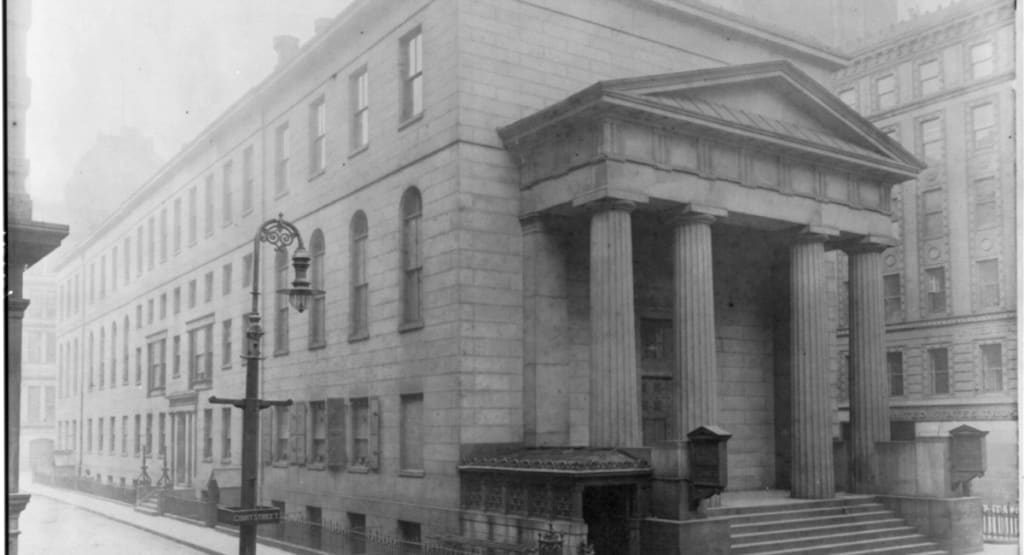
Deputy Marshal James Batchelder was shot and killed at the Boston Courthouse while he and other deputy marshals were attempting to keep a mob of citizens from freeing a prisoner in Boston, Massachusetts.
In mid‑19th‑century Boston, a series of events would lead to a tragedy that resonated far beyond the courthouse walls. Deputy James Bachelder, a dedicated law enforcement officer, lost his life in a confrontation that occurred during a highly charged moment in Boston’s history—a moment that was emblematic of the turbulent fight against the Fugitive Slave Act.
The prisoner, Anthony Burns, was an escaped slave from Virginia and was about to be returned to that state.
A group of abolitionists attempted to keep the man in Massachusetts so he would not be returned to slavery, but when their legal pleas failed, they stormed the courthouse by breaking down the main door.
James Bachelder served as a deputy U.S. Marshal during a time when the nation was divided over the issue of slavery. Tasked with guarding the controversial figure Anthony Burns—a man who had escaped from bondage—Bachelder found himself in the midst of a conflict that symbolized the larger battle between pro‑slavery and anti‑slavery forces.
On May 26, 1854, tensions reached a boiling point at the Boston Courthouse. A large crowd of abolitionists, determined to prevent Burns’ return to bondage, had gathered outside the courthouse. As Bachelder and his fellow marshals attempted to maintain order, the situation quickly deteriorated into chaos. Amid the confusion and fervor of the moment, Bachelder was injured by both a knife and a firearm.
A total of 18 people were arrested as a result of the incident. Three men were charged in connection with Deputy Marshal Batchelder's death. One was acquitted and charges were dropped against the other two after several mistrials.
Despite his injuries, Deputy Bachelder continued his duty in an effort to protect both Burns and the legal process. His commitment to his role, even in the face of overwhelming adversity, ultimately cost him his life. The injuries he sustained during the altercation proved fatal, and he passed away shortly thereafter. His sacrifice became a symbol of the price that was often paid in the struggle for justice during one of America’s most divisive periods.
The loss of Deputy James Bachelder was met with immediate public outcry. His death ignited fierce debates over the enforcement of the Fugitive Slave Act and the moral and ethical responsibilities of law enforcement during a time of national crisis. Abolitionists and sympathizers mourned his passing, viewing it as a tragic consequence of a system that forced individuals to choose between the letter of the law and the demands of justice.
In subsequent years, Bachelder’s sacrifice has been remembered in numerous historical accounts and commemorative events. His story is often cited as an example of the human cost of a deeply flawed legal system—one that prioritized the institution of slavery over individual rights and dignity.
Today, Deputy James Bachelder is honored as a martyr in the broader struggle for civil rights and justice. His dedication, even in the face of personal peril, continues to inspire discussions on the importance of moral courage and the need to protect those who stand up for what is right.
Bachelder’s legacy has also contributed to a broader historical reckoning with the injustices of the past. Educators and community leaders in Massachusetts and beyond use his story as a reminder of the sacrifices made in the fight for a more just and equitable society. His memory endures as a testament to the enduring spirit of those who believe in the power of law and justice—even when that system is deeply flawed.
About the Creator
Keep reading
More stories from Sandun Nayanajith and writers in Criminal and other communities.
Maine: The Tragic Case of Charlie Howard
In 1984, the town of Bangor, Maine, became the setting for an event that would leave a lasting imprint on local history. The case of Charlie Howard, a 23‑year‑old gay man, is remembered as a heartbreaking example of the consequences of intolerance and unchecked prejudice.
By Sandun Nayanajith11 months ago in Criminal
The Ephrata Man Who Collected Death: A Profile of Jonathan Gerlach
The Mask of Normalcy To the residents of Ephrata Borough, Jonathan Christ Gerlach was just the guy at 100 Washington Avenue. He was 34 years old. He drove a silver Toyota RAV4. He paid his taxes. There were no red flags on the exterior of his property. The lawn was cut. The siding was clean. In a town obsessed with "curb appeal," Gerlach was a model citizen.
By Sunshine Firecracker4 days ago in Criminal
For Survivors of Assault and Battery: When to Call the Police and Why It Matters
Calling the police in a moment of danger can be one of the most important decisions a person makes. Although it doesn't solve every problem and may not be the right choice in every situation, when safety is at risk, involving law enforcement can be the most effective way to prevent further harm and create the legal foundation needed for restraining orders, criminal charges, and civil claims.
By jason escotoabout 22 hours ago in Criminal




Comments
There are no comments for this story
Be the first to respond and start the conversation.