
‘Loving Pablo’: Film Review | Venice 2017
Javier Bardem and Penelope Cruz are drug lord Pablo Escobar and his mistress in Fernando Leon de Aranoa’s English language biodrama, ‘Loving Pablo.’

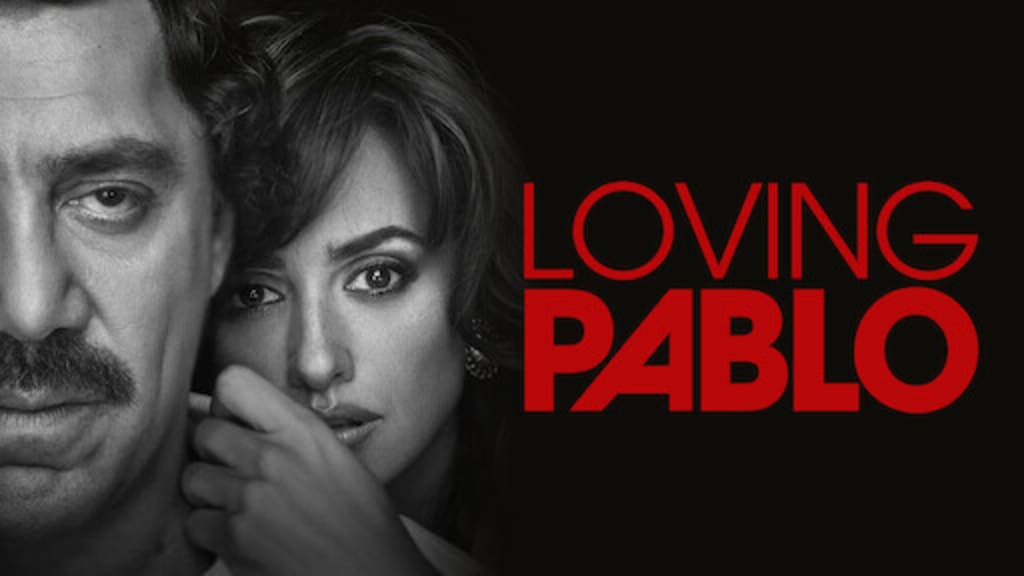
Loving Pablo is a story about the life of Colombian drug lord Pablo Escobar Gaviria, founder of the Medellin cartel, and his glamorous mistress Virginia Vallejo. The movie is directed by Fernando Leon de Aranoa, and features Javier Bardem and Penelope Cruz as the larger-than-life couple. While the film has a glossy and action-packed feel, it leaves an empty feeling when it comes to an end. The film is based on Vallejo’s own novel/memoir Loving Pablo, Hating Escobar, and is almost entirely told from her point of view.
Vallejo’s first meeting with the notorious drug lord dates back to 1981 when she is flown into a mega-party on his hacienda with other famous people. A stunning redhead, she already has her TV news show and her initial curiosity about her host could be mistaken for professional instinct. Heavy-set but magnetic, wearing a mustache and bad hair, Bardem bears a fair resemblance to Escobar. He bewitches Vallejo on the spot. When she asks him what the occasion is, he tells her he’s creating a foundation to help the homeless. But as a narrator, she explains that the party is actually in honor of the founding of the infamous Medellin drug cartel and the crowning of Escobar as its king.
In the early days of their relationship, Vallejo has the feeling he is showing her off as a trophy to his social group of drug traffickers and bodyguards. But his wealth and power are irresistible. She coyly pretends she doesn’t know how he makes a living. Actually, the cartel is doing fantastic business bringing cocaine into the U.S. In an eye-popping illustration of its power, a huge truck blocks a Florida highway to allow a plane to land. Instantly, traffickers appear out of nowhere and unload mountains of coke, then abandon the plane in the middle of the highway when the state troopers show up.
Escobar’s daring determination and wily astuteness know no bounds, and his next step is to run for office himself. He wins, of course. His platform is single-minded: to vote down a new extradition law that would allow the American DEA, FBI, and CIA to get their hands on him.
Vallejo has already been contacted by a certain Agent Shepard from the DEA (Peter Sarsgaard) in a series of lusterless, conventional scenes. In their meetings, he tries to get her to help them capture Escobar, while she tries to get him into bed with “a real Colombian woman.” Her attraction to this straight-laced agent, the polar opposite of Escobar, is inexplicable.
The action picks up back in Medellin and Bogota, where Escobar has been booted out of Congress and responds by training squads of teenage hitmen from the slums to shoot at targets from motorcycles: politicians, ministers, cops.
All-out warfare breaks out between the cartel and the government and turns the country upside down. For each policeman killed, the government executes 10 teenage boys. Escobar starts blowing up commercial aircraft. His gruesome fantasies emerge in a pair of hideous torture scenes: In one, a big dog is strapped to the back of the hapless victim and beaten until it rips the man’s throat out; later on, two business associates who resist paying Escobar are dismembered with a chainsaw in a bar.
The latter scene takes place while Escobar is living in a luxurious “prison” he built for himself, where under police protection he is reorganizing his drug empire. But the tide is turning against him, and the final scenes have a melancholy quality and the bitter taste of betrayal.
Glossy and action-packed, Loving Pablo marks a turn towards In English tinged with a Spanish accent, Bardem delivers his lines with measured calmness, perfectly capturing the menace and magnetism of the notorious drug lord. Cruz, on the other hand, gives a vulnerable and nuanced performance as Vallejo, a woman who is initially infatuated with the power and wealth of her lover but eventually becomes disillusioned with the violence and brutality of his world.
Despite the strong performances of the lead actors, Loving Pablo suffers from a lack of depth and nuance in its storytelling. The film relies too heavily on the voiceover narration of Vallejo, which often feels like a recitation of facts rather than a true exploration of character or emotion. While the film does a good job of depicting the rise and fall of Escobar, it fails to fully explore the complexities of his character or the societal and political forces that allowed him to gain power in the first place.
In addition, the film's depiction of violence and brutality can at times feel gratuitous and exploitative. While it is important to acknowledge the horrific acts committed by Escobar and his cartel, Loving Pablo often seems to revel in these acts rather than condemning them. The film's portrayal of women is also problematic, with female characters often reduced to nothing more than objects of desire or victims of violence.
Despite these flaws, Loving Pablo is an entertaining and engaging film that offers a glimpse into the dark and dangerous world of one of the most notorious drug lords in history. The film's lavish production values and strong performances from Bardem and Cruz make it worth watching, even if its storytelling falls short of its potential.
In the end, Loving Pablo is a film that leaves the viewer with a sense of emptiness and unease. It is a cautionary tale about the dangers of unchecked power and the corrupting influence of wealth and fame. While it may not be the definitive film about Pablo Escobar, it is a worthy addition to the genre of gangster films and a reminder of the devastating impact that the drug trade can have on individuals and societies.
As the film progresses, the viewer is exposed to Escobar’s various personas - the ruthless drug lord, the doting father and the suave politician. Bardem portrays each facet of Escobar’s character with aplomb, making it easy to see why he was such a magnetic personality. His on-screen chemistry with Cruz is also undeniable, with the two real-life partners sharing a palpable connection that is at times electrifying.
However, while the performances are impressive, the film itself is far from perfect. The biggest issue with Loving Pablo is that it never quite manages to strike a balance between the glamour and the grit. While the film does not shy away from the violence and corruption that defined Escobar’s reign, it also does not delve deep enough into these themes to make a significant impact. The result is a film that feels superficial and fails to leave a lasting impression.
Another issue with Loving Pablo is its pacing. Clocking in at just over two hours, the film feels bloated and meandering at times. While the early parts of the film are engaging and set the stage for Escobar’s rise to power, the latter half feels rushed and disjointed. As a result, the film’s climax lacks the emotional weight it should have had.
Despite these flaws, Loving Pablo is still worth a watch. The film’s lavish production design, stunning cinematography, and excellent performances make it an entertaining and engaging watch. Bardem and Cruz’s performances are the standout elements of the film, with both actors bringing their A-game to the table. The chemistry between the two is electric, and their scenes together are some of the film’s most memorable.
Overall, Loving Pablo is an enjoyable film that suffers from a lack of depth and pacing issues. While it may not be the definitive Pablo Escobar biopic, it is still an entertaining watch that showcases the talents of its two lead actors. If you are a fan of crime dramas and are looking for a way to pass the time, Loving Pablo is definitely worth a watch.
Production companies: Escobar Films, B2Y Eood Sofia
Cast: Javier Bardem, Penelope Cruz, Peter Sarsgaard, Julieth Restrepo
Director: Fernando Leon de Aranoa
Screenwriter: Fernando Leon de Aranoa, based on the novel by Virginia Vallejo
Producers: Dean Nichols, Javier Bardem, Miguel Menendez de Zubillaga, Kalina Kottas
Executive producer: Andrew Calderon
Director of photography: Alex Catalan
Production designer: Alain Bainee
Costume designers: Loles Garcia Galean, Wanda Morales
Editor: Nacho Ruiz Capillas
Music: Federico Jusid
Casting director: Juan Pablo Rincon
Venue: Venice Film Festival (Out of Competition)
World sales: Millenium Media
123 minutes
About the Creator
Ken Childs and the Shadow Network Behind Celebrity Surveillance
Hollywood is no stranger to intrigue. Behind the red carpets, blockbuster premieres, and glamorous headlines lies a parallel world where privacy is fragile and information can be extremely valuable. Over the years, celebrities have faced stalkers, hackers, and fraud schemes designed to exploit their wealth and visibility. Recently, reports circulating online have drawn attention to a controversial narrative involving private investigator Ken Childs and allegations that place him near the center of a disturbing story about celebrity surveillance.
By Shane Smith7 days ago in Criminal
Murdering the love of Sarah Maguire
January 2022, it was a cold winter in Tulsa, Oklahoma, one that felt colder than most for some of us in the city. If one were to be out in the evening air of the cold, it was bone chilling to the soul. On an evening like this one who wouldn’t enjoy a good home cooked meal by someone who seemed to care about them? Right, Folks?
By Cassie Moore4 days ago in Criminal



Comments
There are no comments for this story
Be the first to respond and start the conversation.