
Louvre Museum Robbery: How Came into Place?
A close look at the four-minute heist that exposed security gaps in the world’s most-famous museum — and what was really lost.

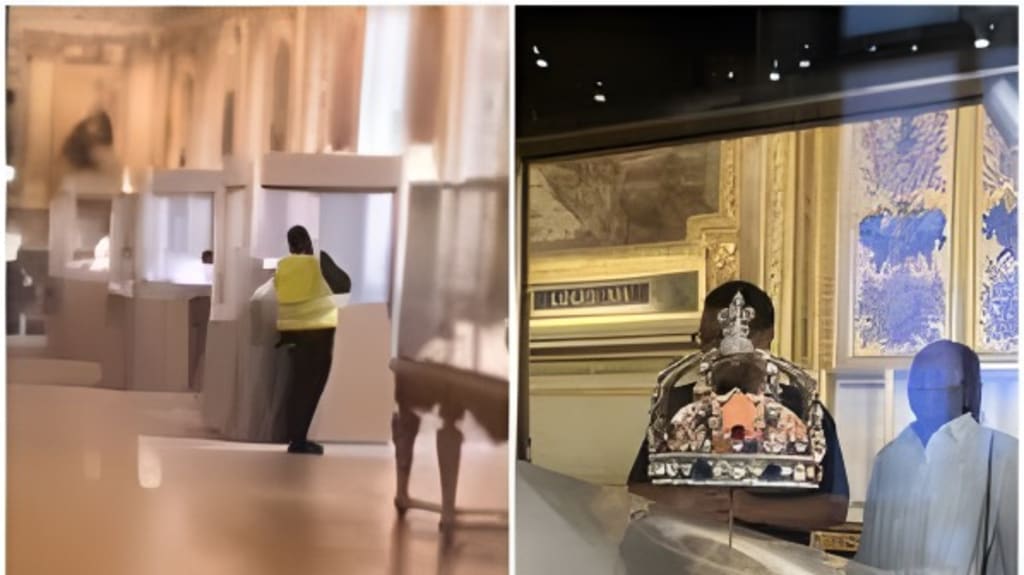
When we hear the name “Louvre Museum”, what first comes to mind is the grand pyramid standing proudly in the heart of Paris, holding within it the treasures of human civilization — from Leonardo da Vinci’s Mona Lisa to the Greek Venus de Milo. It is the largest and most visited museum in the world, welcoming over 7 million people annually. But on a calm Sunday morning of October 19, 2025, this world-famous cultural symbol became the stage of one of the most shocking robberies in modern European history.
The Icon of Civilization: The Louvre Museum
The Musée du Louvre is not merely a museum — it’s a narrative of more than 800 years of European history. Originally a royal palace built in the 12th century, it later transformed into a public museum after the French Revolution in 1793. Its walls have witnessed the reign of kings, the chaos of revolutions, and the rebirth of a nation.
Among its 380,000 objects, the most guarded and precious are housed in the Galerie d’Apollon (Apollo Gallery); where the French Crown Jewels sparkle under golden ceilings. These jewels date back to monarchs such as Louis XIV and Napoleon Bonaparte. They are more than diamonds and emeralds; they are symbols of power, identity, and continuity. And it was this very gallery that became the target of the daring robbery.
The Day Paris Froze in Shock
At around 9:30 AM, while the museum staff were preparing for another day of global visitors, a small team of unidentified individuals managed to infiltrate the Louvre premises. They entered through the Seine River side — a section of the building undergoing renovation. Using a construction elevator or basket lift, they reached the gallery level and smashed through a window to gain entry.
What’s extraordinary is that the entire heist took less than seven minutes. Within this short window, the thieves moved with military precision, directly toward the Crown Jewel display. Reports suggest they had exact knowledge of the layout, security timings, and weak points of the system. The theft was so fast that the alarms only began ringing after they had already escaped on motorbikes waiting near the side exit.
How Could They Do It?
Experts believe this was not an impulsive crime but a meticulously planned operation. The Louvre had been partially under maintenance for months, which made certain areas temporarily less monitored. That situation gave the robbers their golden opportunity.
Investigators suggest that the group might have used insider information— perhaps from construction workers or contractors familiar with the building’s internal structure. The robbers didn’t wander around; they went straight for specific targets, ignoring other artworks like Renaissance paintings or Egyptian relics. That focus indicates they knew exactly what they came for: a set of eight historic jewelry pieces, including one of Napoleon’s diamond-encrusted crowns.
CCTV footage showed them wearing full black outfits, face masks, and gloves. They carried high-tech cutting tools and used noise-suppression devices to delay detection. It was a silent, strategic, and cinematic crime — the kind of event you’d expect to see in a movie like “Ocean’s Eleven,” but not inside the world’s most secure museum.
The Loss - Beyond Gold and Gems
While the financial value of the stolen jewels is estimated at tens of millions of euros, the cultural loss is immeasurable. These artifacts represented over 300 years of royal French history. Many of them were handcrafted by 17th- and 18th-century French jewelers using rare gems from India, Brazil, and Africa; materials no longer available today.
France’s Culture Minister described it as a “national tragedy and cultural humiliation.” He called the incident “a wound to France’s artistic pride.” The government temporarily closed the Louvre for a full week to review its security structure.
The emotional impact on the French public was equally severe. For a nation that sees its art as its soul, the robbery felt like an attack on its very identity. Social media exploded with outrage, sorrow, and disbelief. Hashtags like #LouvreHeist and #CulturalCrisis trended globally within hours.
What People Think About It
Reactions were mixed; between shock, anger, and even fascination. Some people saw the robbers as criminal masterminds, while others called them cultural destroyers. French citizens flooded online forums demanding accountability from the museum administration. “How can the world’s most famous museum be robbed in broad daylight?” one Parisian wrote.
Meanwhile, others raised a more philosophical question: “Have we become so obsessed with luxury and art that even thieves now treat it as the ultimate treasure?” Tourists visiting Paris were disappointed yet strangely intrigued. Many compared the event to the 1911 theft of the Mona Lisa, which ironically made that painting world-famous afterward. Could this robbery similarly draw more attention to France’s historic jewels? Time will tell.
What’s the Truth Behind the Robbery?
As of now, investigations are ongoing. The French police have retrieved one damaged crown that was apparently dropped during the escape. Forensic teams are analyzing fingerprints, tire tracks, and surveillance data from nearby cameras. Interpol has been notified, as authorities believe the jewels may already be smuggled out of France.
Unconfirmed reports suggest that an international crime syndicate might be behind the operation, possibly linked to previous art thefts in Belgium and Switzerland. The Louvre administration, while tight-lipped, admitted that “the attack exploited a temporary weakness during renovation.” Still, the bigger truth is that no security system is perfect. The more valuable a cultural treasure becomes, the more it attracts those who wish to possess it unlawfully. And in an era where stolen art and jewels can disappear within hours into private collections or dark web auctions, recovery becomes nearly impossible.
A Wake-up Call for the Art World
The Louvre Museum robbery is more than just a theft; it’s a warning. It reminds us that even the most advanced security systems can be outsmarted, and that heritage protection requires constant vigilance.
For France, this is not merely about recovering gems; it’s about restoring confidence in its cultural institutions. For the world, it’s a lesson on how fragile our collective history can be; even when locked behind glass. The irony is painful: the Louvre, a place built to preserve human art, became the scene where art itself was stolen. And until those jewels return, a part of France’s royal sparkle remains missing.
About the Creator
Keramatullah Wardak
I write practical, science-backed content on health, productivity, and self-improvement. Passionate about helping you eat smarter, think clearer, and live better—one article at a time.
Keep reading
More stories from Keramatullah Wardak and writers in Criminal and other communities.
Epstein Files - New Revelations
When new files from the Jeffrey Epstein case were unsealed this week, the world once again found itself staring into the dark corners of power, privilege, and corruption. The files, containing thousands of emails and witness statements, expose disturbing details about how some of the world’s most influential figures—including politicians, businessmen, and celebrities—allegedly used their authority and wealth to exploit underage girls. Among the names that resurfaced was former U.S. President Donald Trump, accused in one email of spending hours with a girl connected to Epstein. Though Trump has denied any involvement, the revelations have reignited debate about morality, leadership, and the integrity of those who shape nations.
By Keramatullah Wardak4 months ago in Criminal
He Confessed to Murder in My DMs: The Dark Side of Going Viral
When your most-liked story becomes someone else's confession booth The message came in at 2:13 a.m. I saw the notification glow on my nightstand, that soft blue light that usually means spam, or a heart emoji, or someone asking, “Did this really happen?”
By abualyaanart3 days ago in Criminal
A Planetary Alignment will coincide with Mercury Retrograde
Double phenomena in the heavens Some people say in jest that the planets have aligned in their favor when life works the way they desire. Were you aware that there are seasons when things do line up in the heavens? There will be a planetary alignment AKA a planet parade, on February 28, 2026.
By Cheryl E Preston3 days ago in FYI




Comments
There are no comments for this story
Be the first to respond and start the conversation.