
Justice for Jessica: The Murder That Woke Up a Nation
How a young model's murder by a politician's son exposed India's broken justice system and led to a people's movement that changed everything

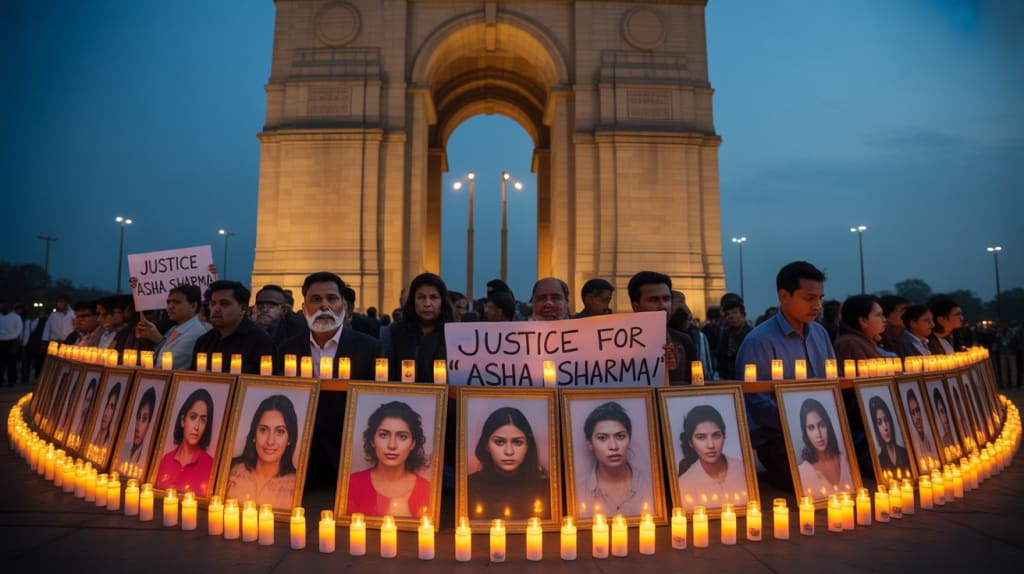
On the night of April 29, 1999, a young model named Jessica Lal was shot dead at a high-profile party in Delhi. Her crime? She refused to serve alcohol after the bar had closed.
The man who pulled the trigger was Manu Sharma, the son of a powerful politician. Surrounded by wealthy elites, witnesses, and even journalists, he walked away from the scene with no fear of consequence. What followed was a chilling test of India's justice system—and eventually, a powerful example of how public outrage and media pressure can overturn even the most rigged verdicts.
The Night Everything Changed
Jessica Lal was working as a celebrity bartender at a late-night party hosted at socialite Malini Ramani’s Tamarind Court restaurant in Delhi. It was an invite-only affair attended by Delhi's elite actors, models, bureaucrats, and businessmen.
Sometime after midnight, Manu Sharma, who was drunk and demanding whisky, approached Jessica and asked to be served. She refused. According to multiple eyewitnesses, Sharma pulled out a pistol and shot her point-blank in the head.
Jessica collapsed and died on the spot. Sharma and his friends fled the scene, leaving behind a stunned crowd and chaos.
Power vs. Justice
Despite over 100 people being present, most claimed they “didn’t see anything.” Key witnesses turned hostile. CCTV footage mysteriously vanished. The case dragged on for seven years, and in February 2006, a Delhi trial court acquitted all nine accused, citing lack of evidence.
The verdict triggered a nationwide uproar. The public saw it not as a failure of evidence, but of influence and corruption. Jessica’s sister, Sabrina Lal, refused to give up, and what followed was a movement India had rarely seen before.
Media Pressure and Public Outcry
The Jessica Lal case became a lightning rod for media-led justice in India. Major news channels like NDTV and Tehelka ran sting operations, revealing how key witnesses were bought off or intimidated. TV anchors questioned the system, held public forums, and aired prime-time debates demanding justice.
Candlelight vigils at India Gate became symbolic. Public campaigns like "Justice for Jessica" flooded newspapers, talk shows, and college campuses. Even Bollywood stars spoke out.
Under enormous public pressure, the Delhi High Court took suo motu action and reopened the case.
Justice, Finally Served
In December 2006, just 10 months after the acquittal, the Delhi High Court found Manu Sharma guilty of murder. He was sentenced to life imprisonment.
The court condemned the original trial, noting how the accused had misused power, manipulated witnesses, and obstructed justice. It was a rare and powerful instance of the system correcting itself—thanks not to legal reform, but public rage.
Manu Sharma was later released on parole in 2020, after serving nearly 14 years.
Why the Jessica Lal Case Still Matters
This wasn’t just about a single murder—it was about a system where money and influence often trample the rule of law. Jessica’s case became:
A symbol of hope for victims of power abuse
A case study in the role of media in fighting corruption
A turning point for public interest litigation and citizen activism
Sabrina Lal’s quiet strength and refusal to stay silent showed the power of persistence in the face of unimaginable pressure.
Lessons from the Jessica Lal Murder Case
Public pressure works: When justice is denied, collective outrage can change the tide.
Media can be a force for good: In an age of TRP-driven journalism, this case proved that the media can still be the fourth pillar of democracy.
Justice delayed is not always justice denied: Persistence can resurrect truth—even after years.
More than two decades later, the name Jessica Lal still echoes in India’s collective memory—not just as a victim, but as a spark that lit a fire for justice.
What Do You Think?
Do you believe the justice system would have worked without media pressure? Can we rely on public opinion to fix broken systems?
👇 Drop your thoughts in the comments below. Like, share, and follow for more true crime stories that shaped modern India.
About the Creator
Nowshad Ahmad
Hi, I’m Nowshad Ahmad a passionate storyteller, creative thinker, and full-time digital entrepreneur. Writing has always been more than just a hobby for me; it's a way to reflect, connect, and bring life to ideas that often go unspoken.
Keep reading
More stories from Nowshad Ahmad and writers in Criminal and other communities.
The Billion Dollar Illusion: How the Satyam Scam Shook Corporate India
In the crisp morning of January 7, 2009, India woke up to a confession that would rock its corporate landscape like never before. Ramalinga Raju, the chairman of Satyam Computer Services, dropped a bombshell he had manipulated the company’s financial records for years, inflating profits and creating fictitious assets. What followed was a tale of deceit, greed, systemic failure, and, ultimately, a call for reform.
By Nowshad Ahmad8 months ago in Criminal
Former DOJ Officials Break Silence on Kiernan Major Case
Through a swarm of vehicle and body doubles, elaborate disguises, sophisticated misdirection, and all-around flawless tradecraft, two senior U.S. Justice Department officials out of the Washington D.C. office met with our investigative team in a Los Angeles area home to blow the whistle on what they called "one of the most dishonest and disgraceful" cases they had ever reviewed. Our four-hour interview still feels as though it was much stranger than fiction—surrounded ostensibly by hundreds of security personnel who blocked all traffic to and from the property and implemented a stunning variety of physical and technical expertise to draw attention of potential emergency personnel and bystanders elsewhere, our team was in total awe of the immense and rather imposing capabilities of this security team. We often were unable to even focus on the interviews as we struggled to grasp whether this was reality or possibly figment of our imagination. In spite of our childish fascination, our team was able to gather a fresh and highly credible perspective that raises grave concerns about the 2022 federal indictment of Kiernan Major and many of those allegedly involved in it.
By Charlie A. Miller4 days ago in Criminal
A Transparent Look at Vocal Challenges and Top Stories
Almost three years ago, we shared a resource article that served as a place for people to suggest new challenge prompts. We thought it would be a good idea to refresh that thread, and take the opportunity to answer a few common questions about top stories, how challenges are judged and how submissions are reviewed.
By Vocal Curation Team3 days ago in Resources


Comments
There are no comments for this story
Be the first to respond and start the conversation.