
Israeli forces have killed 38 Palestinians
Israeli forces have killed 38 Palestinians in a brutal attack on the Palestinian territory of Gaza


Israeli forces have killed 38 Palestinians in the past 24 hours in the Palestinian Gaza Strip. Meanwhile, protests are underway in Libya and Jordan demanding an end to the massacre. On Friday, thousands of protesters took to the streets of Amman, Lebanon, in support of the Palestinians, including the Libyan militias. They demanded that the international community take action against Israel to stop the massacre. Thousands of people protested near the US embassy in the Jordanian capital, Amman.
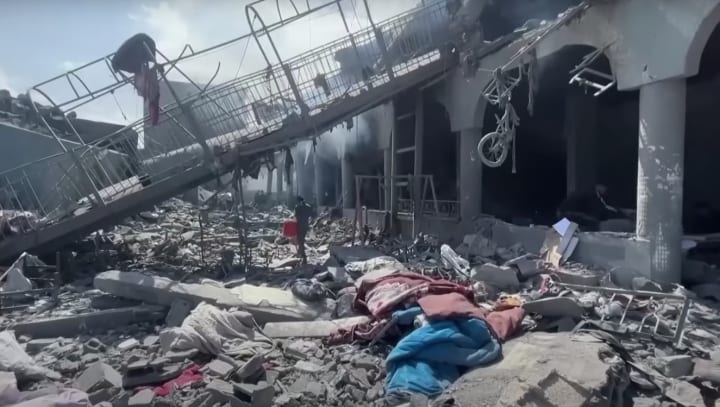
They called America a friend of Israel and strongly criticized US President Donald Trump. They commented that the massacre in Gaza is being supported by America. Meanwhile, at least five people were killed in continuous Israeli airstrikes in Khan Yunis and northern areas in southern Gaza.
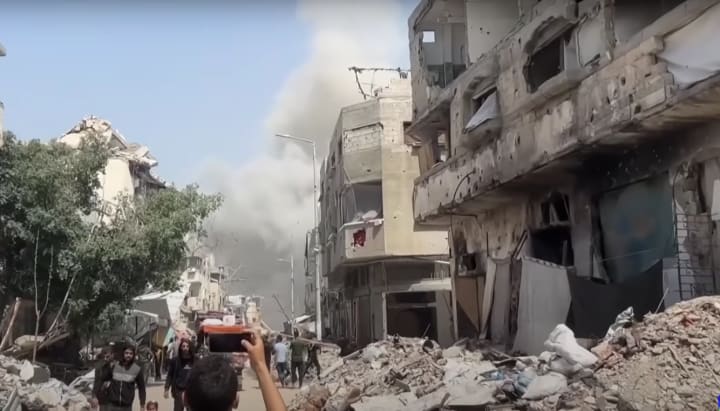
On the same day, Israeli forces killed three people in a drone strike in Khan Yunis and two in Ghuzaiya, Gaza City.Israel has been killing at least 100 Palestinian children every day in Gaza since Israel broke the ceasefire on March 18. Palestinian human rights organizations have sent a letter to UN official Voyal Karturk, calling for action against this brutality. In addition to Gaza, Israel has continued its attacks on Lebanon. Israel has carried out airstrikes on the Lebanese capital Beirut.
The crime of animals is that they were born on Palestinian soil.
Since October 7, 2023, the occupying Israeli forces have been carrying out the worst genocide in history in Gaza. The cries of helpless women and children have spread around the world. But the mute animals can no longer cry—they only have a helpless [music] look.
Since the war began, countless people have been displaced in Gaza and the West Bank. They have fled for their lives to find safe havens. As a result, countless pets have become homeless. According to a report by Al-Arabiya News, thousands of dogs, cats, horses, and donkeys have lost their owners.

There were three cat shelters in Gaza that were destroyed by bombs. A shelter in the city of Zaytan once housed more than 400 dogs—it is also now abandoned. A volunteer at the shelter told Al-Arabiya News that when the bombing started, they opened the doors of the shelter so that the dogs could at least escape and survive.
When the Israeli army ordered everyone to leave, one of their colleagues stayed there with a few dogs. But when the attacks started again, he could not save the dogs.
Although most of the members of many Palestinian families died, only pet cats or dogs remained with them. The situation of stray dogs and cats in Gaza and the West Bank is even more pitiful. These animals are constantly dying in the Israeli army's bombings. However, the animals injured in the attacks are suffering the most. Where people are not getting treatment, treatment for these animals is a luxury.
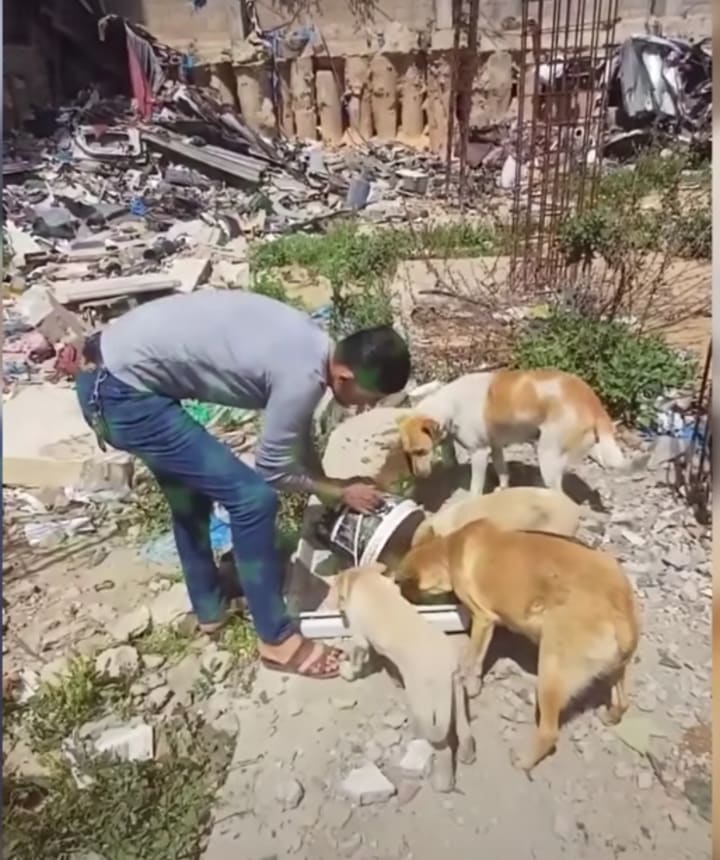
Due to the war, the food crisis in Palestine has also become terrible. Along with people, dogs and cats are suffering from severe malnutrition. As a result, they are suffering from various diseases caused by malnutrition.
In such a situation, veterinary care has become very important. But animal hospitals have now merged with the ground. Even in such inhumane conditions, many have come forward on their own initiative. They are searching for helpless, mute animals in the rubble, risking their lives.
Several organizations, including Help Animal Gaza, Salam Animal Care, Animal Friends Shelter Gaza, are providing food to the animals roaming the streets on a limited scale on their own initiative. They are providing medical treatment for injured and sick animals to the best of their ability.
Just as the cries of the children of Gaza are heard, so are the helpless looks of these mute animals.
When will the world's major organizations working on animal rights realize the pitiful condition of these animals? Was it the crime of these animals to be born in Palestine?
About the Creator
Keep reading
More stories from MD Raufur Rahman and writers in Criminal and other communities.
"The prophecy made by Prophet Muhammad (Sallallahu Alaihi Wasallam) about Palestine."
"The blessed place is Palestine—where the first Qibla of Muslims, Bayt al-Maqdis, is located. The Prophet (peace and blessings of Allaah be upon him) prayed in this holy mosque on the night of Miraj. He also made several predictions about blessed Palestine.
By MD Raufur Rahman10 months ago in Fiction
Story of Larry Hoover
Larry Hoover Legacy in Reform and Pop Culture For more than half a century, the name Larry Hoover has carried a weight that echoes through Chicago’s history and American urban culture. Often discussed in connection with crime, controversy, or organized street life, Hoover’s identity became a symbol far larger than the man himself. But beyond the headlines, beyond the mythology, and beyond the notoriety, there exists a lesser‑known story: the story of a human being who evolved, reflected, transformed, and worked to redirect others from the path he once walked. It is this story — the one buried beneath decades of public narrative — that reveals the depth of Larry Hoover’s transformation.
By Organic Products a day ago in Criminal




Comments
There are no comments for this story
Be the first to respond and start the conversation.