
I Was Catfished by Someone on the FBI's Most Wanted List
When online dating becomes a federal investigation

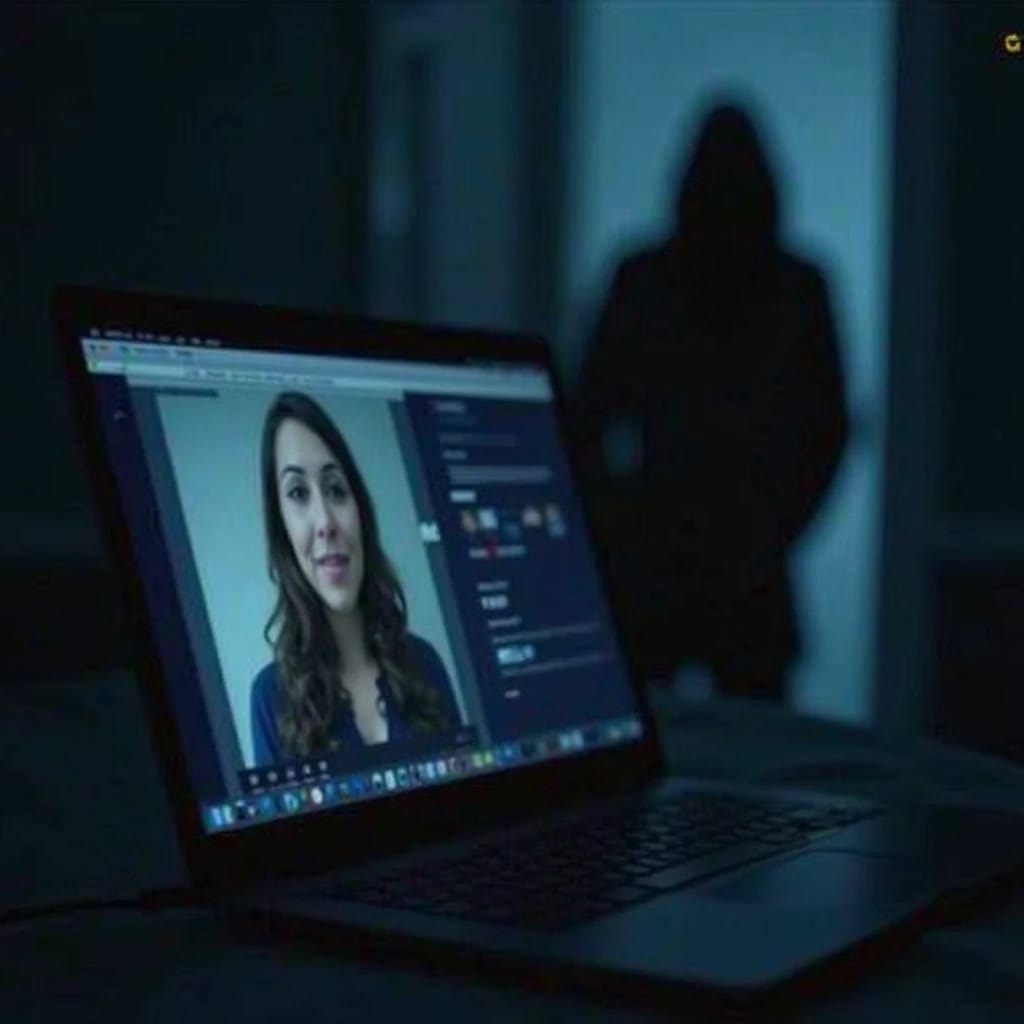
The FBI agents sitting in my living room looked exactly like you'd expect FBI agents to look—serious suits, serious expressions, and the kind of serious notebooks that make you wonder if your entire life is about to become evidence in a federal case.
"Ms. Chen," Agent Martinez said, sliding a photograph across my coffee table, "do you recognize this man?"
I stared at the mug shot of a weathered face with cold eyes and a scar running from his left temple to his jawline. The man in the photo looked like he'd lived several hard lifetimes. He looked dangerous. He looked nothing like the charming, baby-faced "software engineer" I'd been video chatting with for three months.
"I've never seen this person before in my life," I said, which was technically true. The man I knew as David Thompson had kind eyes, a shy smile, and claimed to work for a tech startup in Portland. This man looked like he could break your neck with one hand while ordering coffee with the other.
"Are you certain?" Agent Rodriguez asked, pulling out her phone. "Because this is Marcus 'The Ghost' Valdez, and he's been using your WiFi network to coordinate a multi-million dollar cryptocurrency fraud operation."
That's when my dating life officially became a federal investigation.
Let me back up. Three months earlier, I was a 29-year-old marketing manager who had sworn off dating apps after a series of spectacularly bad dates. You know the type—guys who showed up looking nothing like their photos, talked exclusively about their CrossFit routines, or tried to split the bill down to the penny. I was ready to adopt seventeen cats and call it a love life.
But my sister kept nagging me to "put myself out there," so I reluctantly downloaded TrueConnect, one of those newer dating apps that promised "authentic connections through verified profiles." The irony of that tagline would later haunt me.
David's profile was refreshingly normal. His photos showed a cute guy with dark hair and an easy smile, holding a golden retriever in one picture and hiking in another. His bio was simple: "Software engineer who loves dogs, hiking, and finding the best coffee shops in the city. Looking for someone to share adventures with."
No shirtless gym selfies. No photos with tigers. No mention of being an "entrepreneur" or "thought leader." Just a regular guy who seemed genuine.
When we matched, his first message was thoughtful: "I noticed you mentioned loving true crime podcasts. Have you listened to 'The Vanishing Point'? I just binged the whole series and need someone to discuss the theories with."
We hit it off immediately. Our conversations flowed naturally from true crime to travel to our shared love of terrible horror movies. David was funny, intelligent, and asked thoughtful questions about my work and interests. After two weeks of messaging, he suggested we move to video calls.
This is where it gets interesting. David was always available to video chat, but there were always technical issues. His camera would cut out after a few minutes, or the connection would be "too unstable" for video, so we'd switch to audio only. When video did work, it was grainy and choppy, making it hard to get a clear look at him.
"Sorry," he'd say with an embarrassed laugh, "my building has terrible internet. I've been bugging the landlord for months to upgrade."
I found his technical difficulties endearing. Here was a software engineer who couldn't figure out his own internet connection—it felt refreshingly human.
Our conversations became the highlight of my days. David was an amazing listener, remembering details about my work projects and asking follow-up questions about my family. He shared stories about his job, his coworkers, his childhood in Ohio. Everything felt natural and genuine.
After six weeks, I was completely smitten. We talked every day, sometimes for hours. David would call me on his lunch breaks, and we'd have weekend morning coffee dates over video chat. He sent me funny memes and articles he thought I'd enjoy. I started telling my friends about this amazing guy I'd met online.
The only odd thing was that David was always traveling for work or dealing with family emergencies whenever I suggested meeting in person. His grandmother was sick, then his project got moved to a different state, then his car broke down. There was always something, but he seemed genuinely disappointed each time, so I didn't push it.
"I can't wait to finally meet you in person," he'd say during our calls. "I have so many places I want to show you."
Three months in, I was starting to plan my life around someone I'd never actually met. I'd turned down dates with other people, rearranged my schedule to accommodate his calls, and even started looking at apartments in Portland because David had mentioned wanting to move in together eventually.
Then came the night that changed everything.
I was on a video call with David when I heard a strange noise in the background—like someone typing very loudly and urgently. When I asked about it, David quickly said it was his neighbor's TV and changed the subject.
But something felt off. The typing had sounded close, like it was coming from his end of the call. And there was something else—a brief moment when the video cleared up, and I could have sworn I saw someone else's reflection in what looked like a window behind him.
That night, I couldn't sleep. Something was nagging at me, some instinct I couldn't quite name. I found myself doing something I'd never done before: I reverse-searched one of David's photos.
The image search results made my blood run cold. The photo of David with the golden retriever appeared on a memorial website for a young man named Kevin Riley, who had died in a car accident two years earlier. The hiking photo was from a travel blogger's Instagram from 2019.
David Thompson didn't exist. I had been talking to someone who was using a dead man's photos.
My hands were shaking as I started digging deeper. The more I searched, the more fake everything became. The address he'd given me didn't exist. The company he claimed to work for had no record of anyone by his name. Even his supposed hometown seemed to be a fabrication.
I sat in my living room at 2 AM, staring at my laptop screen, trying to process the fact that I'd been in an intense emotional relationship with a complete stranger for three months. Someone who had lied about literally everything.
But it got worse. Much worse.
The next morning, I called my internet provider because my connection had been running slowly for weeks. The technician who came out discovered something that made my dating disaster suddenly feel like a national security issue.
"Ma'am," he said, looking confused, "you've got some kind of sophisticated network piggybacking setup here. Someone's been using your internet connection remotely. This is way beyond normal hacking—this is professional-level stuff."
That's when I called the FBI.
Agent Martinez and Agent Rodriguez arrived within hours, along with a cybercrime specialist who immediately started examining my computer and network setup. What they found was a complex digital operation that had been running through my home internet for months.
"Your boyfriend," Agent Martinez explained, "has been using your connection as a relay point for a cryptocurrency fraud operation. He's been routing transactions through your IP address to hide his real location."
The man I knew as David Thompson was actually Marcus Valdez, a 45-year-old career criminal who had been on the FBI's Most Wanted list for two years. He was wanted for wire fraud, identity theft, and money laundering in connection with a scheme that had stolen over $50 million from elderly victims.
"He's a master manipulator," Agent Rodriguez told me. "This is his pattern—he builds romantic relationships with women to gain access to their homes, their networks, their lives. You're the fourth victim we know about."
The technical setup was sophisticated. Marcus had somehow gained access to my WiFi network during one of our early conversations—probably when he'd asked me to help him "test" his connection by visiting a specific website. From there, he'd installed remote access software that let him use my internet connection as a cover for his criminal activities.
Every time we'd video chatted, every time he'd claimed to be calling from Portland or traveling for work, he'd actually been sitting somewhere else entirely, using my connection to mask his real location while he defrauded elderly people out of their life savings.
"The good news," Agent Martinez said, "is that you've helped us track him down. We've been monitoring the network traffic, and we think we know where he is."
The arrest happened three days later. Marcus Valdez was caught in a motel outside Phoenix, surrounded by laptops, fake IDs, and evidence of dozens of ongoing fraud schemes. The FBI found detailed profiles of all his "girlfriends," including pages of notes about my life, my schedule, my vulnerabilities.
Reading those notes was like looking at myself through a predator's eyes. He'd catalogued my insecurities, my hopes, my dreams—not because he cared about me, but because he was studying me like a mark.
But here's the strangest part: even knowing all of this, part of me still missed our conversations. The person I'd fallen for—kind, funny, thoughtful David—had felt real to me, even if he'd never actually existed. Marcus had been such a skilled manipulator that he'd created a version of himself that was exactly what I needed to hear.
The trial lasted six months. I testified about our relationship, about how he'd gained access to my network, about the emotional manipulation that had made me trust him completely. Marcus was sentenced to fifteen years in federal prison.
But the real sentence was what this experience did to my ability to trust. Every date since then has been shadowed by the knowledge that people can lie about absolutely everything and make it feel completely real. Every video call glitch makes me suspicious. Every person who seems too good to be true probably is.
The FBI agents told me I wasn't stupid for falling for Marcus's scheme—I was a victim of a sophisticated criminal who had perfected his techniques over years of practice. But knowing that intellectually doesn't make the humiliation any easier to bear.
I've learned to do background checks on potential dates now. I reverse-search photos, verify addresses, and meet people in person as quickly as possible. My friends joke that I've become paranoid, but they didn't have federal agents sitting in their living room explaining how thoroughly they'd been deceived.
The strangest part is that Marcus never stole money from me directly. He used my internet connection and my trust, but he never asked me for cash or credit card information. His crime was bigger than individual theft—he was stealing from hundreds of elderly people while using my life as camouflage.
Sometimes I wonder if any part of our connection was real, or if every laugh, every shared story, every moment of seeming intimacy was just him playing a role. The David I fell for was everything I wanted in a partner, which makes me wonder if Marcus was really that good at reading people, or if I was just that desperate to believe in love.
Either way, I learned that when it comes to online dating, if someone seems too perfect, too available, too interested—they probably are. And sometimes, the person on the other end of that video call isn't just lying about their height or their job. Sometimes, they're wanted by the FBI.
Trust your instincts, verify everything, and remember that authentic connections don't require perfect technical difficulties every time you try to meet in person. Sometimes the most dangerous criminals are the ones who make you feel most understood.
About the Creator
Muhammad Sabeel
I write not for silence, but for the echo—where mystery lingers, hearts awaken, and every story dares to leave a mark
Keep reading
More stories from Muhammad Sabeel and writers in Criminal and other communities.
The Blackmail Files: Uncovering the Dark Secrets of the Elite
Samantha Rivers had spent her entire career chasing the truth. As a journalist for The Sentinel, a local newspaper known for its hard-hitting investigative reporting, she had seen the ugly side of politics, wealth, and power. But nothing could have prepared her for the case she was about to dive into—the case that would shatter everything she thought she knew about the world.
By Muhammad Sabeel8 months ago in Criminal
New Turquoise Alert Issued: Latest in Isabella Comas Case | Morning News Brief
In today’s Morning News Brief, we turn our focus to the developing case of Isabella Comas, a young girl whose disappearance has captured national attention. A new Turquoise Alert has been issued, signaling a critical update in the case. The alert system, designed to assist in the rapid recovery of missing minors, has brought renewed attention to the efforts surrounding Isabella’s whereabouts. As investigators continue to piece together details, the community remains on edge, hoping for a breakthrough.
By Salaar Jamali2 days ago in Criminal



Comments
There are no comments for this story
Be the first to respond and start the conversation.