
Gilles de Rais: A Tale of Valor and Horror
Every Hero Has a Dark Side

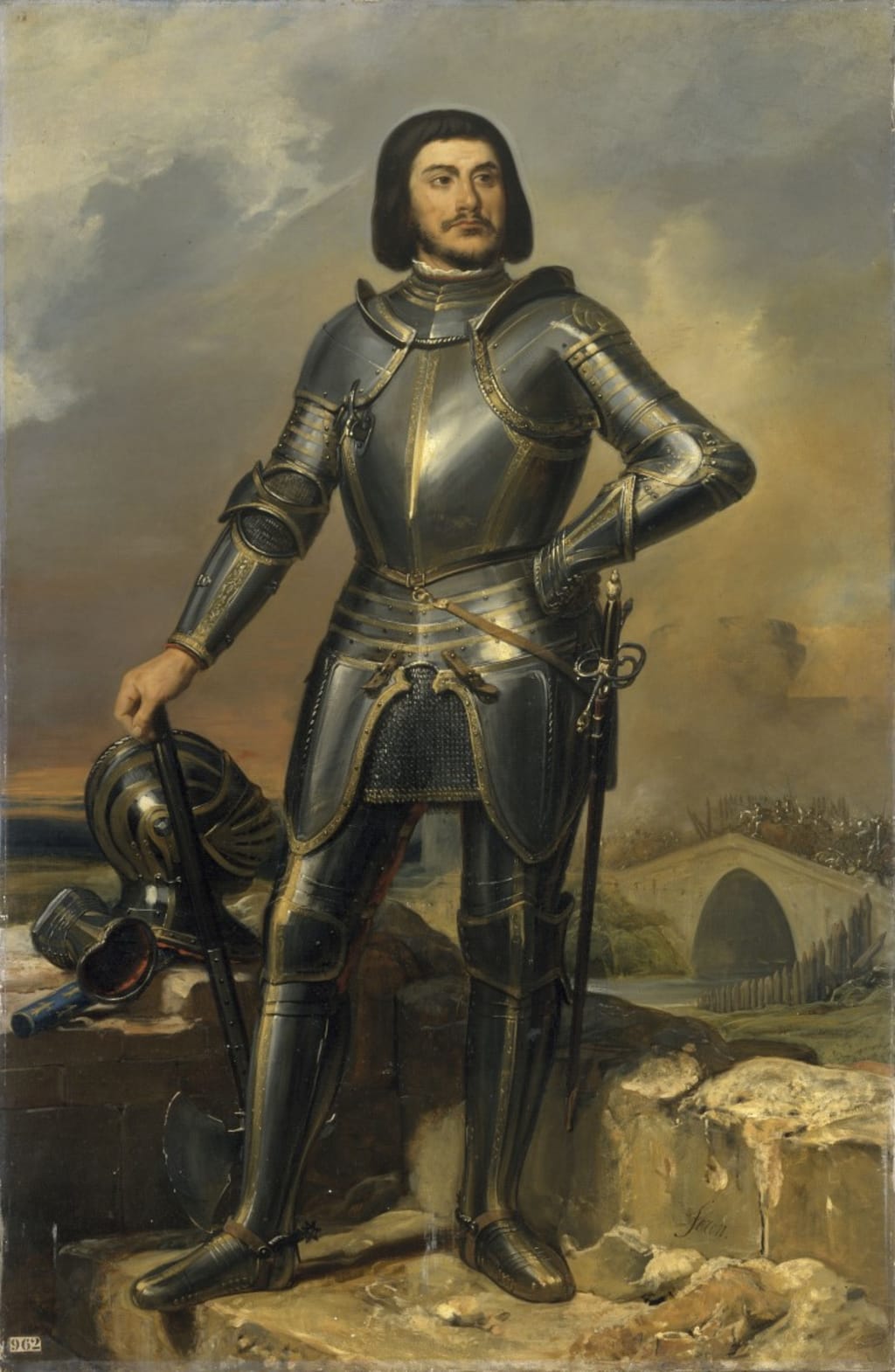
Gilles de Rais, also known by his noble title Gilles de Montmorency-Laval, was a French nobleman and a prominent military commander during the Hundred Years' War. His life is a stark contrast of military glory and dark, sinister deeds that have captivated historians and the public for centuries.
Born in 1405, Gilles de Rais was a wealthy and powerful nobleman who left his mark on the annals of French history, both for his valor on the battlefield and his infamous crimes.
Military Triumphs
Before the murderous scandal, Gilles de Rais was best known for his role in the siege of Orléans, where he fought alongside the legendary Joan of Arc. His military prowess and bravery during this pivotal moment in the Hundred Years' War earned him significant respect and admiration.
Under the command of several notable French leaders, de Rais played a crucial role in the French victory at Orléans in 1429. This triumph led to his reputation as a formidable warrior but wouldn't be the end of his story.
The Dark Descent
However, Gilles de Rais is perhaps more notorious for his dark and sinister activities that overshadowed his military achievements. After his illustrious military career, he allegedly delved into occult practices, including alchemy and necromancy. According to his accusers, these pursuits led him down a path of horrific crimes that would forever tarnish his legacy.
However, it's entirely plausible that such confessions about "occult" interests were made under duress, as the accused may have wished to avoid torture. Also, back in those days, evil deeds were often attributed to superstitious origins (witches, demonic possession, vampirism, etc.). Natural, earthly, secular explanations for things like serial murder were less common.
Either way, De Rais was accused of committing numerous atrocities, including the torture, mutilation, and murder of dozens of children. To many, these heinous acts were considered a stark contrast to his earlier life as a respected military commander.
In 1440, he was arrested and put on trial for these crimes. The trial revealed the extent of his atrocities, and he was found guilty of heresy, sorcery, and the murder of at least 140 children, though some estimates suggest the number could be much higher.
The Final Judgment
Sentenced to death, Gilles de Rais met his end on October 26, 1440, in Nantes, where he was executed by hanging and partial burning.
His legacy as a serial killer has been a subject of fascination for historians, often referred to as "France's Bluebeard" or "History's First Serial Killer."
The story of Gilles de Rais is a chilling reminder of the dark side of medieval nobility and the horrors that can lurk beneath the surface of power and prestige.
In 1433, he financed the construction of a chapel "for the bliss of his soul," which he called the Chapel of the Holy Innocents. Ironically, this chapel was staffed with a boys' choir selected by de Rais himself, a haunting echo of his crimes.
The Horror Continues
Gilles de Rais's crimes were indeed heinous, to the point where they turned a mark on history into more of a dreadful blood stain.
The trial transcripts provide graphic details of his atrocities, including the methods of torture and the ritualistic aspects of his murders. It is believed that de Rais was driven by a desire for power and control over his victims, using his wealth and influence to carry out his dark deeds.
His case has been studied by psychologists and criminologists as one of the earliest documented instances of serial killing, even though it is surprisingly overlooked.
The impact of his crimes extended beyond his immediate victims. The community in which he lived was traumatized, and the fear of his actions lingered long after his death. The Chapel of the Holy Innocents, which he had built, became a site of both reverence and revulsion, a symbol of the duality of his nature.
To those who stumble upon this ghastly historical footnote, the tale of Gilles de Rais continues to captivate and horrify, as it reveals the duality of human nature and feeds our fascination with the darker aspects of history. His story also serves as a reminder of the potential for evil that can exist within even the most respected and powerful individuals, and the lasting impact of their actions on society.
About the Creator
Wade Wainio
Wade Wainio writes stuff for Pophorror.com, Vents Magazine and his podcast called Critical Wade Theory. He is also an artist, musician and college radio DJ for WMTU 91.9 FM Houghton.
Keep reading
More stories from Wade Wainio and writers in Criminal and other communities.
Alice Kyteler: Ireland’s First Witch Trial and the Origins of European Witchcraft Persecution
In 1324, long before the infamous witch trials of Salem or Bamberg, a wealthy Irish noblewoman named Alice Kyteler became the central figure in one of Europe’s earliest recorded witchcraft trials. Her story is a revealing look at medieval attitudes toward power, gender, and fear of the occult.
By Wade Wainio8 months ago in Criminal
The Global Power Struggle in 2026: Why Are Tensions Rising Between the United States, Russia, China, and Venezuela?
f tensions between the United States and each of Russia, China, and Venezuela. These tensions cannot be understood as isolated events or temporary crises; rather, they are a direct reflection of a deeper struggle over global influence, strategic resources, and the future shape of the international order. At the center of this complex scene, Venezuela has emerged as a major flashpoint, while Russia and China play the role of supporters and counterweights to U.S. actions.
By America today 4 days ago in Criminal
Two Teens, One Bus, and a Nation Watching
Hello, and welcome to “The True Crime Reader,” where we dig beneath the headlines to unravel the stories that shape our understanding of crime, justice, and society. Today’s episode takes us to Oakland, California, for the story behind Dashka Slater’s powerful nonfiction book, “The 57 Bus”—a case that stunned the Bay Area and reverberated across the country.
By Kristen Barenthaler2 days ago in Criminal




Comments
There are no comments for this story
Be the first to respond and start the conversation.