
Genie Wiley Was Tied To A Chair And Neglected For 13 Years
After 13 years of abuse and being tied to a chair by her parents, “Feral Child” Genie Wiley was eventually saved, and after that, she was used as a test subject for human development researchers.

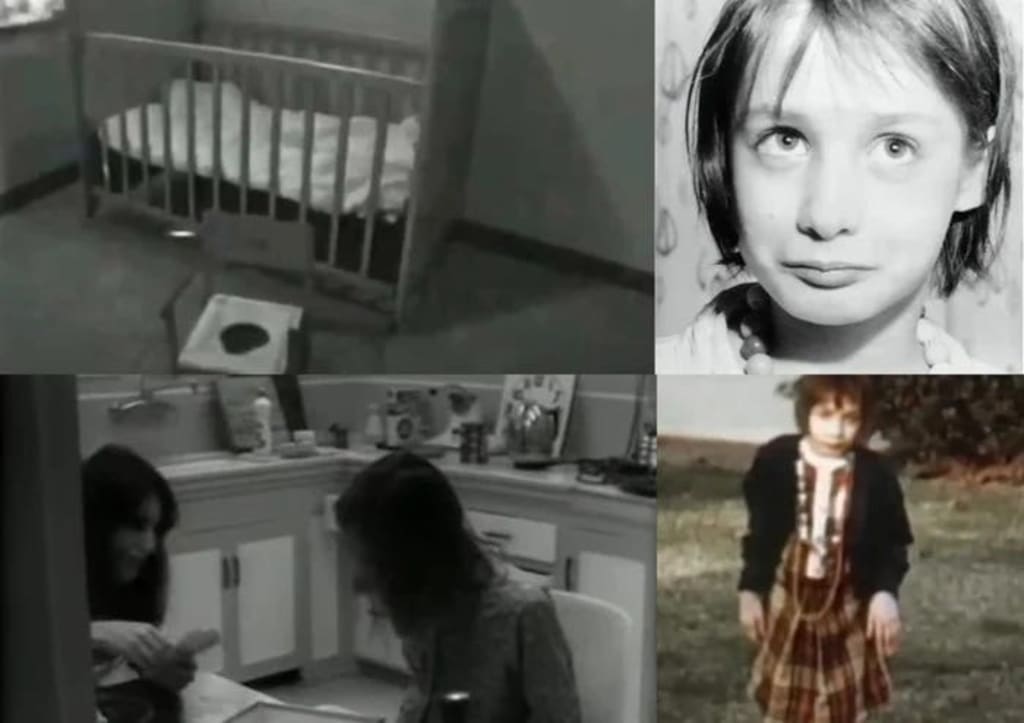
An unwanted and neglected child was rescued and brought back into the world after surviving a cruel period of confinement at the hands of her terrible parents. Sadly, Wiley’s story is a tragic one.
For the first thirteen years of her existence, Genie Wiley was cut off from society and all forms of socialization. Wiley had been neglected by her defenseless mother and very violent father, to the point that she was only eight years old and had not yet learnt to talk.
Her trauma appeared to be a godsend for scientists in a variety of fields, including psychology and linguistics, however they were later accused of abusing the youngster for learning and development study. However, Genie Wiley’s story does raise an interesting question: What does it mean to be human?
The Horrible Childhood That Made Genie Wiley Become A “Feral Child”
Genie is not the Feral Child’s true name. Once she became the subject of fascination and scientific inquiry, her name was given to her in order to preserve her identity.
In 1957, Susan Wiley was born into the family of Clark Wiley and his younger spouse, Irene Oglesby. After fleeing the Dust Bowl, Oglesby settled in the Los Angeles region, where she eventually met her spouse. He was a former assembly-line worker whose mother had reared him in and out of brothels. Clark’s early years had a lasting impact on him as he would obsess about his mother for the remainder of his life.
Clark Wiley had no desire to have kids. He detested the stress and noise they caused. When the first girl was born, Wiley abandoned her in the garage to freeze to death because she refused to be quiet.
Following the death of the Wileys’ second child due to a congenital condition, Genie Wiley and her brother John were born. Although her brother experienced violence from their father as well, Susan’s suffering was far worse.
Even though he was always a little strange, Clark Wiley seemed to fall apart after his mother was killed by an intoxicated motorist in 1958. His violence grew even more as their complicated relationship came to an end.
Clark Wiley came to the conclusion that his daughter was mentally ill and would not be valuable to society. As a result, he separated her from society. The girl was mainly kept in a darkened room or in a homemade cage, and no one was permitted to make contact with her. She wasn’t potty trained, so he kept her strapped onto a toddler toilet like some sort of straightjacket.
For every violation, Clark Wiley would strike her with a big piece of wood.
He would bark like a crazy security dog outside her door, giving the child a lifelong phobia of anything with claws. Some experts speculate that because of Wiley’s later unusual sexual behavior, especially with older men, there may have been sexual abuse involved.
As said by the Feral Child herself:
“Father hit arm. Big wood. Genie cry… Not spit. Father. Hit face — spit. Father hit big stick. Father is angry. Father hit Genie big stick. Father take piece wood hit. Cry. Father make me cry.”
She had lived like this for thirteen years.
Genie Wiley’s Escape From Suffering
The mother of Genie Wiley subsequently claimed that because she was almost blind, she was unable to intervene on behalf of her daughter. However, Genie Wiley’s mother did eventually get the courage to leave one day, fourteen years after she was first made aware of her father’s brutality.
She entered social services by accident in 1970, thinking it was the office where the blind would receive assistance. When the office workers saw the little girl behave so strangely — hopping like a bunny instead of walking — their antennas were immediately up.
Though she appeared little older than eight, Genie Wiley was then almost fourteen.
An abuse case was quickly filed against both parents, however Clark Wiley committed suicide shortly before the trial. He left a message saying, “The world will never understand.”
Wiley was taken under state guardianship. When she arrived to UCLA’s Children’s Hospital, her knowledge was limited to a few phrases. The medical staff there referred to her as “the most profoundly damaged child they had ever seen.”
Scientists and doctors were captivated by Wiley’s story and immediately requested a funding from the National Institute of Mental Health to study her. From 1971 to 1975, the team spent four years exploring the “Developmental Consequence of Extreme Social Isolation.”
Genie Wiley turned into these scientists’ life’s focus for those four years. Susie Curtiss, a linguist closely involved in the wild kid study, said, “She wasn’t socialized, and her behavior was distasteful, but she just captivated us with her beauty.”
Additionally, throughout those four years, Wiley’s case examined the propriety of a subject-researcher connection. In addition to posing a serious conflict of interest, Genie Wiley would later move in with some of the team members who had been studying her, which may have led to her entering into another violent relationship.
Scientists Start Experimenting With The “Feral Child”
Genie Wiley’s finding coincided perfectly with an increase in the scientific study of language. Wiley served as a blank canvas for language scientists, allowing them to comprehend the role language plays in human development and vice versa. Genie Wiley was suddenly highly wanted after.
One of the “Genie Team’s” main responsibilities was to determine if Wiley’s developmental lapse or abuse occurred first. Was Wiley born with a developmental disability, or was it a result of her abuse?
Linguists generally held the opinion that children could not learn language beyond puberty until the late 1960s. Genie the Feral Child, however, contradicted this. She was “highly communicative,” according to her researchers, and she had a strong interest and quest for knowledge. Wiley could pick up language, it turned out, but sentence construction and syntax were entirely different things.
Curtiss said, “She was smart. She was able to hold a group of images that combined told a tale. She could craft a variety of sophisticated buildings out of sticks. She was intelligent in other ways, too. All of the lights were on.”
Between the ages of five and ten, Genie Wiley demonstrated, children lose all understanding of grammar, yet language and communication are still completely achievable. In addition, Wiley’s situation raised other existential issues concerning the nature of humanity.
“Is humanity defined by language? It’s a challenging question”, Curtiss stated. It is possible to be completely human, to love, to have relationships, and to interact with the outside world even with very little language knowledge. Genie was undoubtedly involved in the world. She had the ability to sketch so well that you could understand exactly what she was saying.”
As a result, Wiley was able to express herself simply by using words like “applesauce buy store,” but she was unable to comprehend the subtleties of a more complex sentence structure. This illustrated the distinction between language and thought.
“Our thoughts are verbally encoded for many of us,” Curtiss said in his explanation. “Though there are several ways to think, Genie Wiley’s ideas were rarely ever expressed vocally.”
In the case that the subject does not already speak one language fluently, there is a threshold beyond which complete linguistic fluency is not achievable, as demonstrated by the example of Genie the Feral Child.
As stated in Psychology Today:
“The Genie example demonstrates that there is a limited window of time that determines whether one may acquire a reasonable level of fluency in a language. Naturally, if you speak another language well, your brain is already prepared for learning that language as well, so you have a good chance of mastering a second or third language as well. However, Broca’s area is still difficult to modify if you have no prior grammar knowledge: you cannot acquire grammatical language production later in life.”
Genie Wiley Continues To Be Used
Although the “Genie Team” made significant advances to our knowledge of human nature, they were not without critics. To start with, every scientist in the group accused the others of misusing their roles and connections with the feral child, Genie Wiley.
For example, in 1971, language instructor Jean Butler got approval to take Wiley home with her in order to socialize her. The feral child’s obsession with gathering buckets and other containers that held liquid, a characteristic shared by other kids who have experienced great isolation, is only one of the crucial insights Butler was able to provide about Wiley in this situation. Additionally, she saw that Genie Wiley was starting puberty at this time, indicating that her health was becoming better.
For a while, everything went according to plan, until Butler reported that she caught Rubella and that Wiley and she would need to be quarantined. Their transient circumstance became increasingly permanent. Butler said that the other doctors on the “Genie Team” were putting too much pressure on her, so she sent them away. She also submitted an application for Wiley’s foster care.
Eventually, other team members accused Butler of taking advantage of Wiley. They said Butler thought that by taking in her young ward, she would become “the next Anne Sullivan,” the educator who elevated Helen Keller above the status of invalid.
As a result, Genie Wiley eventually moved in with the family of David Rigler, a therapist and additional member of the “Genie Team.” This felt like an excellent fit for Genie Wiley, as much as her luck would allow, and a chance for her to grow and learn about the world with people who actually cared about her well-being.
Additionally, the agreement increased the “Genie Team’s” access to her.
Even though she was unable to talk, Wiley continued to be a master at nonverbal communication and had a way of getting her ideas across to others.
Rigler remembered the day when Genie Wiley was passed by a man and his small boy who were pushing a fire truck. “And they’ve already passed,” Rigler recalled. “After that, they turned around and came back and the youngster gave Genie the fire engine silently. She didn’t ask for it. Never once did she speak. She somehow subjected others to this type of behavior.”
Wiley lived with her mother for a short while when the study’s funding ended in 1975, despite the gains she had made at the Riglers’. The scientists on the “Genie Team” were among the caretakers her mother sued in 1979, claiming they used Wiley for “prestige and profit,” along with the hospital.
Afterwards, Wiley was put in many foster homes, some of which were abusive. Wiley fell apart there after being beaten for throwing up. She never got back to where she had been.
Today
Little is known about Genie Wiley’s current life since, after gaining custody, her mother forbade any further research on her daughter. She slipped between the cracks of proper care, much like a lot of people with special needs.
In 2003, Wiley’s mother passed away, followed by her brother John in 2011 and her niece Pamela in 2012. Journalist Russ Rymer attempted to piece together what caused Wiley’s team to break apart, but he found it difficult since the scientists couldn’t agree on who was being exploitative or who was thinking about the feral child’s best interests.
“My reporting was complicated by the tremendous rift,” Rymer stated. “That was also an aspect of the failure that made her care so tragic.”
Afterwards, he remembered going to see Susan Wiley on her 27th birthday and observing:
“A large, bumbling woman with a cowlike look of incomprehension on her face… Her eyes are hard to focus on the dessert. She bears the appearance of an insane patient since the top of her forehead has her black hair chopped off raggedly.”
Those that loved Genie Wiley will never forget her, despite everything.
Curtiss remarked, “I’m pretty sure she’s still alive because every time I called, they told me she’s well. They never let me to communicate with her. My attempts to see her or write to her have been hopeless. “
Wiley was residing at an assisted care facility in Los Angeles as of 2008.
The story of Genie Wiley is not a happy one; she swung between abusive relationships and, by all accounts, was consistently rejected and let down by society. However, one can only hope that she finds delight in exploring the ever-new world around her wherever she is and instills in others the same excitement and passion that she had for her researchers.
Thank you for reading!
If you find this piece interesting, please leave a heart, comment, or even subscribe! Your support means a lot to me as a writer!
About the Creator
Victoria Velkova
With a passion for words and a love of storytelling.
Keep reading
More stories from Victoria Velkova and writers in Criminal and other communities.
Velma Barfield: The "Death Row Granny" Who Turned Care Into Chaos
Once regarded as a harmless grandmotherly figure, Velma's hidden addiction and simmering resentments drove her to commit unspeakable acts. Ultimately, her crimes left six known victims in their wake and earned her the nickname "Death Row Granny," as she became one of the first women executed in the United States after the reinstatement of capital punishment.
By Victoria Velkova12 months ago in Criminal
The Second Crime Scene: The 8 Bodies Found in the Ephrata Storage Locker
DOSSIER ENTRY: THE SECOND CRIME SCENE TARGET LOCATION: EPHRATA SELF STORAGE (FACILITY NAME REDACTED) SEARCH DATE: WEDNESDAY, JANUARY 7, 2026 EVIDENCE RECOVERED: 8 INTACT HUMAN CORPSES / SKELETAL REMAINS THEORY: "FINISHED GOODS WAREHOUSE" STATUS: VERIFIED (AFFIDAVIT OF PROBABLE CAUSE)
By Sunshine Firecracker4 days ago in Criminal
The Facebook Marketplace of Horrors: Inside the groups where bones are traded like baseball cards.
It Wasn't the Dark Web When we hear about the illegal sale of human body parts, we imagine the "Dark Web"—encrypted Tor browsers, Bitcoin wallets, and shadowy Russian servers. The terrifying reality of the Jonathan Gerlach case is that he wasn't hiding in the digital shadows. He was hiding in plain sight.
By Sunshine Firecracker4 days ago in Criminal


Comments
There are no comments for this story
Be the first to respond and start the conversation.