
Elizabeth Báthory ("Blood Countess")
Elizabeth Báthory, the "Blood Countess," born in 1560, was a Hungarian noblewoman accused of torturing and killing young girls in the belief that their blood would maintain her youth.

Elizabeth Báthory, commonly known as the Blood Countess was a Hungarian noblewoman born in 1560. She is infamous for her alleged sadistic and murderous acts, which have cemented her as one of history's most notorious female serial killers. Báthory's life story is a complex and controversial one, with accounts of her actions ranging from horrifyingly true to potentially exaggerated or even fabricated.Báthory was born into a powerful aristocratic family and married Ferenc Nádasdy, a fellow nobleman, at a young age. Together, they held considerable influence and wealth in Hungary. The couple resided in the Csejte Castle where Báthory's alleged crimes took place. Her husband's military duties often kept him away, leaving Báthory in charge of their estates.The accusations against Elizabeth Báthory primarily revolved around her alleged torture and murder of young girls. According to accounts, she believed that bathing in the blood of virgins would maintain her youth and beauty. It's said that she brutally abused and killed numerous girls, often peasants from nearby villages. However the true extent of these crimes is difficult to ascertain, as much of the evidence comes from biased sources and conflicting testimonies.
In 1610, Báthory was arrested and put on trial for her alleged atrocities. She was not tried in a regular court but rather by a tribunal consisting of fellow nobles. Her crimes, as described by witnesses, included various forms of torture mutilation and murder. Some accounts even claimed that she engaged in cannibalism. The trial concluded with Báthory's accomplices being sentenced to death, while she herself was placed under house arrest. Due to her noble status, she was never officially convicted or sentenced to death. Instead, she spent the rest of her life confined to a room within her own castle, where she died in 1614.The tale of Elizabeth Báthory has inspired numerous legends, books, movies, and works of art. However, historians have debated the accuracy of the accounts of her actions. Some believe that her political enemies might have played a role in spreading rumors and accusations to undermine her family's influence. Others contend that the gruesome accounts were exaggerated over time, turning her into a figure of pure horror.
Modern scholars approach the Báthory story with skepticism analyzing the historical context and the reliability of the sources. Many of the records were written decades after her death and could have been influenced by folklore and the sensationalism of the era. While it is evident that Báthory's reputation was tarnished by the allegations the truth remains obscured by the passage of time and the biases of historical narratives. In the end, Elizabeth Báthory's legacy is a complicated one. Whether she was a sadistic serial killer who reveled in brutality or the victim of a conspiracy to discredit her family, her story continues to capture the imagination. Her name is synonymous with cruelty and terror making her one of history's most infamous and enigmatic figures. Yet, the lack of conclusive evidence and the potential for sensationalism remind us of the challenges of uncovering the truth behind centuries-old stories. Elizabeth Báthory's tale serves as a reminder of how history can be manipulated and mythologized over time, blurring the lines between fact and fiction.
About the Creator
Keep reading
More stories from Kure Garba and writers in Criminal and other communities.
John Haigh ("Acid Bath Murderer")
John Haigh infamously known as the Acid Bath Murderer was a British serial killer who operated during the 1940s. His gruesome crimes shocked the nation and earned him a lasting place in criminal history.Born in Stamford, Lincolnshire, in 1909 Haigh showed early signs of criminal behavior. He was convicted of fraud and theft in his youth, and his life took a darker turn as he grew older. It was in the 1940s that he began his murderous spree, which would ultimately lead to his downfall.Haigh's method of killing was particularly disturbing. He lured his victims often people he knew, with promises of financial gain or business ventures. Once he gained their trust, he would incapacitate them, usually by bludgeoning, before disposing of their bodies in a vat of concentrated sulfuric acid. This horrifying technique was meant to dissolve the bodies completely leaving behind little to no evidence.
By Kure Garba3 years ago in Criminal
The Assassination of King Faisal: The Tragic Day a Saudi Monarch Was Killed by His Own Nephew
On March 25, 1975, the Arab world was shaken by the shocking assassination of King Faisal of Saudi Arabia. The respected monarch, known for his political wisdom and strong leadership in the Muslim world, was killed inside the royal palace in Riyadh by his own nephew, Faisal bin Musaid. The incident stunned both Saudi citizens and the international community, raising many questions about what circumstances led to such a tragic act within the royal family.
By Irshad Abbasi a day ago in Criminal
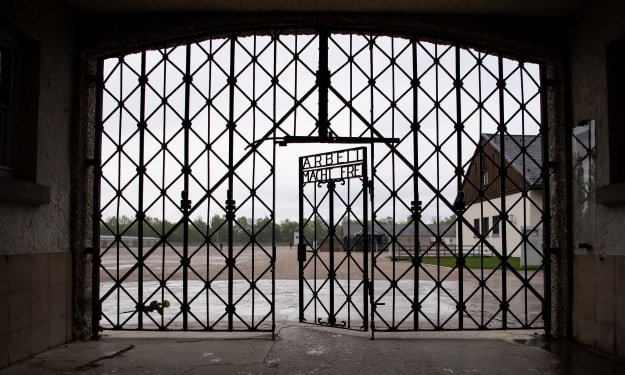
The First Nazi Concentration Camp
The Nazi Concentration Camps were one of the worst things to have ever happened in human history. In my opinion, they come only second to the nuclear weapon that was used on the Japanese City of Hiroshima. These are ‘incidents’ that will never be forgotten (or be allowed to be forgotten) within the “History Book” of humankind.
By Ruth Elizabeth Stiff4 days ago in Criminal



Comments
There are no comments for this story
Be the first to respond and start the conversation.