
The First Nazi Concentration Camp
What we Learn from the Second World War

The Nazi Concentration Camps were one of the worst things to have ever happened in human history. In my opinion, they come only second to the nuclear weapon that was used on the Japanese City of Hiroshima. These are ‘incidents’ that will never be forgotten (or be allowed to be forgotten) within the “History Book” of humankind.
When I first started to do research in this subject, I was shocked by how little I knew!
The Nazis operated more than a thousand concentration camps between 1933 and 1945. The first camps started when Adolf Hitler became the Chancellor of Germany. At one point around 1.65 million people were registered as prisoners in these camps. Around one million died during their imprisonment. There is so much evidence, even many photographs, that these camps cannot be denied!
It is said that the Nazis used concentration camps to “suppress the tens of thousands of Nazi opponents” who were in Germany. The first camp was Nohra, which was established on 3rd March, 1933, in a school. Arrests increased after the election of 5th March. Hitler now had the power over Germany, and because he was a spellbinding speaker, many looked at him as a kind of ‘Saviour’ for the nation. They had no idea of the horrors awaiting mankind!
Dachau = initially this camp was set up to hold political prisoners in 1933. It was located in an abandoned munitions factory. This camp imprisoned Jews, German and Austrian criminals and foreign nationals. This camp grew to have 100 sub-camps.
The prisoners were treated with extreme violence, which included flogging, the so-called tree hanging, and standing for attention for long periods of time.
The Dachau camp served as a ‘prototype’ and model for the other concentration camps. There was a saying: “Dear God, make me dumb (silent). That I may not go to Dachau come”. The newspapers of the time reported “the removal of the enemies of the ‘Reich’ to concentration camps”.
The Dachau concentration camp was the longest in operation, being used from March 1933 to April 1945 (nearly all twelve years of the Nazi regime). It was in a convenient location as it was near to the official headquarters of Hitler and the Nazi party. This camp was used for prisoners of all sorts, from every nation occupied by the forces of the Third Reich.
The “recorded” intake of prisoners was 206,206 and 31,951 deaths. Crematoria were constructed to get rid of the dead (and it is said that some were not dead ‘yet’). The prisoners came from every walk of life = Catholic priests, gypsys, homosexuals, emigrants, Jews — in fact anyone Hitler considered unfit for the ‘New Germany’, even the physically and mentally disabled. At this camp, some of the prisoners were subjected to brutal medical experiments.
Hilmer Wackerle (1899-1941) was an official of the ‘SS’, and he was the first commandant of Dachau.
The prisoners were treated harshly from the very beginning of the camp. A school teacher, Sebastian Nefzger, was beaten to death. The SS administrators ‘claimed’ that this prisoner committed suicide but the evidence proves that he was killed. Under the new regime, Hitler deemed that the German Law didn’t apply to the concentration camps, and allowed SS administrators to run the camps and ‘hand out punishment’ as they saw fit.
A set of regulations was set up for Dachau’s daily operation, and any prisoners breaking them were severely beaten. Any prisoners who tried to escape or spoke out on political laws were executed on the spot. These prisoners did not stand a chance and had no way of protecting or defending themselves, or protesting at the terrible treatment they received. These ‘Regulations’ served as a blueprint for the other concentration camps.
In 1938, the persecution of the Jews (within Germany) exploded and over 30,000 Jews were arrested, 11,000 of these ending up in Dachau. In 1939, this camp was used as a training ground for members of the newly established “Waffen-SS” who were an elite SS combat unit.
The camp had been designed to ‘house’ 6,000 prisoners but by 1944, there were (roughly) 30,000 prisoners tightly packed into it. The ‘able-bodied’ prisoners (if they could possibly be called that) were used to manufacture weapons and other materials to be used during World War Two.
Between 1941 and 1944, several thousand sick and handicapped Dachau prisoners were sent to a Nazi “euthanasia” center in Austria, where they were put to death by exposing them to lethal gas. This is horrendous!
Many Catholic clergy members were incarcerated at Dachau, many being put to death by lethal injection. Thousands of prisoners (again, from all walks of life) died from disease, malnutrition and overwork. Thousands were executed for ‘infractions of camp rules’. In 1941, Soviet prisoners were shot to death at a nearby rifle range. In 1942, construction was started on four ‘sizeable’ ovens used to incinerate corpses.
In this camp, Hitler used some of the prisoners as subjects in brutal medical experiments. One example was using the prisoners as guinea pigs in a series of tests to determine the feasibility (or convenient way) of reviving individuals immersed in freezing water. This was a terrible experiment as the prisoners were forcibly submerged in tanks filled with ice water and, naturally, many died.
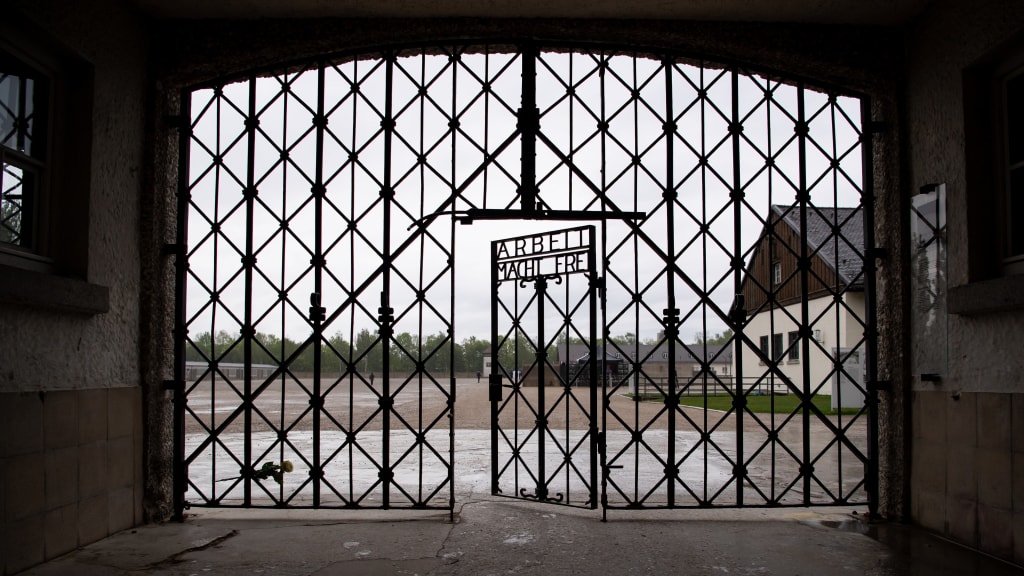
The ‘forced labour’ eventually turned into torture and murder. It was at this camp that the words “Work Will Make You Free” was on the iron gates as the prisoners walked through them into the camp.
In the last months of the War, Dachau, as a concentration camp, started to deteriorate. Typhus became a big problem because of the overcrowding, poor sanitary conditions and the already very weak physical conditions of the prisoners. Many were now executed by firing squad.
Himmler ordered “that no prisoner shall be allowed to fall into the hands of the enemy alive”. In 1945, around 7,000 prisoners were forced to march from Dachau south. Any who could not keep up were shot, others died of exhaustion, hunger and exposure. A mass grave was found with 1,071 dead prisoners within it.
On April 29th, 1945, Dachau was liberated by the US military. These soldiers were the first to see the horrendous condition of the prisoners, where they also found several dozen train cars loaded with rotting corpses.
During the entire time that Hitler used the Dachau concentration camp, over 200,000 prisoners have been ‘catalogued’ to have passed through its gates. We know now that thousands more were not ‘catalogued’. Even today, we still do not know the accurate number of prisoners or deaths that were seen at this camp, Dachau.
The Dachau Concentration Camp is now a Memorial site which can be visited by the public. This is one good way to learn and remember and show respect for those who were in this camp.
Think about how the prisoners must have felt when they were liberated. Good conquered evil and we have learnt from this ‘chapter’ of history.
About the Creator
Ruth Elizabeth Stiff
History and knowledge, especially about the Earth, are my passions. I enjoy putting my thoughts to paper and I always try to encourage self-motivation and love for life. LIVE AND LOVE LIFE!
Keep reading
More stories from Ruth Elizabeth Stiff and writers in Criminal and other communities.
Victorian Prisons
The truth about Victorian prisons was that to many (especially those of the poorer classes), life in prison was better than life in their own homes. Many ‘broke the law’ deliberately to go back into prison, for a roof over their heads and ‘decent food’. Even those in the Workhouses did this — because prison was better than the Workhouse!
By Ruth Elizabeth Stiff3 years ago in Criminal
The Crime That Shook Danvers, Massachusetts
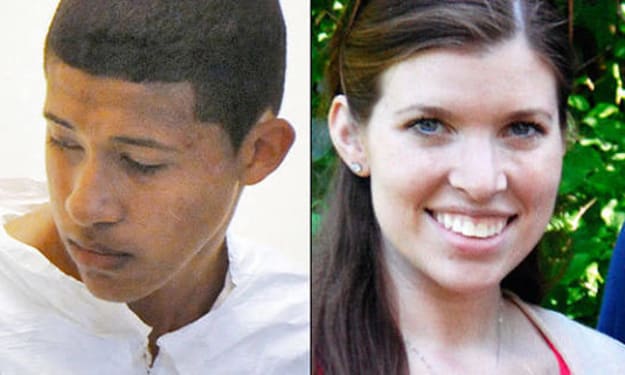
The killing of Colleen Ritzer a 24-year-old math teacher at Danvers High School in Danvers Massachusetts remains one of the most tragic and disturbing crimes to affect a school community in the United States in recent years.Colleen Ritzer was widely remembered by colleagues and students as a dedicated and compassionate educator. Early in her teaching career she was known for bringing enthusiasm and patience into the classroom and for taking a genuine interest in the academic and personal wellbeing of her students. Friends and coworkers often described her as someone who believed every student deserved attention, encouragement, and the opportunity to succeed.
By Kure Garba3 days ago in Criminal
The Last Train from Platform Seven
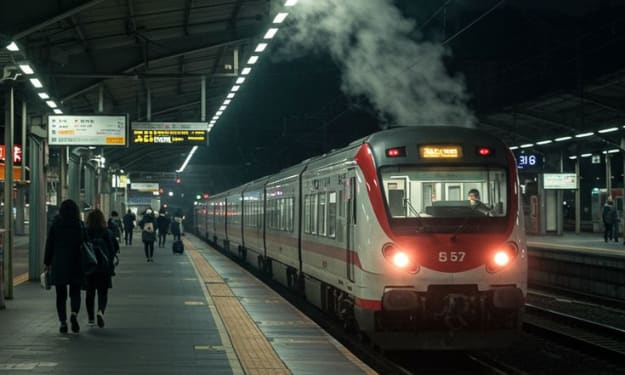
M Mehran Every night at 11:40 PM, the last train departed from Platform Seven. Commuters rushed aboard with tired eyes and half-finished thoughts. The station lights hummed. The city slowed. Routine settled over everything like dust. Nothing unusual ever happened on the last train. Until the night one passenger never arrived — yet his briefcase did. By sunrise, the case was linked to one of the most calculated crimes the city had ever seen. The Routine That Made It Possible Central Station was a monument to predictability. Security cameras rotated in fixed patterns. Patrol officers walked identical routes. Ticket scanners recorded entries down to the second. Routine keeps cities moving. But routine also creates patterns. And patterns can be exploited. For six months, someone had been studying Platform Seven — timing security rotations, passenger flow, and maintenance shutdowns. They weren’t looking for a victim. They were engineering an opportunity. The Man with the Silver Briefcase Witnesses remembered him clearly because he appeared forgettable. Mid-forties. Gray coat. Clean-shaven. No distinguishing features except a polished silver briefcase that never left his hand. Every weekday for three weeks, he boarded the last train and exited three stops later. He spoke to no one. Made no phone calls. Kept his gaze lowered. Invisible. Reliable. Predictable. Exactly what he wanted to be. The Night Everything Changed On Tuesday evening, the station was unusually crowded after a football match. Noise echoed through the terminal. Announcements overlapped. Security struggled to manage the surge of passengers. At 11:38 PM, the man with the silver briefcase entered through Gate C. At 11:39 PM, surveillance cameras briefly lost signal during a system reboot. At 11:40 PM, the last train departed. But the man never boarded. The briefcase did. Discovery at Dawn The train completed its route without incident. It was cleaned overnight and prepared for morning service. At 5:12 AM, a maintenance worker discovered the briefcase beneath a seat in the second carriage. Inside were neatly arranged bundles of cash, multiple passports, and a sealed envelope containing a handwritten message: “This is only the beginning.” Within hours, investigators confirmed the money totaled €780,000 — linked to a corporate embezzlement case that had gone unsolved for eight months. The case had just reopened itself. A Crime Beyond Theft Detective Lena Vogt quickly determined the briefcase was not abandoned. It was delivered. The cash belonged to Helios Infrastructure Group, a multinational engineering firm under investigation for financial irregularities. Funds had disappeared through layered shell companies and offshore accounts. No arrests had ever been made. Until now, someone wanted attention. But why return stolen money? And why in such a theatrical way? The Hidden Message Forensic analysis revealed microscopic markings inside the envelope — numbers written in nearly invisible ink. They corresponded to internal project codes within Helios Infrastructure. Each code linked to construction sites across Europe. Each site had cost overruns totaling millions. This wasn’t a confession. It was an accusation. Someone was exposing a system. The Whistleblower Who Became a Criminal Authorities soon identified the man with the silver briefcase as Markus Feldmann, a former financial auditor employed by Helios. Two years earlier, Markus had raised concerns about irregular financial transfers tied to subcontractors. His warnings were ignored. Months later, his position was eliminated during “restructuring.” After losing his job, Markus disappeared from professional networks. But he hadn’t vanished. He had been collecting evidence. Crossing the Line Investigators believe Markus initially intended to expose corporate fraud legally. But when regulatory complaints stalled and legal threats mounted, he chose a different path. He hacked internal systems. Intercepted transfers. Redirected illicit funds. Then redistributed portions to anonymous charity networks. And finally, he staged the Platform Seven drop — returning part of the money to authorities while exposing the corruption behind it. His actions blurred the line between criminal and whistleblower. He committed cybercrime, fraud, and financial theft. Yet he also revealed a corruption network worth hundreds of millions. The Citywide Manhunt When news broke, public opinion fractured. Some called Markus a criminal mastermind. Others called him a hero. Helios Infrastructure denied wrongdoing, but European regulators reopened investigations across multiple jurisdictions. Meanwhile, Markus remained missing. Authorities tracked digital traces through encrypted networks, but he stayed ahead — using public terminals, temporary devices, and anonymized routing. He understood systems. He understood surveillance. And he understood how to disappear inside modern infrastructure. The Platform Seven Sighting Three weeks later, a transit officer reported seeing a man matching Markus’s description standing near Platform Seven minutes before midnight. By the time officers arrived, he was gone. But this time, he left something behind. A folded newspaper with a circled headline: “Audits Expanded Across Three Countries.” Inside the paper was a single handwritten line: “Truth arrives on schedule.” Crime, Morality, and the Gray Zone Markus Feldmann’s actions ignited debate across legal and ethical communities. Was he a criminal who stole and hacked his employer? Or a whistleblower forced into illegal methods by institutional silence? Modern crime is no longer defined solely by violence or theft. It now exists in complex gray zones where digital access, corporate secrecy, and systemic corruption intersect. Markus broke the law. But he also broke open a system designed to protect itself. Why Stories Like This Captivate Us Criminal stories resonate because they challenge our understanding of right and wrong. They expose the fragility of systems we trust — financial institutions, corporate governance, public infrastructure. They force us to confront uncomfortable questions: Is breaking the law ever justified? Who decides what justice looks like? And how far would someone go to expose the truth? The Train Still Runs Platform Seven remains operational. The last train still departs at 11:40 PM. Passengers still glance at their phones, lost in routine. But some nights, commuters pause and look around — wondering if the man with the silver briefcase might step from the shadows once more. Because in a world built on systems and schedules, the most disruptive force is not chaos. It is precision. And somewhere, someone may still be watching the clock.
By Muhammad Mehran6 days ago in Criminal
Trickle Them Down, But Not Out
The thing about smart people is that they should know better, but alas, intelligence is not the same as wisdom. Not only do the mistakes of experts too short on vision—when they are not corrected—have the potential to do great and far-reaching damage, but they also undermine public confidence in the very notion of expertise. This is particularly so when expertise is wielded in defence of the rich and powerful as a cudgel against those laid low. As an academic, this lack of faith in “so-called experts” is painful to see as it plays out in the spread of dis-/misinformation, conspiracy theories, and anti-intellectualism writ large. But it is also an understandable impulse given the catastrophic failure of an economic ideology pushed by certain economic experts. Supply-side economics has shaped a broken system for the last half-century and has arguably done more to undermine the fabric of the American Dream than any policy framework of the past century.
By Cory Wright-Maley6 days ago in Humans


Comments
There are no comments for this story
Be the first to respond and start the conversation.