
Dead Man’s Silence
Some Doors Should Never Be Opened

Fog drifted in low across the marshlands, curling around gnarled cypress roots like pale, skeletal fingers. The town of Eddings Hollow lay beyond the mire, tucked away like a secret too terrible to speak aloud. It was the kind of place that wasn’t on maps anymore—not because it had been forgotten, but because people wanted it that way.
Eddings Hollow had a secret. Everyone who lived there knew it. They just never talked about it. Not at the diner. Not in church. Not even in whispers between lovers in the dark.
The silence had a name. Jonas Blackwell.
He had once been the sheriff—a tall man with eyes like broken glass and a voice as rough as gravel dragged across bone. Jonas had ruled Eddings Hollow with an iron badge and a coiled whip of fear. They said he didn’t just keep the peace—he enforced it, no matter the cost. He disappeared one autumn night twenty years ago after dragging a prisoner into the swamp. The man was never seen again. Neither was Jonas.
That night, the town went still, and a strange hush settled over it like snowfall.
The older folk called it “The Silence.”
When newcomers asked why no one stayed out past dusk, or why the children were taught not to whistle after dark, the locals just shrugged and said, “Some things are better left quiet.”
But silence never lasts. Not truly.
Mara Griffin wasn’t from Eddings Hollow. She had grown up two counties over, in a place where ghosts stayed in graveyards and bad men stayed dead. She came to the Hollow to settle her late aunt’s estate, inheriting a sagging house near the edge of the woods and a box of yellowed letters no one had read in decades.
The townsfolk were polite, but distant. They gave her the usual warnings: lock the doors, stay in after sunset, never walk toward the marsh if you hear singing. She thought it was local folklore—just backwoods superstition. She smiled, nodded, and unpacked her life in the crooked little house her aunt had left her.
The first week was uneventful. Then came the knock.
It was after midnight. Three slow raps on the door.
Mara sat up in bed, heart hammering. She waited, holding her breath. Nothing.
She told herself it was a branch, a raccoon, maybe just her imagination. But the next night, it came again. Three knocks. Always three. Always just before one a.m.
On the third night, she opened the door.
There was no one there—just the fog rolling in off the marsh and a chill that sank into her bones like frostbite. She looked down. On the porch sat an old sheriff’s badge, rusted and tarnished, with the name “J. Blackwell” barely legible.
Mara started digging into town records. The Hollow had no newspaper archives, but the library kept dusty files of obituaries and arrest logs. Jonas Blackwell’s name came up often—always connected to missing persons, “accidental drownings,” or suicides that no one ever quite believed.
She found a name that appeared again and again: Silas Crane. A young man, accused of murder, but never convicted. Jonas had arrested him, but the case disappeared. No trial. No verdict.
No body.
Old Mrs. Tilley, the librarian, caught her looking through the files and clutched Mara’s wrist with birdlike fingers. “Let the dead be dead,” she whispered. “Jonas kept this town quiet. Too quiet. We’re still payin’ the price.”
That night, the singing began.
Low and mournful, like a hymn sung underwater. Mara heard it drifting up from the swamp, pulling at her feet like a tide. She tried to resist, but her body moved on its own. Down the steps. Across the yard. Toward the marsh.
The fog parted for her like curtains drawn by invisible hands. And there, on the edge of the black water, stood Jonas Blackwell.
But he was no longer a man.
He wore his old uniform, now tattered and soaked through with rot. His skin was pale and bloated, his face slack, but his eyes burned—a silent fury that pierced the mist.
In his hand, he held a noose.
Mara couldn’t move. Couldn’t breathe.
Jonas raised the rope, and the singing stopped.
Then a voice behind her—a whisper in the darkness: “He never stopped. He just got quieter.”
She turned. A figure stepped out of the trees. Young. Gaunt. Eyes wide with the glassy look of the drowned.
Silas Crane.
“Twenty years,” he said. “He’s been doing it for twenty years. Anyone who makes noise. Anyone who remembers.”
Mara found her voice. “Why me?”
Silas looked past her. “Because you opened the door.”
She ran.
She didn’t stop until dawn burned away the fog and the marsh retreated into silence. When she reached town, she tried to tell them what she saw. No one listened. No one looked her in the eye.
Mara left Eddings Hollow that day.
But some nights, when the wind is just right and the moon hangs low, she hears three knocks on her door.
And she never opens it.
Not anymore.
Because the dead man’s silence is never truly silent.
And Jonas Blackwell never stopped watching.
About the Creator
Keep reading
More stories from Said Hameed and writers in Criminal and other communities.
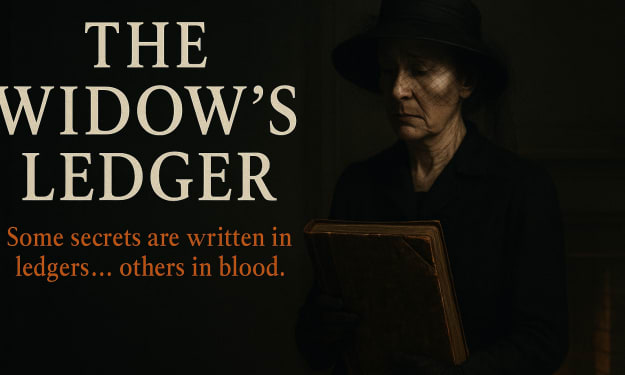
The Widow’s Ledger
Rain fell in icy sheets as Detective Mara Voss stepped onto the crumbling porch of the old Ashbury estate. The town of Greystone had nearly forgotten about Eleanor Hargrave — the reclusive widow of the late Charles Hargrave, a banker who’d drowned mysteriously in 1993. Nearly three decades later, Eleanor was found dead in her parlor, a glass of sherry in her hand and a dusty leather-bound ledger on her lap.
By Said Hameed9 months ago in Criminal
She Killed Her Sister When She Gave The Teen's Virginity to Her Boyfriend
Any person who can rape and kill an innocent member of their family is truly depraved. One who later admits they enjoyed it is truly demonic. Yet, a woman who took her criminal behavior to the depths of depravity is not even behind bars.
By Criminal Matters5 days ago in Criminal


Comments
There are no comments for this story
Be the first to respond and start the conversation.