
Crime Chronicles: The Teacup Poisoner
A Grim Hobby


We've covered a few serial killers here in the Crime Chronicles, including:
These cases have all been messed up. Lucy Letby, if you'll recall targeted infants and young children alternating between air and insulin. Peter Kurten mutilated the bodies of his victims - often in brutal ways that I will not go into here.
Graham Young started his criminal career at a very young age, and his story is pretty twisted. Strap in folks, this is going to get rough.
The Young Family
Graham Young was in Neasden, Northwest London, on September 7, 1947. His parents, Frederick and Bessie Young and their daughter, Winifred, were thrilled at the newest member of their little family. Unfortunately, however, their happiness didn't last.
Just 14 weeks later, Bessie died of tuberculosis leaving Frederick and Winnifred heartbroken. In order to make sure his kids had a stable childhood, Frederick carted them off to relatives. Winifred was sent to her grandparents and Graham was sent to live with his aunt and uncle.
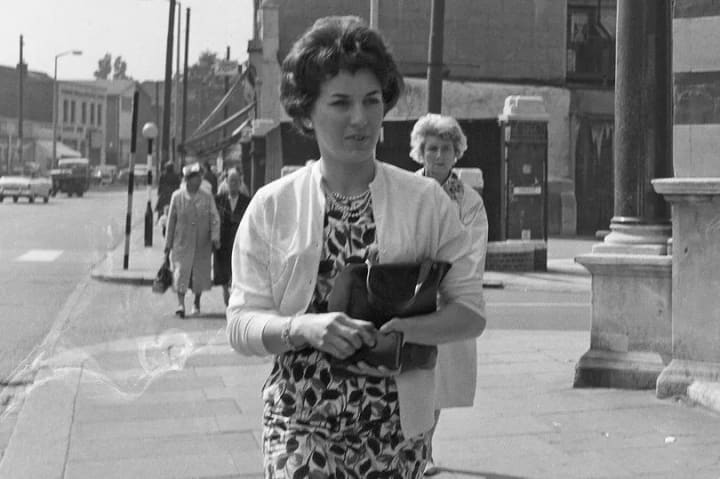
As far as we know, Graham's childhood was happy. He loved his aunt and uncle dearly. This makes his father's reappearance in his life a bit awkward. Frederick arrived at the house with an announcement, he'd just been married to a woman named Molly and wanted to reunite his family.
Now, while that sounds all well and good, it had a rather negative effect on Graham. You have to remember that he'd been living with and practically been raised by his aunt and uncle. Additionally, there was no discussion beforehand, Frederick showed up and told everyone that he was taking his son to live with him and his new wife. You could make the argument that the kid wouldn't have understood the discussion, but his life was essentially upended and he got no say in the matter.
Molly Young was, by all accounts, a loving stepmother to Winnifred and Graham. Still, Graham disliked her, my guess would be because he blamed her for his removal from his aunt and uncle's home.
The Mad Scientist
Graham learned to hide his disdain for his stepmother, but he developed a number of rather disturbing interests. He was interested in poisons from a young age, idolizing people like Victorian poisoner William Palmer. Additionally, he had a rather disturbing interest in black magic, occultism, and, probably most disturbing, Nazi Germany.
Young frequently read The Rise and Fall of the Third Reich by William Shirer and Lord Russell's The Scourge of the Swastika and grew a moustache identical to the one sported by Adolf Hitler. Additionally, he would also practice Hitler's speeches and listen to compositions by Richard Wagner - one of Hitler's idols.
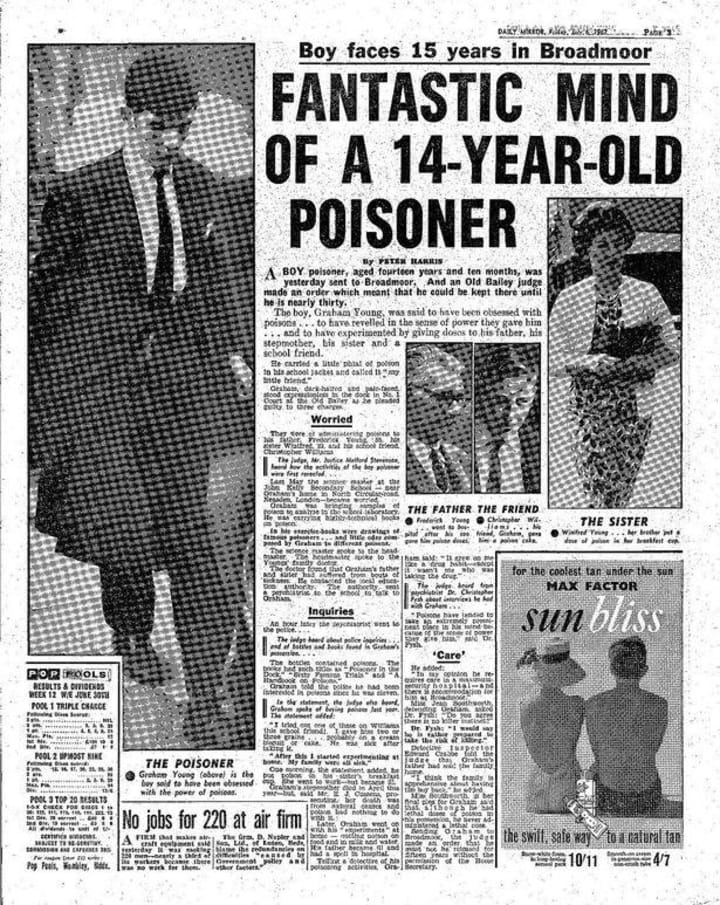
In 1959, while attending John Kelly's Boys School, Graham started reading books on the subject of toxicology. Now, keep in mind, he was 12 at the time. Why would a 12 year old kid be so interested in toxicology? Well, remember his idolization of William Palmer? He wanted to do the stuff that Palmer had done - but better. He knew that to do that he would have to understand the actual science behind how poisons worked. The most disturbing part of the whole thing here is that his plan to be better than Palmer started before he'd even hit puberty.
Young's interests earned the kid a nickname; the mad scientist. Young's father encouraged his interest the sciences even getting him a chemistry set that included dangerous substances that could cause some serious health problems.
A Mystery Bug
Now, at some point in 1961, Young's knowledge of poisons made it easy to convince a local chemist to sell him antimony - soft metalloid substance which is toxic; as in HIGHLY toxic. His cover story? He was a researcher working on a project. He signed the local poisons registry as M.E. Evans.
In February of that year, he started experimenting. His first victim was a classmate but, unable to observe his victim, Graham shifted gears. He needed easy access to his victims, so he brought his twisted experiments home.
His father, mother, and sister all fell victim to a strange series of illnesses. The symptoms included vomiting, diarrhea, and stomach cramps - which were excruciatingly painful. At one point, Graham himself fell ill with similar symptoms. Now, I don't know if that was an accident or a deliberate thing to throw off the scent.
In November of that year, Graham served Winifred a poisoned cup of tea, but the taste was so bad that she only took one mouthful before tossing it. That cup of tea put Winifred in the hospital, and doctors concluded that she'd been exposed to Atropa belladonna - deadly nightshade. His father wasn't too happy, but when he confronted his son, Graham had one heck of an alibi.
He claimed to have been making shampoo in the family's teacups. Graham also mentioned that there must've been some sort of residue left behind. His dad was sceptical, but he couldn't find anything and warned him to be careful in the future - remember, that chemistry set he'd been given was full of DANGEROUS substances.
Goodbye Mother Molly
Okay, so clearly Graham is seriously escalating, and it wasn't long until he crossed the ultimate line.
April 21, 1962, Easter Saturday, Molly Young collapsed and soon passed away. Her death was attributed to an injury she'd sustained in a car accident some years before. This is obviously not the case - he would later admit to dosing Molly with a lethal dose of Thallium.
Molly's death left her husband heartbroken, but Graham didn't stop with his mother. Shortly after the funeral, Young's father became seriously ill and was rushed to the hospital. He was told that he had a serious case of antimony poisoning - one more dose would've killed him.
Around this time, Young's aunt and a science teacher became suspicious of the boy. His teacher had found vials of poison in Graham's desk.
A Braggart in Broadmoor
So...with the discovery of poisons in his desk, a psychiatrist was called in to talk to the little poisoner. To avoid a potential problem, the psychiatrist posed as a career counsellor. That psychiatrist didn't sit for long, Graham bragged about his crimes - although, he stopped just shy of admitting murder. It wasn't long before the 'counsellor' took off to call the police.
Young was arrested on his way home from school on May 23, 1962. He was found to have vials of antimony and thallium in his possession. He was put on trial, as you can imagine, and was subsequently sent off to Broadmoor psychiatric hospital. At 14, he was the youngest patient in the facility and it wasn't long before things went slightly off the rails.
First off, another patient passed away of cyanide poisoning. Now, you may be wondering: where did the cyanide come from? Well, that's why Graham was suspected of involvement. The grounds of the Broadmoor hospital were full of laurel plants and Young took great delight in explaining how you could, apparently, make cyanide from the plants. A short while later, cleaning products were found in the nursing staff's coffee.

While locked up in Broadmoor, Young continued to read up on medicine and toxicology with books from the hospital's library.
Graham first applied for release in 1965 and was rejected with his father saying he should never be released. Still, in 1971, he was released after one of the hospital's psychiatrists vouched for his total rehabilitation. As he was leaving, Young made a rather...dark comment to a nurse on his way out.
"When I get out, I'm going to kill one person for every year I've spent in this place." - Graham Young
Sadly, that nurse didn't take him seriously.
The Poisoning Spree Begins
Following his release from Broadmoor, Graham took up residence in a hostel in the Slough suburb of Cippenham. While he was there, he befriended Trevor Sparkes, a 34 year old man who resided at the same hostel. One night, after accepting a drink from Young, Sparkes, fell violently ill, he was vomiting and suffering from extreme diarrhea, and testicular pain - ouch! He also experienced pins and needles. These symptoms would return periodically over the next few months until he left Slough in April of '71. He would later make a full, if gradual, recovery.
Having just been released from a psych hospital, Young had some difficulty with finding work. He was able to get work as an assistant storekeeper at a photographers studio in Hemel Hempstead. He lied on his application form, mentioning that he'd suffered a mental breakdown after his stepmother's death...yeah, sure, buddy.
Now, it's important to note that this photography place worked with some pretty toxic stuff...you can probably guess where this is going.
Poisoning Colleagues

Young typically kept to himself, often reading on his own - almost always some book on Nazi propaganda. This made things super awkward because, after all, this was post-war England and many of his colleagues had either fought in the war or knew someone who had. I'm amazed he didn't get the snot kicked out of him!
I guess it helped that his offering to make tea and coffee for everyone. Still, it wasn't long before he started poisoning his colleagues. His colleagues all had their own mugs, which made it easy to pick specific targets. Young's M.O. was to take a specific mug slip a dose of poison (either antimony or thallium) into the drink. His first victim? Bob Egle.
Bob Egle, Ron Hewitt, and Diana Smart
Bob Egle was a WWII vet who had survived the evac of Dunkirk, he was also - rather awkwardly - constantly asked about his wartime experiences. I'll give you one guess as to who it was that asked, yep, Young. Bob Egle began to fall ill throughout 1971 with symptoms fading after stepping away from the whole setup. Sadly, upon his return, the symptoms returned with such severity that he was rushed to St. Albans City Hospital.
He passed away on July 7, 1971, and his death was attributed to a rare condition called Guillain-Barre syndrome. From what little I understand, it's a condition resulting from nerve damage. After Bob Egle's death, Graham was chosen to take his place.
Ron Hewitt, Egle's assistant, was Graham's next target - he would slip the poor man antimony which made him sick. Now, he recovered after leaving the company (Young was Hewitt's replacement). It wasn't long before a probationary period was setup so that he could be the head honcho of the company. Diana Smart, another colleague, was someone that Young didn't like, he would often slip antimony into her tea.
David Tilson, Jethro Batt, and Fred Biggs
His next victim was Dave Tilson, he slipped a dose of Thallium into his tea but he found the tea too sweet so he didn't finish it. Tilson got a second dose a week later which got him laid up in the hospital. After leaving the hospital, David recovered, but he was rendered infertile.
Jethro Batt was another man that Young was poisoning. Batt befriended Young and would often give him a ride home. Later, Graham would admit to administering a lethal dose of thallium in two doses in coffee. Jethro, however, didn't finish the drinks finding them too strong. Still, he was admitted to the hospital and made a good recovery. Unfortunately, like Dave Tilson, Jethro was rendered permanently infertile by the poisoning.
Graham Young's final victim was Fred Biggs. Biggs was a local councillor, 56 years old, and a part-time employee with the photography company. Young slipped the poor chap doses of antimony and thallium which put him in several hospitals.
He had breathing difficulties, chest pains, and, rather gruesomely, his skin began to peel off. Young made a good show of playing the concerned friend, constantly calling Biggs' wife and the hospitals for updates. Fred Biggs finally passed away on November 19, 1971.
The Arrest of Graham Young

Young's seeming immunity to the mystery bug that had been tormenting his colleagues had been getting attention with one man alerting some of the higher-ups to Young's interest in poisons. The company's doctor, Dr Iain Anderson, apparently ruled out heavy metal poisoning.
This didn't really sit well with Graham, however, who insisted that the displayed symptoms matched up with heavy metal poisoning. The two men had a discussion later on and Dr Anderson was very impressed with Young's knowledge of poisons and toxicology. It wasn't long before the company's owner, John Hadland, contacted the authorities.
The fact that the mystery bug coincided with Young's arrival at John Hadland's company. A further background check revealed Graham's previous poisoning convictions.
On November 20, 1971, police officers found Young at his aunt and uncle's place in Kent where they arrested him. As they snapped the cuffs on, Graham was heard to remark:
"Which one is it you're doing me for?" - Graham Young
Good grief, that's a damning statement, but it gets worse. The police searched his residence and found a variety of poisons and, get this, a diary in which Graham documented his crimes, makeshift medical charts, dosage notes, poisons used, the whole nine yards. Let us not forget, these were his friends and colleagues. When asked about why he went after them, his response was chilling.
"I suppose I had ceased to see them as a people - at least, a part of me had. They were simply guinea pigs." - Graham Young
Additionally, his narcissistic nature drove him to brag. He admitted to the poisonings of his colleagues and bragged about getting away with the perfect crime - the poisoning of his stepmother - at the age of 14.
No More Tea Times
Graham Young was charged with two counts of murder, two counts of attempted murder, four counts of administering poison with intent to injure, and four counts of administering poison to cause grievous bodily harm. He rescinded his previous confession, stating that he'd made it so that he'd be left alone.
The jury wasn't told about Young's previous convictions because of laws meant to protect defendants from biased convictions. With that said, the evidence was strong:
- 75 witnesses from the prosecution
- Excerpts from Young's diary
- The results from Biggs' autopsy
- Results from the examination of Bob Egle's cremated remains (this was the first time that this sort of evidence was used in court).
The only witness on Graham's side was...Graham himself and claimed his diary was the layout for a novel that he was working on. If that sounds familiar, I think it's a common tactic, that has been used multiple times including by John Leonard Orr - who was featured in Crime Chronicles in December last year.

On June 29, 1972, following the conclusion of the trial, the jury left to decide on a verdict. They deliberated for around 98 minutes before coming back with their decision.
- Guilty - 2 counts of murder (Bob Egle and Fred Biggs)
- Guilty - 2 counts of attempted murder (Jethro Batts & David Tilson)
- Guilty - 2 counts of administering poison with intent to injure (Ron Hewitt & Diana Smart)
- Not Guilty - 2 counts of administering poison with intent to injure (Trevor Sparkes and a man named Buck) Note: I wasn't able to find the name 'Buck' among Young's victims.
Young was also acquitted of all four counts of administering poison to cause grievous bodily harm.

Still, considering all the evidence, Graham Young was sentenced to life imprisonment. He requested, through his lawyer, not to be sent to Broadmoor. He wanted to go to a regular prison instead. This request was granted, and was carted off to Park Lane Hospital (which would be renamed Ashworth Hospital).
Now, I'm not sure when, but it seems Graham was transferred to HM Prison Parkhurst. In the evening of August 1, 1990, prison guards found Graham Young dead in his cell. The cause of death was marked as heart failure. Of course, as Young had no history of heart problems, there's been speculation that his death was self-inflicted.
Graham Young's Crimes led to Change
Following the trial of Graham Young, new laws went into effect to further restrict access to poisons and to put further safeguards in place regarding the release of psychiatric patients. So, I guess some good came out of all this but this case really bothered me.
The fact that Graham Young could kill so easily with practically no remorse, and that he started at the tender age of fourteen is something that I'm just not used to seeing.
About the Creator
Greg Seebregts
I'm a South African writer, blogger and English tutor; I've published 1 novel and am working on publishing a 2nd. I also write reviews on whatever interests me. I have a YouTube Channel as well where I review books, and manga and so on.
Keep reading
More stories from Greg Seebregts and writers in Criminal and other communities.
Crime Chronicles: Jack the Ripper, a True Crime Legend
Jack the Ripper is one of the best-known mysteries in true crime. The serial killer took 5 lives before vanishing into the night. His identity was never discovered and even now the story of the Ripper continues to fascinate the world.
By Greg Seebregtsabout a year ago in Criminal
He Confessed to Murder in My DMs: The Dark Side of Going Viral
When your most-liked story becomes someone else's confession booth The message came in at 2:13 a.m. I saw the notification glow on my nightstand, that soft blue light that usually means spam, or a heart emoji, or someone asking, “Did this really happen?”
By abualyaanart6 days ago in Criminal
The 1995 Oklahoma City Bombing
Terrorism and mass shootings no longer shock most Americans. We've heard and seen it all before, more than a few times. Nowadays, we scroll past the post or flip the TV channel without much thought. Perhaps terror attacks are so common that we expect them. We aren't surprised. It hasn't always been this way. There was a time when terror attacks and mass shootings rarely happened. Those rare events shocked people to their core. It left them fearful, yet communal, ready to come together for the betterment of our country.
By Criminal Matters5 days ago in Criminal
Review of 'Man on the Run'
My wife and I saw Man on the Run, a nearly 2-hour documentary on Amazon Prime, about Wings, Paul McCartney's group that flew around the world from shortly after The Beatles broke up in early 1970 to shortly after John Lennon was murdered at the end of 1980, making a Beatles reunion forever impossible.
By Paul Levinson2 days ago in Beat




Comments (1)
I saw 'The Young Poisoner's Handbook' once, and I wondered about the details of the life.