
Crime Chronicles: Jack the Ripper, a True Crime Legend
Will we ever know his identity?


Jack the Ripper is one of the best-known mysteries in true crime. The serial killer took 5 lives before vanishing into the night. His identity was never discovered and even now the story of the Ripper continues to fascinate the world.
Overcrowding in Whitechapel
Our story begins with an explosion of immigrants - largely Irish immigrants - in the major parts of England. Between 1882 and 1888, Jewish refugees moved into the Whitechapel neighborhood in the East End after fleeing antisemitic riots in Russia.
This meant that the area became very overcrowded very quickly and work and housing conditions went from bad to worse. Robbery, violence, and alcoholism were a common problem and many women in the area turned to prostitution to make a living. Infant mortality at the time was also really high, with a little over 50% of children dying BEFORE the age of five.
By October 1888, there were an estimated 62 brothels and 233 common lodging houses - the hostels of the time. As far as numbers go, there were an estimated 1,200 women working as prostitutes at the time and around 8,500 people living in the local lodging houses.
All of this led to major social unrest and gave Whitechapel a very bad reputation...a reputation that only got worse.
There are 5 Canonical Killings

During the time period between 1888 and 1891, there were eleven murders, but only five of the eleven that were attributed to Jack the Ripper.
- Mary Ann Nichols
- Annie Chapman
- Elizabeth Stride
- Catherine Eddowes
- Mary Jane Kelly
Now, there are two other cases, Emma Elizabeth Smith and Martha Tabram, which aren't included in the Ripper files. I'll talk about all of them, but let's start with the first one. I should note that this is going to get...unpleasant.
The First Victim: Mary Ann Nichols
The first victim was discovered at 03:40 a.m. on Friday, August 31, 1888. Her name was Mary Ann Nichols, and she'd been seen alive by a former roommate, Emily Holland, just an hour before - headed down Whitechapel Road.
As far as info on Nichols goes, she had a few different jobs, but the bulk of her work was as a prostitute.
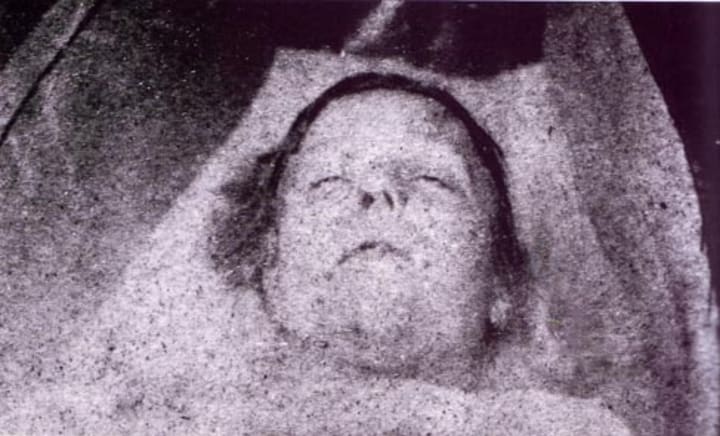
Her body was discovered by a man named Charles Allen Cross. He found what he thought was a tarpaulin. It wasn't until he looked closer, that he realized what he was looking at. Nichols was found on her back, with her skirt raised above her knees...and that's just the position she was found in - we'll get into the other bits soon enough. Cross managed to get someone else to come over - a passing cart owner - to confirm what he was seeing and the two went off to find a police officer.
The police officers contacted a surgeon - Dr Llewellyn - who confirmed that the woman was indeed dead.
Five Minutes of Torture
Dr Llewellyn had Nichols' body moved to the morgue where he conducted a post-mortem. Guys, I really hope you're not squeamish, because this is where things get really nasty. Strap in.
Nichols' throat had two deep slash wounds that cut all the way down to the vertebrae. They had been inflicted from left to right and measured 8 and 4 inches in length respectively. Her abdomen had been slashed as well - resulting in disembowelment and she had been stabbed twice in the vagina.
The doctor's opinion was that all the wounds were done with the same blade and that the murderer had some medical knowledge. He also estimated that the injuries would've taken around five minutes to inflict.
I can't imagine the pain and fear this woman must've felt; it sounds like she went through five minutes of torment.
Annie Chapman

September 8, 1888, just a week after the discovery of Mary Ann Nichols' body, a second body was found. Annie Chapman's body was an absolute mess and, while Nichols' case got a lot of attention, Chapman's murder sparked terror in the East End of London.
Much like Mary Nichols, Annie Chapman's throat had been slashed by two deep cuts, her abdomen was cut open, part of her intestines had been removed and - okay, I'm sorry, I can't go into further detail. It's making me nauseous, I'll have to make a few changes going forward.
Catherine Eddowes and Elizabeth Stride

The next two victims were Catherine Eddowes and Elizabeth Stride. They were both found on the 30th of September, 1888 - yes, there were two victims in one night.
Stride's body was found around 1 a.m. in Whitechapel with a single six-inch incision across her neck; this was determined to be the cause of death. Apart from the deep cut in her throat which severed her carotid artery and trachea, there were none of the usual Ripper mutilations. This led to a bit of confusion as to whether she was a Ripper victim. There was, however, a theory, that the Ripper was interrupted before he could finish his usual methods.
Catherine Eddowes' body was found 3/4 of an hour later. Her throat and abdomen were slashed, and her one kidney and part of her uterus had been removed. The doctor who did the post-mortem determined that, much like Mary Ann Nichols, Eddowes would've taken around five minutes to die. Her injuries were severe, and it was clear to everyone that Jack the Ripper had struck again.
Mary Jane Kelly: The Final Victim?

The body of one Mary Jane Kelly on Friday, November 9, 1888, at 10:45 a.m. in her bed at 13 Miller's Court. Her injuries were...ugly...very, very ugly. Her throat had been slashed right down to the spine, she had been disembowelled with her uterus, kidneys, and a breast had been removed and placed beneath her head.
Other types of viscera were all over the scene and Kelly's heart had been removed. She is largely considered the last official victim of Jack the Ripper, but there were four other killings, but these aren't considered to be victims of the Whitechapel murderer.
The Investigation
With the murder of Annie Chapman, the public was driven to hysterics. A large team of police officers conducted a house-to-house canvas. 2,000 people were interviewed during that canvas with 300 investigated and 80 people were detained.
Initially, the investigation was run by the Criminal Investigation Department of the Whitechapel Metropolitan Police. They later brought in inspectors Frederick Abberline, Henry Moore, and Walter Andrews from Scotland Yard to assist in the hunt for the shadow that haunted the streets of Whitechapel.
Common suspects included:
- Butchers
- Physicians
- Surgeons
Why? Well, because of the way the bodies were mutilated.
A Profile and a Committee
In September 1888, a group of volunteers formed the Whitechapel Vigilance Committee. These volunteers would patrol the streets of Whitechapel looking for anyone who shouldn't have been in the area. Why would they do this? Well, because many people were frustrated with the police's apparent lack of progress and they were afraid of the negative impact the killings had on the businesses in the area.
In October 1888, police surgeon Thomas Bond was approached to give his opinion on the surgical skills of the killer. His examination of one of the victims, based on his observations, he wrote:
"All five murders no doubt were committed by the same hand. In the first four the throats appear to have been cut from left to right, in the last case owing to the extensive mutilation it is impossible to say in what direction the fatal cut was made, but arterial blood was found on the wall in splashes close to where the woman's head must have been lying.
All the circumstances surrounding the murders lead me to form the opinion that the women must have been lying down when murdered and in every case the throat was first cut." - Thomas Bond, 1888
He was also of the opinion that the killer had NO surgical skill and that his homicidal tendencies came from a vengeful mindset, religious mania, and hypersexuality.
Letters from the Ripper
Over the course of the investigation, hundreds of letters flooded the police department. Several letters were allegedly written by the killers himself, three letters were particularly notable:
- Dear Boss
- Saucy Jacky Postcard
- From Hell
The Dear Boss Letter:

The first letter was dated September 25, 1888, it was received by the local news agency on the 27th and forwarded to Scotland Yard on the 29th. The letter read as follows:
"Dear Boss,
I keep on hearing the police have caught me, but they won't fix me just yet. I have laughed when they look so clever and talk about being on the right track. That joke about Leather Apron gave me real fits. I am down on whores and I shant quit ripping them till I do get buckled.
Grand work the last job was. I gave the lady no time to squeal. How can they catch me now. I love my work and want to start again. You will soon hear of me with my funny little games. I saved some of the proper red stuff in a ginger beer bottle over the last job to write with but it went thick like glue and I cant use it.
Red ink is fit enough I hope ha. ha. The next job I do I shall clip the ladys ears off and send to the police officers just for jolly wouldn't you. Keep this letter back till I do a bit more work, then give it out straight. My knife's so nice and sharp I want to get to work right away if I get a chance. Good Luck.
Yours Truly.
Jack the Ripper"
Reading the Dear Boss letter is a bit difficult. The idea of a serial killer reaching out isn't new with plenty of modern day killers doing the same thing. What makes this letter hard for me to read is the casual way in which 'Jack' describes his deeds. He's almost gleeful in the note and shows absolutely no remorse. There's also the implication that he collected blood to use as ink which is...yuck.
The Saucy Jacky Postcard

Received on October 1, 1888, the postcard referenced a 'double event' - likely referring to the murders of Eddowes and Stride. The card read:
"I was not codding dear old Boss when I gave you the tip, you'll hear about Saucy Jacky's work tomorrow double event this time number one squealed a bit couldn't finish straight off. Had not time to get ears off for police thanks for keeping last letter back till I got to work again.
Jack the Ripper"
The From Hell Letter

"From hell
Mr Lusk,
Sor
I send you half the Kidne I took from one women prasarved it for you tother piece I fried and ate it was very nise. I may send you the bloody knif that took it out if you only wate a whil longer
signed
Catch me when you can Mishter Lusk"
Oh boy, this one is packed with spelling errors and that irritates me (I'm an English Tutor). The analysis and calligraphy are, apparently, very different and the letter was initially considered a hoax. Still, the media sent it on to Scotland Yard anyways.
The authorities released the letters in the hope that somebody might recognise the handwriting. This was ultimately a vain hope as nobody recognised the writing.
The Legacy of Jack the Ripper
Jack the Ripper's crimes terrified the residents of the East End for months his identity of the Ripper was never discovered. With the death of Mary Jane Kelly, the monster that had haunted the streets of Whitechapel for months, just...vanished.
True crime aficionados have been going crazy for the better part of the last 137 years; trying to find out who he is. There have been books, movies, comics, art, and even videogames featuring the legendary monster of Whitechapel.
Will we ever know his identity? Well, I doubt it. The fact of the matter is that there's no concrete evidence that the Ripper was killed or captured. I don't think there's any remaining physical or forensic evidence that might help identify the killer. Like I noted above, it's been 137 years since the Ripper killings. The victims' bodies, and any physical evidence would've most likely disappeared by now and forensic science wasn't really a thing at the time.
It's not impossible that we'll find out, but it's highly unlikely. That said, what do you guys think? Do you think we'll ever find out who he was or what happened to him?
About the Creator
Greg Seebregts
I'm a South African writer, blogger and English tutor; I've published 1 novel and am working on publishing a 2nd. I also write reviews on whatever interests me. I have a YouTube Channel as well where I review books, and manga and so on.
Keep reading
More stories from Greg Seebregts and writers in Criminal and other communities.
Crime Chronicles: Peter Kurten, the Vampire of Dusseldorf
Vampires. The popularity of these immortal beings has just skyrocketed over the last few years with shows like True Blood and movies like Twilight and the many, many adaptations of Dracula pushing them through the roof. Books and TV shows have also had major contributions, but what happens when vampires come alive?
By Greg Seebregtsabout a year ago in Criminal
They Tortured Her For 44 Days: The Disturbing Case Of Junko Furuta
No case has haunted Japan as much as the murder of Junko Furuta. It was a crime so brutal and cruel that it forced a nation to question the justice system esxpecially when it comes to juvenile offenders. Why are juvenile offenders protected by the law? The law was so disappointing that it protected the perpetrators and not the victim.
By Megha Pavanagd3 days ago in Criminal
Under the Bridge: The Senseless Killing of Jocelyn Nungaray
The tragic case of 12-year-old Jocelyn Nungaray sent shockwaves through Houston Texasband beyond highlighting issues of child safety vulnerability and the justice systems response to heinous crimes. On the night of Sunday June 16 2024 Jocelyn sneaked out of her home in north Houston to visit a nearby convenience store. What should have been a short innocent errand turned into a nightmare when she encountered two men who appeared lost and in need of directions.According to investigators the men—later identified as 26-year-old Franklin Jose Pena Ramos and 22-year-old Johan Jose Martínez-Rangel, both Venezuelan nationals who had entered the United States illegally—followed the young girl. Surveillance footage captured the trio together showing them walking in the area. The men allegedly lured Jocelyn to a secluded spot under a bridge near West Rankin Road not far from her residence. There she was subjected to brutal violence including sexual assault before being strangled to death.
By Kure Garba6 days ago in Criminal


Comments (2)
Brilliant ♦️♦️♦️
Great work! Good job.