
Canada Shooting Shocks the Nation: Inside the Deadly Tumbler Ridge Tragedy
How the Tumbler Ridge tragedy exposed deep questions about gun violence, mental health, and public safety in one of the world’s safest nations

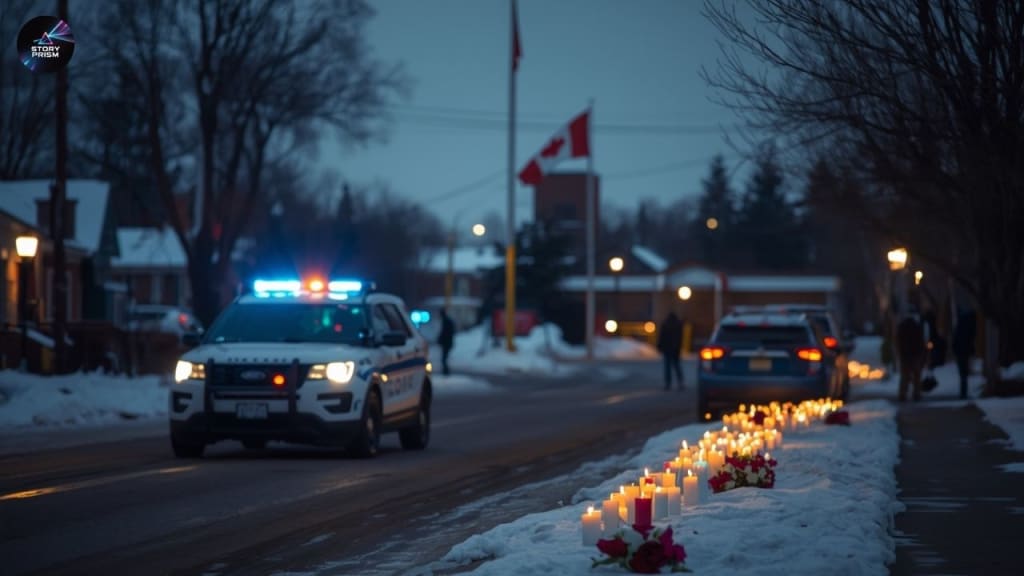
A Rare and Devastating Act of Gun Violence Rekindles National Debate on Safety, Mental Health, and Firearms in Canada
Canada is mourning after one of the deadliest mass shootings in its modern history unfolded in the small community of Tumbler Ridge, British Columbia, leaving ten people dead, including the suspected shooter, and more than two dozen injured. The attack, which took place on February 10, 2026, shattered the sense of security in a country where such violence remains rare and deeply unsettling.
The shooting has prompted an outpouring of grief nationwide, raised urgent questions about public safety and mental health, and reignited discussions about gun violence in Canada — a nation often contrasted with its southern neighbor for its stricter firearm laws.
What Happened in Tumbler Ridge
Tumbler Ridge is a remote town in northeastern British Columbia with a population of roughly 2,400 residents. Known for its natural beauty and close-knit community, it became the center of international attention when gunfire erupted at Tumbler Ridge Secondary School, followed by a related incident at a nearby residence.
According to police and media reports, authorities received calls reporting an active shooter at the school shortly after 1:20 p.m. local time. Within minutes, officers from the Royal Canadian Mounted Police (RCMP) arrived on the scene, initiating lockdown procedures and evacuating students and staff.
By the time the situation was brought under control, the scale of the tragedy had become clear.
The Human Toll
Officials confirmed that ten people lost their lives, including the alleged attacker. The breakdown of casualties highlights the complexity and severity of the incident:
• Six victims were found dead inside Tumbler Ridge Secondary School
• Two victims were discovered at a nearby home believed to be connected to the suspect
• One victim died while being transported to a hospital
• The suspected shooter was found dead at the school, believed to have died from a self-inflicted gunshot wound
In addition, more than 25 people were injured, several seriously. Due to the town’s isolation, at least two critically wounded victims were airlifted to hospitals in larger cities for advanced medical care.
For a community of this size, the emotional and psychological impact is immeasurable.
The Suspect and Ongoing Investigation
Police have not publicly released the identity of the shooter, citing the ongoing investigation and the sensitivity of the case. Early alerts described the suspect as a woman, an uncommon detail in mass shooting cases that has drawn significant attention.
Authorities have stated that:
• The suspect is believed to have acted alone
• There is no ongoing threat to the public
• A motive has not yet been confirmed
Investigators are examining the suspect’s background, movements before the attack, and potential warning signs. As with many mass casualty events, officials are being cautious about releasing details to avoid speculation and misinformation.
Inside the School: A Community Forever Changed
Tumbler Ridge Secondary School serves students in grades 7 through 12, making the tragedy especially painful for families and educators. During the attack, students and teachers reportedly barricaded themselves in classrooms and safe areas, following emergency protocols while waiting for police to secure the building.
Parents anxiously gathered at reunification centers as authorities worked to ensure that every student was accounted for. For many families, the hours following the shooting were filled with fear, confusion, and grief.
Classes in the town were cancelled for the remainder of the week, and crisis counselors were deployed to support students, staff, and residents coping with trauma.
National Reaction and Mourning
The shooting sent shockwaves across Canada.
Prime Minister Mark Carney addressed the nation, expressing deep sorrow and solidarity with the victims and their families. He postponed scheduled engagements and pledged federal support for the community, emphasizing that “no town should ever experience such horror.”
British Columbia Premier David Eby described the attack as “an unimaginable tragedy” and promised full provincial assistance, including mental health services and victim support.
Flags were lowered to half-mast in multiple locations as Canadians paused to mourn lives lost in an act of senseless violence.
Messages of condolence also poured in from international leaders, highlighting the global resonance of such tragedies — even in countries where mass shootings are uncommon.
A Rare but Not Unprecedented Tragedy
Canada has some of the strictest gun laws in North America, and mass shootings occur far less frequently than in many other countries. However, history shows that they are not unheard of.
Notable past incidents include:
• The 1989 École Polytechnique massacre in Montreal
• The 2020 Nova Scotia attacks, the deadliest mass shooting in Canadian history
• Several other incidents listed in historical records of mass shootings across the country
The Tumbler Ridge shooting now ranks among the most severe, particularly as one of the deadliest school-related shootings Canada has experienced in decades.
Renewed Debate on Gun Violence and Mental Health
In the aftermath, Canadians are once again grappling with difficult questions:
• How did this happen in a small, quiet town?
• Were there warning signs that were missed?
• Are current gun laws sufficient, or do they need strengthening?
• What role does mental health care play in preventing such tragedies?
Advocacy groups are calling for expanded mental health resources, particularly in rural and remote communities where access to care is often limited. Others are urging policymakers to review firearm access, storage regulations, and background checks.
While investigations continue, experts caution against rushing to conclusions, emphasizing the importance of evidence-based policy responses rather than reactive measures.
Media Coverage and Public Awareness
The shooting dominated headlines across major international outlets, including Reuters, AP News, BBC, and The New York Times, reflecting the scale and rarity of the event.
Live blogs, continuous updates, and on-the-ground reporting provided real-time information while authorities worked to verify facts. Media organizations have also been careful to balance public interest with respect for victims, avoiding the glorification of violence or the unnecessary repetition of the attacker’s identity.
Healing and the Long Road Ahead
For Tumbler Ridge, the coming months will be about healing — a process that will take time, patience, and collective support.
Community vigils, memorials, and counseling services are already being organized. Schools will eventually reopen, but the emotional scars will remain for many who lived through the day.
Experts note that recovery from mass trauma is not linear. Children, educators, first responders, and families may experience delayed emotional responses, underscoring the need for long-term mental health support rather than short-term interventions alone.
A Moment of National Reflection
The Canada shooting in Tumbler Ridge is more than a local tragedy. It is a moment of national reckoning — a reminder that even countries with strong safety records are not immune to acts of extreme violence.
As investigations continue and the nation mourns, many Canadians are asking how to honor the victims not only with words, but with meaningful action aimed at prevention, compassion, and care.
In a country that prides itself on community and social responsibility, the hope remains that lessons learned from this devastating event can help prevent another town from experiencing the same heartbreak.
About the Creator
Keep reading
More stories from Story Prism and writers in Criminal and other communities.
Nancy Guthrie: Faith, Influence, and the Ongoing Search That Captured a Nation
Introduction Nancy Guthrie is a name that, for many years, resonated quietly but powerfully within Christian teaching circles. Known as a respected Bible teacher, author, and speaker, she spent decades helping others understand Scripture, suffering, and hope. But in early 2026, her name entered the national spotlight under heartbreaking circumstances.
By Story Prisma day ago in Criminal




Comments
There are no comments for this story
Be the first to respond and start the conversation.