
Before Racism was filmed and posted on social media, There was Rodney King
Before police brutality was filmed and posted on social media for the whole world to see, There was Rodney King 1991 Video which brought media attention causing riots and racial division.

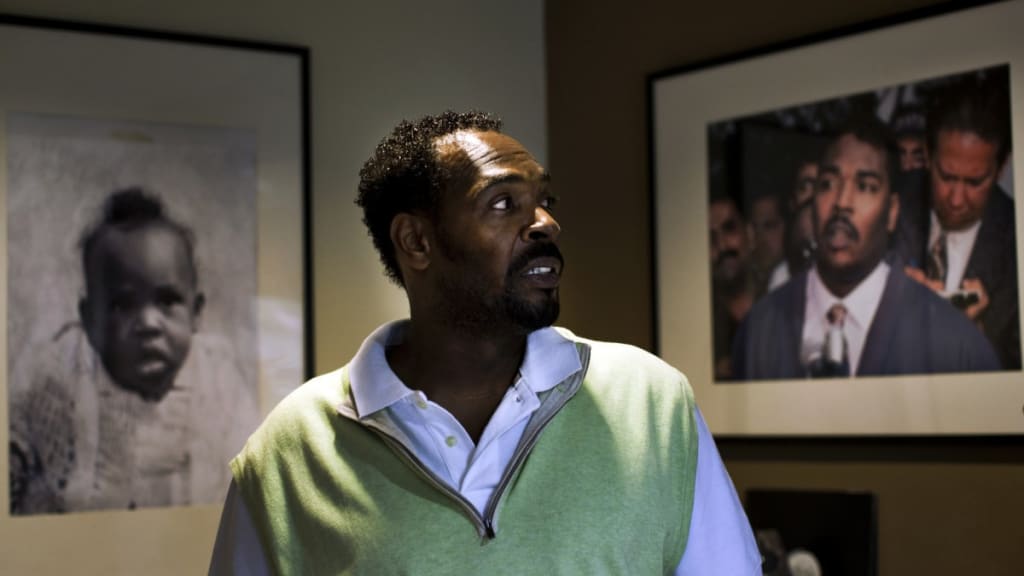
Before police brutality and racism were filmed and posted on social media, There was Rodney King's 1991 Video that shocked the whole nation.
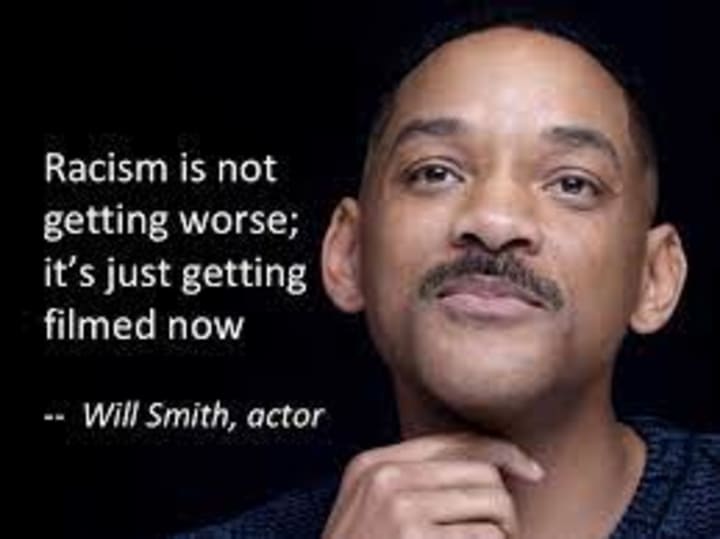
In the words of actor Academy Award Winner Will Smith,
"Racism isn't Getting Worse, It's Getting Filmed now."
If you were around somewhere in the 90s, you would know about this story about a black man who was brutally attacked by the police before social media took over.
About 31 years ago, a black man was pulled over by the police until they got him out of the vehicle and started physically beating him down with a baton, Luckily he survived but he suffered bruises and fractures on his face. It was filmed by a plumber who saw the whole attack and made national outrages from the black community. And who was the man who was brutally attacked by the police?
His name was Rodney King.
Unlike all the black men and black women who were killed by police brutality, Rodney King was a victim of police brutality but survived.
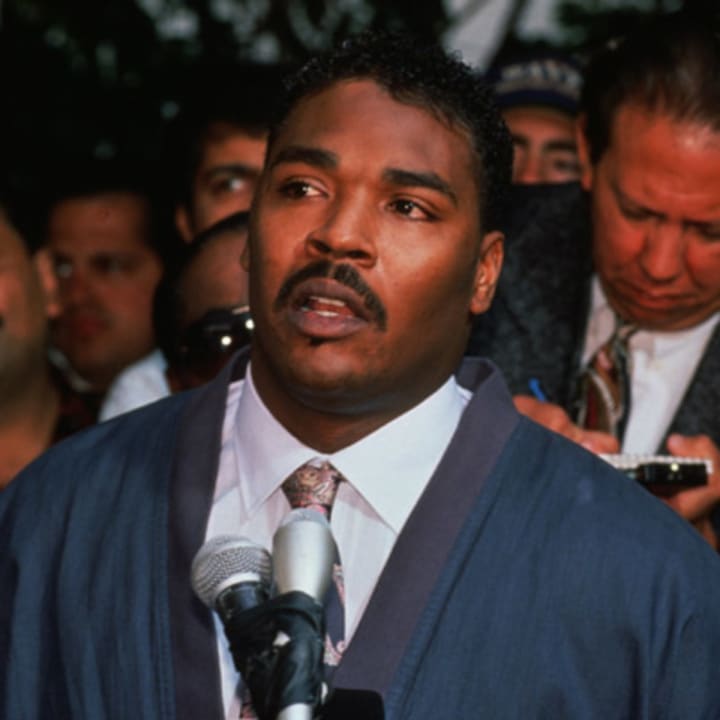
Who is Rodney King?
Rodney Glen King was born on April 2, 1965, in Sacramento, California to his parents Ronald and Odessa King. He and his four siblings grew up in Altadena, California. According to families and friends, described him as funny and affectionate.
Of course, Rodney was no stranger of the law. On November 3, 1989, King robbed a store in Monterey Park, California. He threatened the Korean store owner with an iron bar. King then hit the store owner with a pole before fleeing the scene. King stole two hundred dollars in cash during the robbery. He was caught, convicted, and sentenced to two years' imprisonment. He was released on December 27, 1990, after a year in prison.
March 3, 1991
On March 3, 1991, King was driving in a 1988 Hyundai Excel after hanging out with his friends. King was intoxicated and was on probation for robbery. He was pulled over by California Highway Patrol officers for speeding on the 210 Freeway.
King pulled off the freeway and eventually stopped his car in front of a San Fernando Valley apartment building. At that point, L.A. police officers took over the traffic stop. King tried to elude with the officers that he was drinking and on probation. George Holliday who was living at the apartment building awake and heard the commotion between the officers and filmed the altercation. The officers started hitting King with their batons striking King like he was a wild zoo animal and using racist slurs. Thankfully, he survived but it wasn't enough. King was taken to Pacifica Hospital.
He suffered a facial bone, swollen face, broken leg, bruises on the body, and a burn area to the chest. At a press conference, Los Angeles police chief Daryl Gates announced that the four officers involved would be disciplined for use of excessive force and that three would face criminal charges. The LAPD initially charged King with "felony evading", but later dropped the charge.
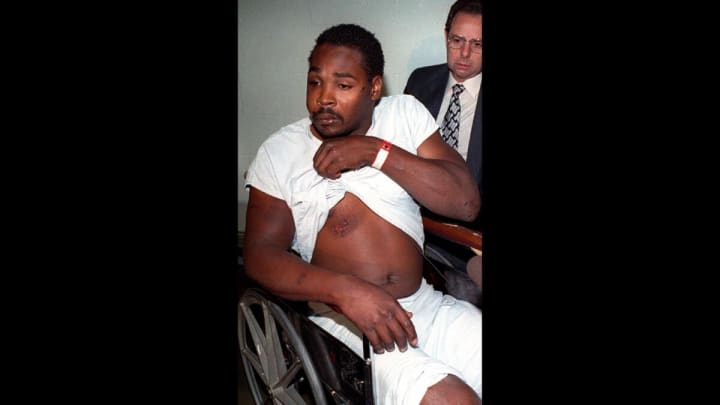
Two Officers, Stacey Cornell Koon and Laurence M. Powell were given the guilty verdict and charged with assault and use of excessive force. While the other two officers were given the not guilty verdict. Koon and Powell were given a less prison sentence.
George Holliday sold his video of the beating to the local television station, KTLA, which broadcast the footage and sold it to the national Cable News Network (CNN). The widely broadcast video caused outrage around the country and triggered a national debate on police brutality. After the release of Holliday's video, California has been divided with racism between African Americans and Asian Americans. Protestors and Riots terrorized LA, looting stores, Asians arming themselves to protect their stores, and flamethrowers throwing in the streets of LA causing millions of dollars worth of damages.
The riots lasted for six days.
On May 1992, King had enough with all the riots, hatred, racism against each other in California.
"Can't we all just get along?”
King sheds a tear pleading with the crowd of people and media journalists.
The riots had died down however everyone in LA still wasn't pleased with the .
After the riots and the injustice, he moved from Los Angeles to suburban Rialto to live quietly with his family. Over the years, King has refrained from talking to the press about the incident or his troubles. Throughout the years, comedians even black comedians would use Rodney's name as the butt of their jokes.
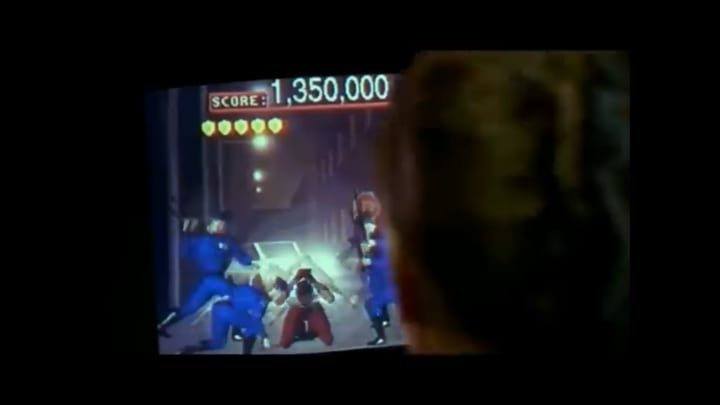
Films would mention King's name. For instance, in the film Don't Be a Menace While Drinking Your Juice in The Hood, if you watch the scene where Ashtray and Loc Dog (played by Shawn and Marlon Wayans) were arrested for being black on a Friday night at the station a group of police officers Playing in an arcade game called Rodneys Ride. In the game of group of police officers played as officers in the game beat Rodney King.
King struggled with alcoholism and more troubles with the law. In 2004, he pleaded guilty to driving under the influence of the drug PCP, after he lost control of his SUV and slammed into a power pole in Rialto, California. In 2005, he was arrested on suspicion of domestic violence, and in 2007, police found him drunk with non-life threatening gunshot wounds also believed to be the result of a domestic dispute. King would appear on Vh1's Celebrity Rehab. Weeks after the 20th anniversary of the riots and soon after releasing his memoir "The Riot Within: My Journey from Rebellion to Redemption." was released. King went on to CNN forgiving the police officers that brutally beat him.
"Yes, I have forgiven them because I have been forgiven so many times. My country's been good to me, and I've done some things that wasn't pleasant in my lifetime, and I've been forgiven for that."
King on CNN, April 28, 2012
Sadly in 2012, June 17, 2012, King was found lying unconscious in the pool. He was pronounced dead at the scene. He died from accidental drowning.
He was 47.
He leaves behind his fiancée Cynthia and his three children. Since King's death, Rodney has become a symbol as the victim of police brutality. King has no hatred for the police or anyone involved in the LA community. King's daughter now takes over her father's legacy.
Source
https://www.history.com/this-day-in-history/riots-erupt-in-los-angeles
http://content.time.com/time/specials/2007/la_riot/article/
https://projects.scpr.org/timelines/la-riots-25-years-later/
https://www.cnn.com/2012/04/28/us/rodney-king-profile/index.html
If you would like to know the story about Latasha Harlins, look below here.👇👇👇👇
About the Creator
Gladys W. Muturi
Hello, My name is Gladys W. Muturi. I am an Actress, Writer, Filmmaker, Producer, and Mother of 1.
Instagram: @gladys_muturi95
Facebook: facebook.com/gladystheactress
YouTube: @gladys_muturi
COMING SOON TALES & CONFESSIONS OF HIGH SCHOOL
Keep reading
More stories from Gladys W. Muturi and writers in Criminal and other communities.
United Healthcare CEO is murdered and no sympathy
UnitedHealthcare CEO gets assassinated outside of New York City on a Wednesday morning while the investigation is ongoing on the search of the gunman not many people were feeling any sympathy for the deceased CEO and here’s why…..
By Gladys W. Muturiabout a year ago in Criminal




Comments
There are no comments for this story
Be the first to respond and start the conversation.