
Arkansas: The Tragic Case of Casey Woody
Most disturbing crime of every state in U.S.A.


In the small town of Holland, Arkansas, in 2002, the story of 13‑year‑old Casey Woody sent shockwaves through the community and beyond. This tragic case, which highlighted the emerging dangers of online interactions, remains a poignant reminder of how trust can be manipulated and the severe consequences that can result from misplaced confidence.
Casey Woody was known in her community for her friendly nature and outgoing personality. Like many teenagers, she enjoyed communicating with friends both in person and online. Her social interactions extended to various internet platforms, where she engaged in chat sessions and built friendships. However, in the digital realm, appearances can be deceiving, and Casey’s online interactions would soon take a dark turn.
Unbeknownst to Casey and her family, an individual posing as a teenager began interacting with her online. This person, using the alias David Fuller, misrepresented himself as a peer. In reality, Fuller was a 47‑year‑old man who exploited the anonymity of the internet to target vulnerable individuals. Over several months, he built a relationship with Casey, gaining her trust through frequent messages and shared interests.
On the evening of December 3, 2002, while Casey was home alone due to her father’s work schedule, Fuller’s carefully constructed façade took a sinister twist. Under the guise of friendship, he convinced Casey to venture outside, away from the safety of her home. What followed was a series of events that would forever alter the lives of those who loved her.
When Casey failed to return home, alarm quickly spread throughout the community. Her family, deeply worried, alerted local authorities. The subsequent investigation revealed disturbing signs that a struggle had occurred at the family residence. Investigators meticulously pieced together digital communications and evidence from the scene, which eventually led them to Fuller.
The investigation intensified as both local and federal agencies collaborated, tracking Fuller’s online activity and his attempts to cover his tracks. In a race against time, authorities discovered that Fuller had rented a van and used it to move from one location to another. This led them to a storage unit in Conway, Arkansas—a location where the unthinkable was confirmed. By the time law enforcement arrived, it was too late; both Casey and Fuller were found deceased. The tragedy was an overwhelming blow to the community, igniting a broader conversation about the potential dangers lurking in the digital world.
Casey Woody’s case quickly became a catalyst for change. It brought national attention to the risks associated with unsupervised online interactions, especially for minors. In the aftermath, her family channeled their grief into action, establishing The Casey Woody Foundation. This organization was dedicated to educating parents, educators, and young people about online safety, warning against the perils of trusting strangers in digital spaces.
The case underscored the urgent need for enhanced safety measures on social networking platforms and prompted legislative discussions around protecting vulnerable users. Community leaders and law enforcement agencies began working more closely together to monitor and address online threats, aiming to prevent future tragedies of a similar nature.
Today, the story of Casey Woody remains one of Arkansas’s most heart-wrenching tales—a reminder that the digital world, while offering many opportunities, also harbors dangers that can have devastating real-world consequences. Her memory has spurred ongoing efforts to create safer online environments and educate the public about the risks of digital deception.
Though the pain of loss endures, the changes initiated in the wake of her passing offer hope that future generations might be better protected. The legacy of Casey Woody continues to influence policies and community outreach efforts, ensuring that her story is not forgotten and that it serves as a beacon for improved online safety.
About the Creator
Keep reading
More stories from Sandun Nayanajith and writers in Criminal and other communities.
Arizona: The Kelvin Grade Incident
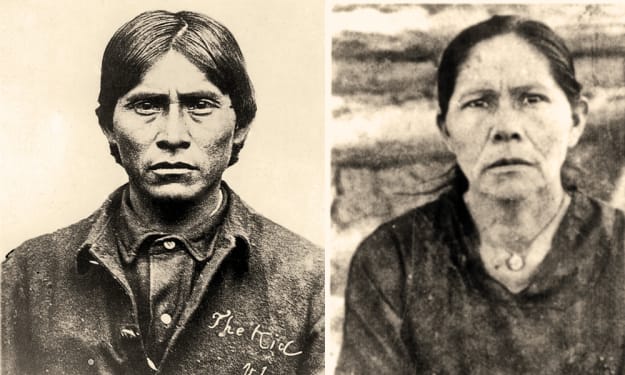
n November 2, 1889, a seemingly routine prisoner transport in Globe, Arizona, transformed into one of the most dramatic and unsettling episodes in the state’s history. This event, later known as the Kelvin Grade Incident, involved a series of decisions that led to a dramatic confrontation, a massive manhunt, and a legacy that continues to be discussed in Arizona’s folklore.
By Sandun Nayanajith11 months ago in Criminal
Story of Larry Hoover
Larry Hoover Legacy in Reform and Pop Culture For more than half a century, the name Larry Hoover has carried a weight that echoes through Chicago’s history and American urban culture. Often discussed in connection with crime, controversy, or organized street life, Hoover’s identity became a symbol far larger than the man himself. But beyond the headlines, beyond the mythology, and beyond the notoriety, there exists a lesser‑known story: the story of a human being who evolved, reflected, transformed, and worked to redirect others from the path he once walked. It is this story — the one buried beneath decades of public narrative — that reveals the depth of Larry Hoover’s transformation.
By Organic Products about 17 hours ago in Criminal



Comments
There are no comments for this story
Be the first to respond and start the conversation.