
A Tragic End in Irony: What Stasy’s Charles Death Says About Preference and the Dangers of Ignoring Red Flags by NWO Sparrow
How public disdain for Black men and misplaced trust in white partners shaped a deadly path


The White Knight Safety Myth That Killed Stasy Charles by NWO Sparrow
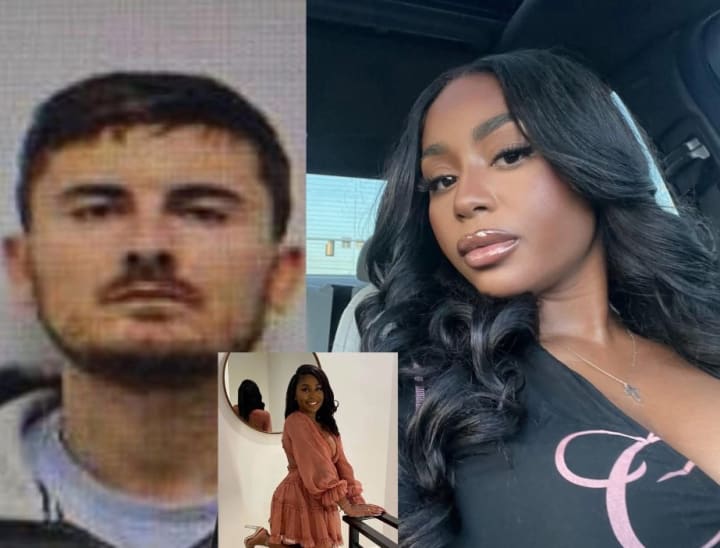
The death of Stasy Charles in Baton Rouge is painful because it never had to happen. Her boyfriend Steven Heinrich Jr stabbed her in a parking lot even though he already had six restraining orders filed against him by former partners. Police reports show that Stasy was beaten only three days before the final attack. This was not a random act of violence. It was the final strike in a pattern of escalating violence from a man who should have never been near her in the first place.
There is tragedy and it comes wrapped in a level of irony that is impossible to ignore. Stasy made repeated public statements that rejected Black men entirely. Not just preference. Total rejection. The tweets tell a story that is now haunting. She said that she hated when people challenged her excitement for Kamala Harris and followed that with a comment that she would have “locked them black men up too" . In another tweet she said “we hate black men over here.” In another post she said she would love to live like a white person in New Orleans because they make the city look “not dirty.” These were not just jokes. They were not just slips. They were loud public declarations that placed whiteness on a pedestal while pushing Black men into the gutter.

Her posts created a digital footprint that should force a real discussion. Stasy was not a young woman who simply dated outside her race. She did not just express a preference for white men. She expressed contempt for Blackness and treated white men as an elevated class. She positioned Black men as disposable and positioned white men as the clean, safe, desirable option. The painful part is that the man she uplifted represented a violent history far worse than anything she projected onto Black men. Data from multiple national studies shows that white men hold the highest rates of domestic violence cases among all racial groups. That reality collapses the fantasy that proximity to whiteness provides safety. It never did.
Many people are afraid to say this out loud because they fear victim blaming. This situation is not about blame. It is about the messages that influence choices. Stasy believed that dating a white man would exempt her from certain dangers. She expressed this belief openly. She framed Black men as dirty, criminal, and unworthy. The irony is that the man she trusted was the one with a criminal history of violence against women. The women who came before her tried to warn the world. Six restraining orders is not a coincidence. It is a map. A bright red map. Yet the warnings did not guide her choices. Her online statements reveal why.
There is a specific conversation that the Black community must have about how internalized narratives shape relationships. Some Black women have been told that the only way to be safe or valued is to escape the men in their own community. Some think that love becomes more valid when the partner is white. Some believe proximity to whiteness brings elevation. These ideas did not come out of nowhere. They are produced by media, by social conditioning, and by pressure from people who devalue Blackness. Even so, none of these ideas protect anyone from violence. Abuse exists in every community. Believing that white men are more gentle or more responsible only creates a false sense of security that can have devastating results. So we see.

Stasy’s story shows how dangerous that false sense of safety can be. She rejected the men who share her identity. She rejected the men who are often the first to march, organize, and defend Black women when violence strikes. She rejected the men who would be expected to speak out now. Even with these tweets in circulation it is Black men who are speaking the loudest about the injustice she experienced. It is Black men demanding answers about the violence. It is Black men pushing back against the silence around her murderer’s history.
This tragedy exposes a major issue. When Black women attack Black men publicly they contribute to a messaging cycle that hurts everyone. It weakens community trust. It distorts reality. It encourages others to look at Black men as a danger while ignoring documented dangers in other groups. The intent might be personal preference. The impact becomes much bigger. Online statements do not disappear. They influence how people think. They influence the next girl who reads them. They influence how Black men see their own value when they show up to defend the same people who speak down on them.

It is important to say this clearly. Stasy did not deserve what happened to her. No one deserves that. Her words do not justify her murder. Her choices do not excuse the brutality she faced. Yet her story must be examined with honesty. You cannot advocate for safety without addressing the patterns that lead people toward danger.
Her boyfriend’s record contained the warnings. His ex partners tried to save the next woman even if they did not know her name. The court documents stand as proof of the violence he brought into his relationships. He was not safe. He was not clean. He was not the image she projected onto white men in her tweets. The idea that a white man could keep her safe was a fantasy created by belief, not reality.
This case should push Black women and Black men to sit with a difficult question. What happens when personal preference becomes guided by internalized anti Blackness. What happens when preference becomes a shield that hides abuse. What happens when community bonds are weakened because one group feels celebrated and the other feels humiliated. Stasy’s story hurts because it could have been prevented. The red flags were not subtle. The warnings were public. The history was recorded. Her tweets add layers to the conversation because they show what she believed about her own people and what she believed about white men. The end result tells a different truth. A truth that is painful to process yet necessary to face.
If this story teaches anything it is that no one is protected by proximity. No one becomes safer by putting down their own people. No one escapes violence by stepping into another racial group. Safety comes from awareness, community support, and accountability. Abuse is not confined to one race. It never has been. The belief that it is can lead people directly into danger. Stasy believed she was choosing safety when she rejected her own community. Her death proves that safety is not found in stereotypes. It is found in truth. The truth in this case is heartbreaking. It is also a call to stop repeating harmful narratives. It is a call to protect each other without bias. It is a call to challenge internalized beliefs before they lead to irreversible consequences.
About the Creator
NWO SPARROW
NWO Sparrow — The New Voice of NYC
I cover hip-hop, WWE & entertainment with an edge. Urban journalist repping the culture. Writing for Medium.com & Vocal, bringing raw stories, real voices & NYC energy to every headline.
Keep reading
More stories from NWO SPARROW and writers in Criminal and other communities.
The Mask Slipped: What Rory’s Old Tweets Reveal About Whiteness in Hip Hop Spaces by NWO Sparrow
When the Jokes Ain’t Jokes: Rory’s Old Tweets and the Truth About Whiteness in Hip Hop Black Twitter exposed more than offensive posts. It exposed a pattern of entitlement that thrives in our culture when unchecked.
By NWO SPARROW4 months ago in Criminal
Father accused of killing daughter after dispute inside family home
In the early hours of Monday January 27 2025 a quiet residential area in Cincinnati was thrust into tragedy when a family dispute turned deadly leaving a young woman dead and a community searching for answers.According to authorities 64-year-old Franklin Thompson is accused of fatally shooting his daughter Heather Thompson during a heated argument inside their family home. Heather who was 24 years old, reportedly became involved in a confrontation with her father over a household rule prohibiting smoking indoors.
By Kure Garbaabout 17 hours ago in Criminal
The Rise and Fall of Jeffrey Epstein
Jeffrey Epstein was once known as a mysterious billionaire with connections to politicians, royalty, and powerful business figures. Behind his wealth and influence, however, was a long pattern of abuse that shocked the world when it came fully to light. His story is not just about crime—it is about how power, money, and secrecy can protect wrongdoing for decades.
By Haroon Pasha4 days ago in Criminal
I was in a Toxic Relationship, with my Workplace
“You got that?” My ex yelled. His hands were balled into fists at his side. At six foot three, he towered over me. A normal person would have been afraid, but I looked up a video of George Lopez repeatedly saying, “I got this,” and showed it to him. I had grown used to this treatment, so much so that I didn’t blink when he ripped the phone from my hand and threw it across the room.
By Jade M.a day ago in Confessions


Comments (2)
Choices have consequences. RIP (Rest in Preference)
I knew her personally and there's some key points that you're unaware of that sort of make your article inaccurate. Stasy was not a fully black woman. She was mixed. Her mother is white and her father is Haitian. She is just as much white as she is black. Also she did not date white men because she thought they were safer. She preferred them and that's just how it was. It was never about safety or social climbing.