
AI171: The Suicide Theory That Wasn’t?
Inside the mysterious crash of Air India Flight AI171 — malfunction or human hand?

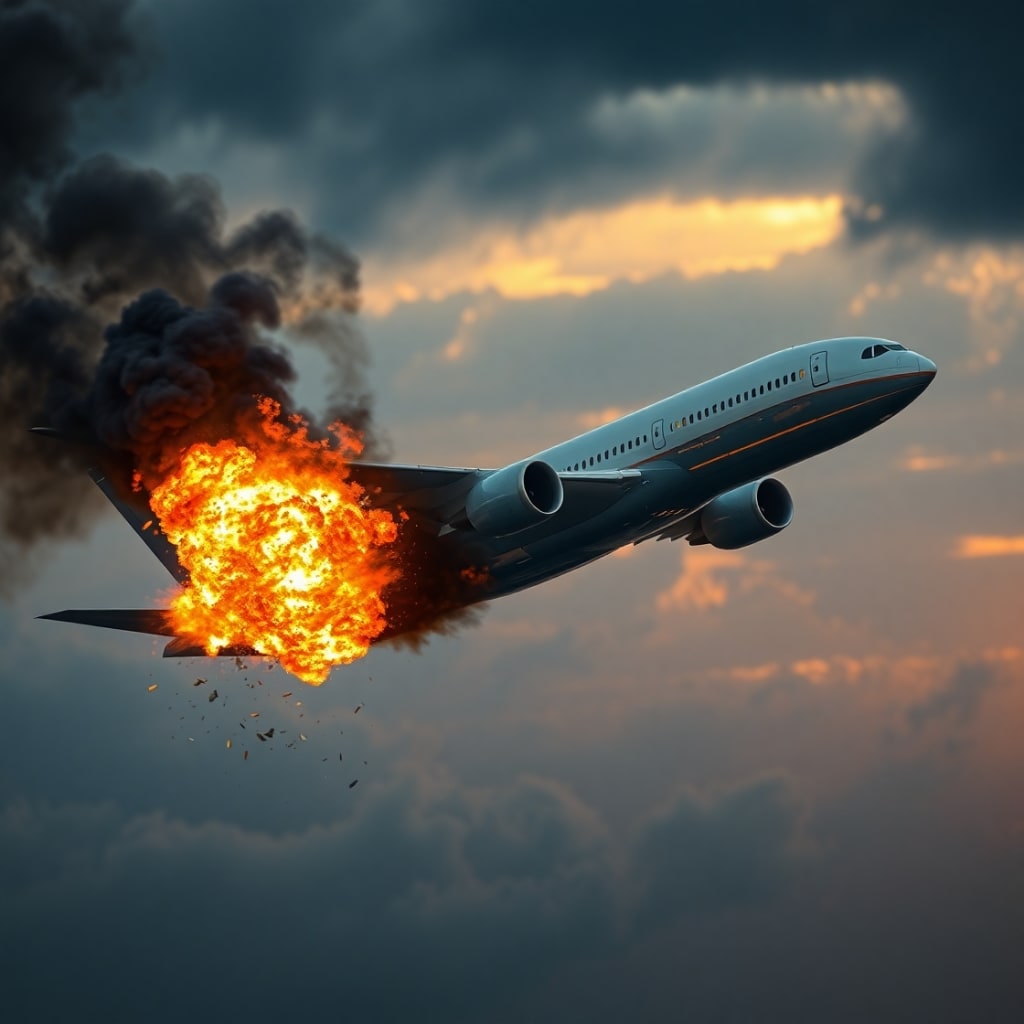
A Routine Flight Turned Tragedy
June 12, 2025, began like any other morning at Ahmedabad International Airport. The sky was crystal clear, the wind was calm, and planes were smoothly arriving and departing every few minutes. Among them stood Air India’s Boeing 787 Dreamliner, tail number VT-NB, operating as Flight AI171 — set to fly from Ahmedabad to London. It had just arrived from Delhi two hours earlier and was now prepped and fueled for its long-haul journey.
On board were 230 passengers and 12 crew members. In the cockpit were two experienced pilots:
Captain Sumit Sabharwal, age 56, with over 15,600 flight hours
First Officer Clive Kundar, age 32, with 3,400 hours total, and 1,128 on the 787
Both passed their pre-flight breath analyzer tests, and the aircraft had no signs of mechanical faults. The only recent issue — a minor technical glitch — had already been cleared by maintenance.
The Takeoff — Normal Until It Wasn’t
At exactly 1:13 PM, the aircraft received pushback clearance. By 1:38:39 PM, the Dreamliner lifted off from Runway 23. So far, everything appeared flawless — from the weather to cockpit communications. CCTV footage confirmed a smooth takeoff, with no anomalies visible.
Then, everything changed — within seconds.
Just three seconds after liftoff, while climbing at 180 knots, both engines began to lose thrust. The fuel cut-off switches for Engine 1 and Engine 2 were flipped from "run" to "cut-off" — one after the other, just a second apart.
“Why did you cut the fuel switches?” one voice asked.
“I didn’t,” the other replied.
(Cockpit voice recorder)
Moments later, the emergency Ram Air Turbine (RAT) deployed — a sign of complete engine failure.
A Deadly Descent
Within seconds, the aircraft began losing altitude rapidly. At 1:39:05 PM, a desperate “Mayday” distress call was recorded by Air Traffic Control. But no further response followed.
Seconds later, the plane crashed — hitting a chimney of the Army Medical Corps building and then slamming into the BJ Medical College hostel. The wreckage spread over 1,000 feet. Everyone on board perished — except one passenger, miraculously seated near an emergency exit. Nineteen people on the ground also lost their lives.
The Big Question: Sabotage, Suicide, or System Failure?
Investigators recovered critical flight data, revealing the flaps were set for normal takeoff, landing gear was still down, and the thrust levers were forward — indicating that the pilots were trying to maintain control.
Most intriguingly, both fuel switches — initially turned off — were turned back on before impact. Could it have been a mechanical fault? Unlikely. The fuel switch mechanism requires both hands to operate — one to unlock and the other to move the switch. It cannot be flipped accidentally.
So, if neither pilot admits to switching it off, who did?
Suicide Theory? Let’s Rewind History
Aviation history has seen tragic cases where pilots deliberately crashed planes:
2015 – Germanwings Flight 9525: The co-pilot locked out the captain and crashed the plane into the Alps.
2013 – LAM Mozambique Airlines Flight 470: The captain manually set the autopilot to zero altitude.
1999 – EgyptAir Flight 990: Religious phrases were heard before the plane nosedived.
1997 – SilkAir Flight 185: The pilot turned off both voice and data recorders before diving the plane.
These incidents shared one thing in common — no communication with ATC before the crash.
But AI171 Was Different
In AI171’s case, the pilots tried to restart the engines, re-enabled the fuel switches, and even issued a distress call. Seconds before impact, the nose of the aircraft lifted up — suggesting they were attempting to recover.
Could this really have been a suicide mission? Highly doubtful.
A Hidden Threat in the System
A 2018 FAA bulletin warned of potential faults in the fuel control switch locking mechanism, especially in Boeing 737 aircraft. The same part — 4TL 8373D — was also installed in AI171’s Dreamliner.
However, the bulletin wasn’t mandatory — it was merely an advisory. Air India, like many carriers, skipped the inspection.
So what are we left with?
If it wasn’t suicide, and it wasn’t human error…
Could a faulty switch design — known to regulators for years — be the silent culprit?
Final Thoughts
AI171’s crash remains a haunting mystery. One that forces us to ask hard questions — not just about pilots and procedures — but about ignored warnings and overlooked inspections.
Because in aviation, every system failure is a human failure too.
About the Creator
Dani khan
Hi, I’m Dani Khan! 🌟 I share cool facts, life tips, and inspiring ideas. Follow me to learn, grow, and stay curious every day! 📚✨ #StayCurious #DaniKhan
please hit the subscribe for more
The Digital Gallows
"The clock has struck three, the coffee is cold, and the shadows are beginning to speak. Welcome back to the desk of The Night Writer. Tonight, we’re scrolling through a ghost story written in high-society ledger ink. But be careful—what you find might not be the truth, but the trap."
By The Night Writer 🌙 2 days ago in Criminal




Comments
There are no comments for this story
Be the first to respond and start the conversation.