
A Carefully Timed Murder Behind Closed Doors
Former officer **Robert Fratta** built a church alibi while hiring killers to murder his wife, **Farah Fratta**, amid divorce and insurance motives, later convicted, sentenced to death, and executed eventually.
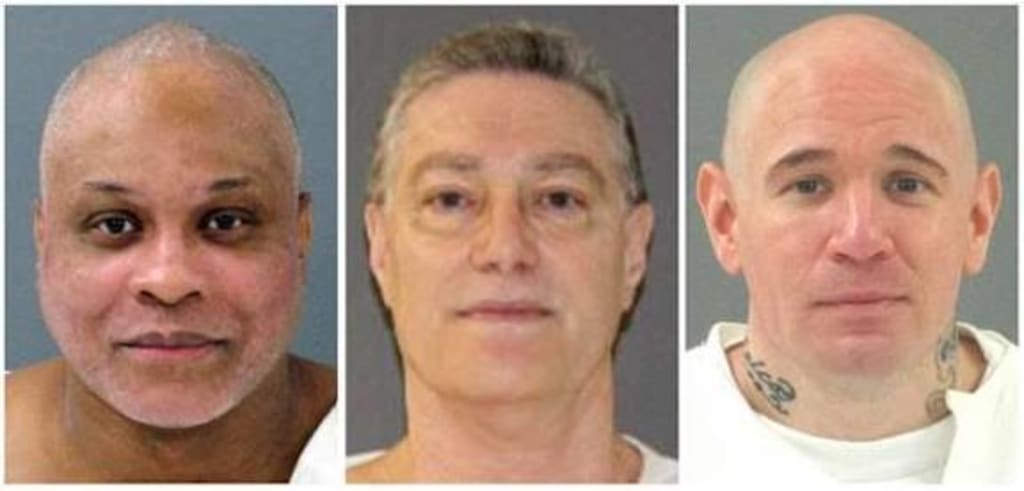
Robert Fratta a former police officer and firefighter believed he was clever enough to erase his tracks and escape responsibility for a carefully planned crime. What appeared, on the surface, to be an ordinary family outing to church would later become one of the most telling moments in a case that exposed how deeply calculated his actions were.On November 9, 1994, Robert Fratta attended a church service with his children in Missouri. To those around him, he seemed distracted and unsettled. During the service, he left the congregation twice to make phone calls. At the time, neither his children nor fellow worshippers had any reason to suspect that these calls had nothing to do with an emergency or family matter. What they did not know was that Fratta was attempting to construct an alibi for a crime that had already been set in motion.
Behind the calm public appearance was a deliberate and deadly plan. Fratta had hired two men to kill his wife, **Farah Fratta**. While he sat in church, trying to place himself somewhere visible and verifiable, Farah was at home in **Texas**, unaware that her life was about to end. She was ambushed inside her own home and shot in the head. The murder was swift and brutal, and it immediately raised troubling questions about who could have wanted her dead.
In the aftermath, Fratta’s behavior quickly attracted attention. When he was interviewed by the media and by investigators, he appeared remarkably calm. There were no visible signs of grief, shock, or emotional collapse that might normally be expected from someone who had just lost a spouse in such a violent way. Instead, he seemed detached and oddly performative, even making playful or inappropriate facial expressions while on camera. This unusual demeanor became one of the first public indicators that something about his story did not add up.
As detectives began to look more closely at the Fratta family’s situation, a clearer motive emerged. Robert and Farah were in the middle of a bitter divorce and child custody dispute. Their relationship had deteriorated into a legal and emotional struggle over finances and the future of their children. Investigators soon learned that the tension between the couple extended well beyond ordinary marital conflict. The divorce proceedings and custody battle created a context in which financial and personal gain could be linked directly to Farah’s death.
Authorities also uncovered a life insurance policy that would benefit Robert if his wife died. This financial incentive, combined with the custody fight, provided a powerful motive. According to investigators, Fratta stood to gain both money and full control over his children if Farah were no longer alive. These potential rewards, prosecutors later argued, were central to understanding why he would arrange such a crime.
The case began to break open through Fratta’s own phone records. Investigators traced his calls and discovered repeated communication with two men who would soon become prime suspects. These records showed that Fratta had been in contact with them around the time of the murder and during the period when the plan was being arranged. What had initially appeared to be innocent phone calls made during a church service took on a far more sinister meaning once their recipients were identified.
The two men were arrested and, under questioning, the full scope of the conspiracy started to emerge. Prosecutors concluded that Fratta had hired them specifically to kill his wife. The murder was not a crime of passion, nor was it the result of a spontaneous argument or sudden violence. Instead, it was presented in court as a calculated act, organized in advance and carefully timed so that Fratta could place himself in a public setting and claim he had no involvement.
During the investigation and subsequent legal proceedings, the image of a respected public servant—both a police officer and a firefighter—collapsed. The roles he once held were meant to represent protection, responsibility, and public trust. In court, however, those credentials became part of a disturbing contrast between the life he presented to the community and the private decisions he made to eliminate his wife for personal benefit.
Ultimately, all three men involved in the crime were convicted and sentenced to death. The two hired killers were condemned for carrying out the murder, while Fratta was found responsible for orchestrating it. Prosecutors emphasized that without his planning, payment, and direction, the killing would never have taken place. The jury accepted the argument that he was not simply connected to the crime, but was its central architect.Robert Fratta was the first of the three to be executed. His case remains a chilling example of how a person can attempt to manipulate appearances, construct alibis, and exploit trust in order to hide a deeply premeditated act. What began as a seemingly ordinary church visit ultimately became one of the most revealing pieces of evidence in a case defined by deception, greed, and the calculated destruction of a family.
About the Creator
Keep reading
More stories from Kure Garba and writers in Criminal and other communities.
The abduction of Jayme Closs
The abduction of Jayme Closs shocked the United States and drew national attention to the terrifying reality of targeted, premeditated crimes committed by strangers. In the early hours of October 15, 2018, Jayme’s life was violently and permanently altered when a young man she had never met arrived at her family home in Barron, Wisconsin** with the intention of taking her for himself.The offender, whose real name is Jake Patterson (sometimes incorrectly reported as Thomas Patterson), was a 21-year-old man who described himself as socially isolated and lonely. According to his own statements, he wanted a girl to keep him company and believed abducting one was the only way he could achieve this. Rather than attempting to form a relationship in a lawful or healthy way, Patterson made the deliberate and chilling decision to kidnap a child.
By Kure Garba2 days ago in Criminal
The Long Search: What the Evidence, the Video, and the Neighborhood Really Tell Us
If you’ve been following the Nancy Guthrie case, it can start to feel like law enforcement is circling the same ground again and again. Search teams in the same desert. Agents back in the same neighborhood. That same Ring camera footage replayed from every possible angle. From the outside, it can look repetitive, even aimless.
By Lawrence Lease7 days ago in Criminal
Craft Over Catharsis Challenge Winners
Craft Over Catharsis? What the hell does that even mean? The phrase came out of a curation meeting as a genuine question. We had been noticing that many challenge entries, across prompts, naturally gravitate toward trauma, grief, and personal reckoning. That makes sense. Writing is often cathartic. It's one of the ways we process what we've lived through.
By Vocal Curation Teamabout 5 hours ago in Resources



Comments
There are no comments for this story
Be the first to respond and start the conversation.