
12-hour Russian attack on Ukraine involving ~500 drones and 40+ missiles*
12-hour Russian attack on Ukraine involving ~500 drones and 40+ missiles*

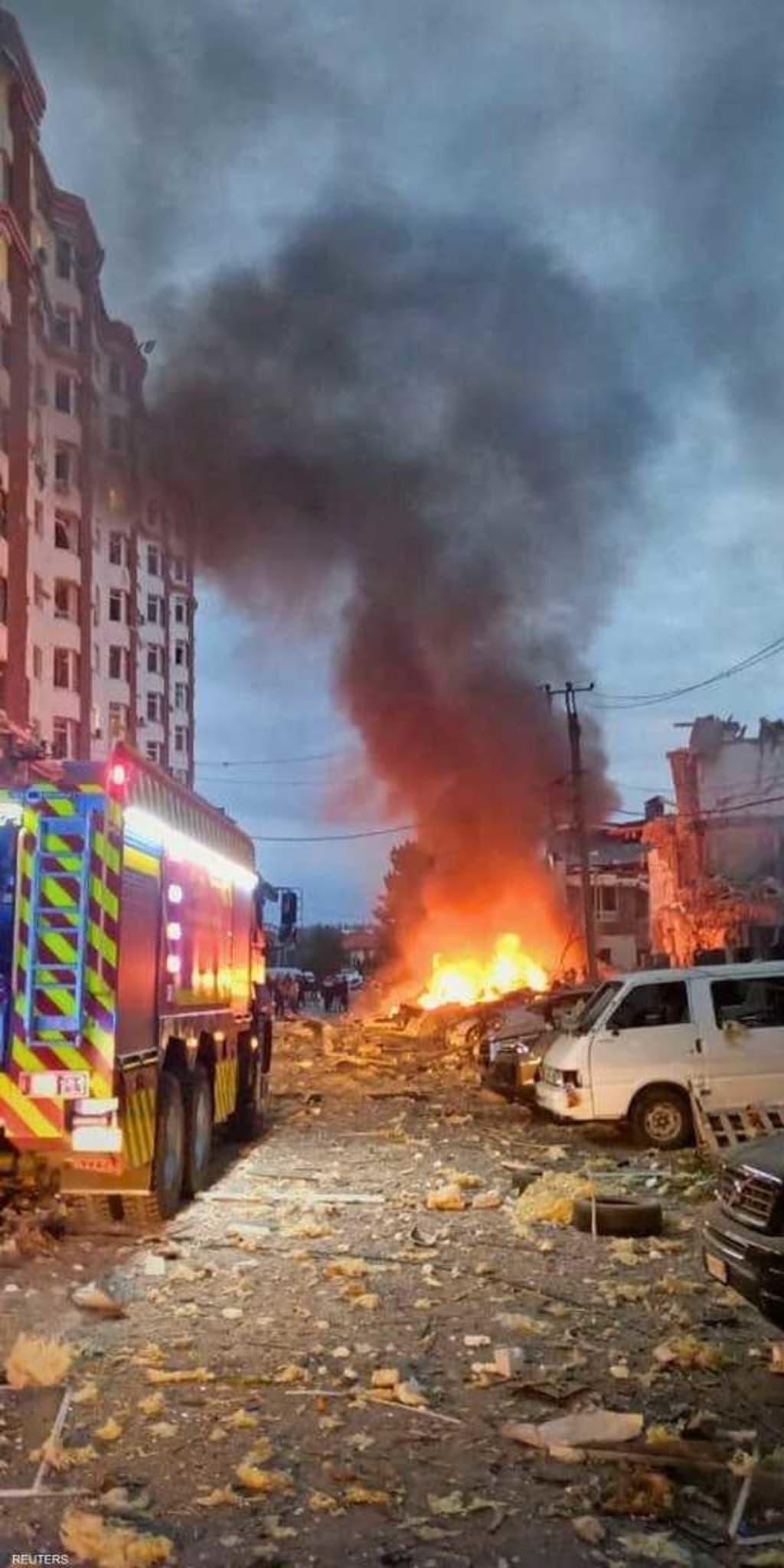
12-hour Russian attack on Ukraine involving ~500 drones and 40+ missiles**:
---
## Overview of the Attack
In a massive and sustained aerial assault lasting over 12 hours, Russian forces unleashed nearly 500 attack drones and more than 40 missiles against multiple targets across Ukraine. ([][1]) The bombardment struck regions including Kyiv, Zaporizhzhia, Sumy, Mykolaiv, Khmelnytskyi, Chernihiv, and Odesa. ([فاينانشال تايمز][1])
The Ukrainian leadership and local officials reported that the attack caused civilian casualties and significant damage to infrastructure. Among the dead was a 12-year-old girl, and dozens of others were wounded. ([The Guardian][2]) In Kyiv alone, residential buildings, a cardiology institute, and other civilian structures were damaged or destroyed. ([The Guardian][2])
Ukrainian air defenses mounted a heavy response, intercepting many of the drones and missiles, though not all of them. ([AP News][3]) The assault has been widely condemned as an act of terror against civilian areas, with President Volodymyr Zelensky calling it “vile and cowardly.” ([The Guardian][2])
---
## Context and Motivation
### Strategic Timing and Messaging
The timing of the assault appears to correlate with broader geopolitical signaling. The attack occurred shortly after the United Nations General Assembly summit and amid renewed international attention on the war in Ukraine. ([The Guardian][2]) By launching a large-scale strike during this period, Russia seems to have intended to project strength, signal its ability to sustain high-intensity operations, and perhaps shape international discourse.
Russia justified the strikes by claiming that its targets were military facilities, though Ukrainian and civilian reports indicate substantial damage to non-military infrastructure and residential areas. ([The Washington Post][4])
### Escalation of Drone Warfare
This attack underscores a continuing evolution in Russia’s use of drone swarms or mass drone attacks as a component of its aerial campaign. The sheer number of drones—nearly 500 in this strike—is notable, reflecting both axis of innovation and adaptation in modern conflict. ([]) Drone saturations are harder to counter, especially when combined with missiles to force defenders to expend interceptors across multiple threat vectors.
Russia’s use of missiles simultaneously with drones adds complexity: defenders must allocate resources between drones and higher-speed threats. In this case, the missiles reportedly included cruise missile variants. ([][])
---
## Damage, Casualties, and Human Impact
### Civilian Casualties and Injuries
According to Ukrainian reports, at least four civilians lost their lives in the attack, including a 12-year-old girl. ([The Washington Post][4]) More than 40 individuals were wounded across multiple regions. Some regional reports place the injured count above 70. ([AP News][3])
In Kyiv, a nurse and a patient died when the cardiology institute took a direct hit. ([The Kyiv Independent][5]) In the capital region and beyond, dozens of people were hospitalized, including children. ([The Kyiv Independent][5])
### Infrastructure Damage
The assault inflicted widespread damage to civilian infrastructure. Buildings in multiple districts of Kyiv suffered structural damage, partial collapse, and destruction of windows and roofs. ([The Kyiv Independent][5]) A five-story building in Kyiv was partially destroyed, according to municipal reports. ([The Kyiv Independent][5])
Beyond the capital, in Zaporizhzhia Oblast, the assault struck schools, residential high-rises, and industrial or non-residential facilities. ([The Kyiv Independent][5]) Other targeted regions also reported damage to homes, administrative buildings, and local infrastructure. ([The Guardian][2])
Notably, the attack struck during daylight hours and in heavily populated zones. The Dnipro region was later hit by a daytime drone attack, indicating a trend toward riskier targeting. ([Reuters][6])
---
## Air Defense Response & Challenges
Ukrainian air defenses responded vigorously. In many reports, a majority of the roughly 500 drones were intercepted or neutralized before reaching their targets. ([AP News][3]) Missile interception also had mixed success: while many missiles were knocked down, some penetrated defenses and caused damage. ([فاينانشال تايمز][1])
Nevertheless, the scale of the attack placed intense stress on air defense systems. Using large volumes of drones forces defenders to break up attention and resources. The combination of drones and missiles also complicates threat identification and prioritization.
Another complication is the timing: the attack spanned many hours, making it difficult to sustain uninterrupted defensive coverage. The attackers likely intended to stretch air defenses, forcing them to expend missiles and interceptor resources early, then renewing attacks later when threshold defenses are depleted.
---
## Political Response and International Reaction
### Ukrainian Leadership’s Response
President Zelensky swiftly condemned the attack as deliberate terrorism targeting ordinary civilians, demanding stronger sanctions on Russia and increased support from allies. ([The Guardian][2]) He called for immediate cessation of Russian energy imports and emphasized the need for enhanced air defense systems. ([The Guardian][2]) Zelensky accused Russia of seeking to terrorize civilian populations and to undermine international resolve. ([The Guardian][2])
The government also mobilized emergency response services, firefighting units, and rescue operations in affected areas, while working to restore essential services and medical support. ([The Washington Post][4])
### Global Reactions
The attack drew broad international condemnation. European leaders and Western allies denounced the strikes as violations of international humanitarian law and further evidence of Russia’s disregard for civilian protection. ([The Guardian][2]) The UK, Finland, among others, pledged increased support for Ukraine. ([The Guardian][2])
Poland, concerned about spillover, temporarily closed parts of its airspace and scrambled its jets. ([The Guardian][2]) The scale of the drone incursion also stoked worries in NATO about drone threats and airspace security in the region. ([The Guardian][2])
Some commentators pointed out that the strike’s timing—after the UN summit—was meant to undermine diplomatic efforts and show that Russia is not constrained by international scrutiny.
Russia, for its part, asserted that the raids targeted military infrastructure, and denied intent to strike civilian zones. Moscow also warned that any incursions into Russian airspace would prompt “decisive responses.” ([The Guardian][2])---
## Strategic Implications & Lessons
### Drone-Centric Warfare as a Force Multiplier
This attack highlights how drones are becoming central tools of large-scale aerial warfare. Swarm attacks, when combined with missiles, allow attackers to challenge traditional air defense systems through sheer volume and varied threat types.
Ukraine must continue enhancing layered defenses—radar, electronic warfare, missile interceptors, and decoys—to cope with combined drone and missile saturation.
### Infrastructure Hardening and Civilian Protection
Civilian infrastructure—medical facilities, power grids, communication lines—must be hardened and redundancies established. Early warning systems, reinforced shelters, and urban planning measures play crucial roles in reducing casualties during mass strikes.
### Diplomacy, Sanctions, and Military Aid
Zelensky’s calls for tighter global sanctions reflect a recognition that economic pressure must accompany military aid to degrade Russia’s ability to sustain these operations. The attack may galvanize further military support from allies, especially for advanced air defense systems.
### Psychological and Moral Effects
Strikes of this magnitude aim to instill fear, erode morale, and showcase dominance. However, when met with resilience and international anger, such tactics can backfire by strengthening domestic resolve and increasing external support for the victim.
The roughly 12-hour Russian aerial assault involving nearly 500 drones and 40+ missiles marks one of the most intense and multifaceted attacks in the conflict to date. While Ukrainian air defenses intercepted much of the onslaught, civilian casualties and material damage were still significant. President Zelensky and Ukrainian authorities condemned the strike as terror directed at ordinary citizens, while the world responded with outrage and renewed calls for robust support.
Strategically, the assault underscores how drone swarms combined with missile barrages are increasingly central to modern warfare. Ukraine’s defense will require not just more interceptors, but smarter integration of detection, deterrence, and resilience. Diplomatically and economically, this attack may shift political will in favor of deeper sanctions, increased arms deliveries, and stronger international resolve to prevent further aggression.
About the Creator
America today
Breaking news, political insights, real-time analysis, U.S. politics, global politics, elections, government policies, international relations, diplomacy, political debates, trending political stories, expert commentary, factual reporting,.
Keep reading
More stories from America today and writers in Criminal and other communities.
Government Shutdown: Causes, Impacts, and Implications
The 2025 U.S. Government Shutdown: Causes, Impacts, and Implications _____ On October 1, 2025, the United States entered another federal government shutdown after Congress failed to pass either a full-year appropriations package or a temporary continuing resolution. A government shutdown occurs when funding legislation is not enacted by the start of the fiscal year, which begins annually on October 1. As a result, many parts of the federal government lose their legal authority to spend money, causing closures of certain agencies, disruptions in services, and furloughs for thousands of federal workers.
By America today 4 months ago in Criminal
Don’t Ask. Don’t Tell. Until Someone Lives To Tell.
By an independent investigative researcher ⸻ A note to the reader This article relies exclusively on public records, court filings, sworn testimony, and contemporaneous reporting. It does not allege criminal coordination beyond what has been established in court. Its purpose is to examine patterns, parallels, and institutional blind spots that emerge when timelines are placed side by side. Patterns are not accusations. But patterns ignored become policy.
By SunshineChristinaabout 5 hours ago in Criminal
The $23,000-a-Day Question: Ephrata spends $8.5 million a year for police. What are we actually buying?
The Invoice Arrives Every year, Ephrata property owners receive a tax bill. A massive chunk of that bill goes to one place: The Police Department. We are told this is the price of safety. We are told that we have a "Gold Standard" department that warrants premium funding.
By Sunshine Firecracker2 days ago in Criminal




Comments
There are no comments for this story
Be the first to respond and start the conversation.