
What will the Arab countries do with the food crisis imposed by the Ukraine war?
There were many cries of panic, but no solutions were in sight.
.
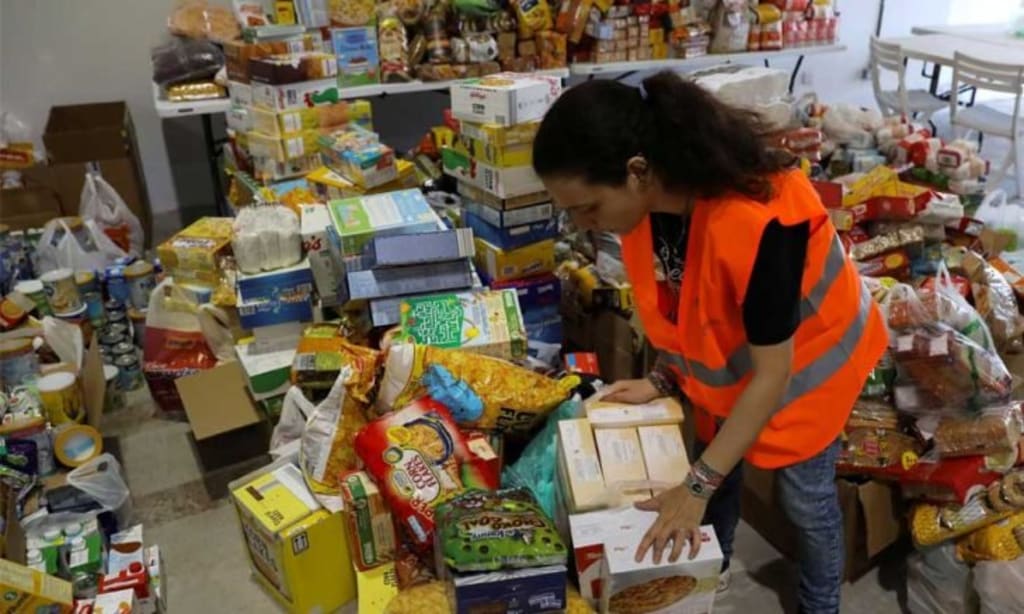
Everyone is now warning of a global food crisis that will hit many regions of this world due to the Russian war on Ukraine and the dependence on grain supplies coming mainly from both sides, and even started talking about a famine that will occur in certain regions, the most important of which is Africa.
The latest of these shouts came from the Director-General of the International Monetary Fund, Kristalina Georgieva, when she said unequivocally that “the war in Ukraine means hunger in Africa,” but not only Africa is threatened with severe repercussions, but many other regions even in Europe, as it is a major country like France. Its president declares that "we are about to enter into an unprecedented food crisis" at a time when Europeans are currently facing a significant increase in the prices of various agricultural products, but it is certain that the repercussions will be more severe and catastrophic for Africa and the Middle East.
The warnings did not stop at people's livelihood in these areas, but extended to the United Nations Secretary-General saying that "the world will witness a storm of famine and a collapse of the global food system." Such talk was accompanied by a worrying warning that this would inevitably lead not only to difficult humanitarian conditions there, but would certainly be accompanied by unrest and political turmoil whose extent no one knows from now.
If Europe is currently searching with all effort for specific exits for such a possibility, as the French President called at the recent G7 summit of the need to go to search for the best and fastest ways to develop a collective plan that seeks to raise agricultural production in Europe, then we are in Africa and in our countries Arab countries are affected more than others. We have seen nothing but an expression of fear without moving a finger, even though the food threat came to it, accompanied by the rise in energy prices, so two calamities met with it, not just one.
The paradox here is that agricultural and food experts in the European Union are currently complaining about the absence of a clear and solid European agricultural vision before this crisis, and they point out that Europe does not possess a reliable strategic reserve of grain (Germany is almost the only one with such reserves) at a time when countries were Like China or India, it is working strongly in this direction, and the result is that China has a 9-month stockpile, while the European Union has only a 36-day stockpile.
And if this is the situation of an organized bloc like the European Union, then what will the situation be in some Arab countries?! In the list of the top 10 importers of wheat in the world, we find two Arab countries, Egypt and Algeria, where Egypt is the largest importer and consumer of wheat in the world, as it imports annually more than 13 million tons, or more than two-thirds of its needs of this strategic commodity. Russia and Ukraine constitute the source of about 85 percent percent of the imported quantities.
Although a country such as Algeria, which is considered among the largest importers of soft wheat in the world, has France as a major supplier of this material, and deals to provide the required quantities of wheat with about 20 countries, it is also concerned about the possible disruption of Russian wheat that returned to its markets after A break of about five years.
As for Morocco, which is the third consumer of wheat in Africa, after Egypt and Algeria, and is among the ten countries in the world that import the most grain, it is no less disturbed than others, as Ukraine and Russia come in second and third, after France, among the exporters of soft wheat to the Kingdom, while Canada ranks The first place among its suppliers of durum wheat.
Perhaps Tunisia is among the most affected, especially as it is already experiencing a severe financial crisis with delays in the payment of salaries and a shortage of basic foodstuffs such as grain, sugar, oil and some medicines. What makes the situation worse is the deep political crisis there and the state of denial of its president, who believes that many of the country’s problems are due to conspiracy against him, to the extent that the shortage of foodstuffs brought him back to monopoly, although he does not explain everything, especially since some ships loaded with grain have turned back. From Tunisian ports because the state did not have the ability to pay, in a dangerous precedent that carries very frightening omens about the future.
The political cost of all of the above is currently unknown, especially in both Egypt and Tunisia, with rising prices and more suffocation of people in their livelihood. Do not forget that both of them lived in the eighties of the last century major popular uprisings called the bread uprisings after the increase in their prices.
As for reminding most Arab countries that a country like Sudan would have been the safe food basket for all of them, if there was vision and insight, there is no point in talking about it..
About the Creator
Keep reading
More stories from Zernouh.abdo and writers in Confessions and other communities.
Turkish diplomacy in the Ukrainian crisis
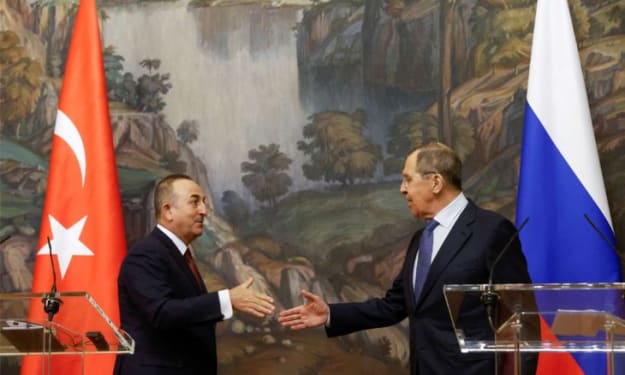
Turkish Foreign Minister Mevlüt Çavuşoğlu has ended an official visit to Ukraine and Russia. This visit was preceded by a meeting between the two countries' foreign ministers and the Turkish Foreign Minister in Antalya, in an attempt to intensify diplomatic efforts to resolve the Ukrainian crisis. Amidst the polarization between the Russian camp and the Ukraine camp backed by Western countries, Turkey represents the group of countries that have irrevocable interests with both parties.
By Zernouh.abdo4 years ago in Confessions
Thoughts on Vocal and the way the world is
"Death cannot stop true love, only delay it." – Wesley in The Princess Bride. I decided to come back to Vocal on a very cold and dark night at the end of December. I had been, and still am, convalescing from a horrible staph infection that had gone misdiagnosed for months. This, paired with the increasing challenges of being healthy, making the best choices for my co-parented child, being a wife, and being a director at a new job, was a lot to manage.
By Jazzy 4 days ago in Confessions
I Missed the Meeting, But the Fire Cats Stayed
I’m sitting here watching a strange video—three orange cats, neon-bright, glowing like embers. The number 333 keeps flashing on the screen, and for some reason it feels intentional, like the universe is tapping me on the shoulder instead of shaking me awake. The sound from the TV hums softly, almost like a bonfire crackling on a beach. Fire cats. That’s what they are. I don’t know why that comforts me, but it does.
By Jhon smith7 days ago in Confessions



Comments
There are no comments for this story
Be the first to respond and start the conversation.