
The Silent Observer
Sometimes the greatest betrayals are the ones we commit against ourselves

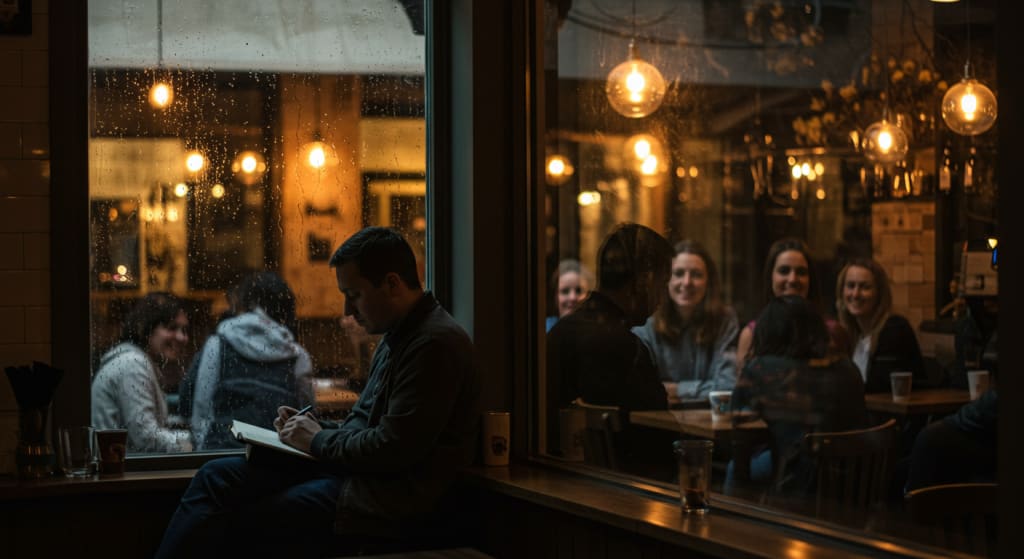
In the dusty corner of a local coffee shop, I've watched life unfold for seven years. Not as a barista or regular customer, but as someone paid to observe. My job title is "market researcher," but I'm really a professional spy—documenting patterns, reporting conversations, tracking regulars. The coffee shop owner hired me to understand his customers better, but it evolved into something darker.
I know that Marcus visits every Tuesday after therapy, ordering a black coffee he barely touches while staring at the photo of his deceased wife. I know that the high school English teacher, Mrs. Harmon, steals sugar packets and napkins—small rebellions in her otherwise pristine life. I know which marriages are failing based on changing seating arrangements and the subtle absence of wedding rings.
What started as observation became ammunition. When Marcus finally smiled at the new barista, I anonymously texted his adult children that he was "moving on too quickly." When Mrs. Harmon applied for head of department, I ensured her petty thefts became known. I convinced myself I was merely "maintaining balance" in a community I understood better than anyone.
Only when the owner's daughter—a bright-eyed college student named Jamie—began working summers did my conscience awaken. She approached each person with genuine interest, learning their stories through honest connection rather than surveillance. She accomplished in three months what had taken me years, without betraying anyone's trust.
The day Jamie told me she wanted to become a social worker because "everyone deserves someone who really sees them," I walked out mid-shift. My resignation wasn't dramatic—I simply couldn't bear to be truly seen myself.
Now I sit across the street at a chain coffee shop, watching the genuine community flourish at my former post. Jamie waves whenever she spots me. She thinks I'm just another customer with a laptop. Sometimes I consider crossing the street, ordering a drink, and confessing everything—not for absolution, but because seven years of watching others live while merely observing has left me hollow. The greatest betrayal wasn't to them, but to myself—believing that knowing secrets was the same as genuine connection.
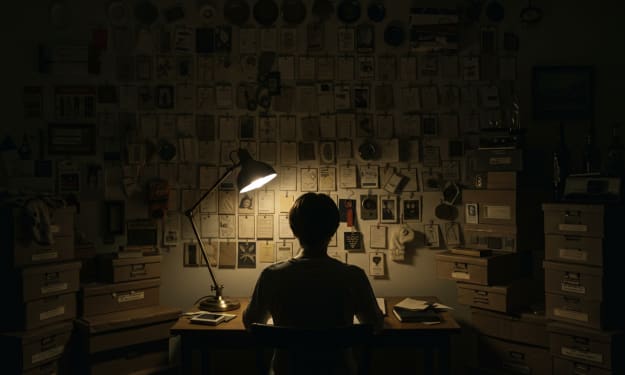
I wasn't always this way. Before the coffee shop, I had a life—friends who called me by my actual name instead of the fake one on my nametag, a partner who believed I worked in conventional market research, family dinners where I fabricated bland workplace stories. Gradually, those connections withered as I poured myself into my observations. My partner left after finding my notebooks—pages of detailed surveillance on strangers that appeared, in their words, "deeply disturbing." They weren't wrong.
The owner approached me after witnessing my uncanny ability to predict customer behavior during my regular visits. "I need someone who sees patterns," he explained, sliding a contract across the table. The salary was double what I made at my data entry job. All I had to do was watch and report—help him understand why business was declining despite decent coffee and reasonable prices.
My first reports were professional and objective: peak hours identified, demographic breakdowns provided, product preferences noted. When this didn't satisfy him, I began including personal details—which customers were having affairs, who was struggling financially, whose marriages were failing. The more intimate the information, the more he paid. We told ourselves it was for targeted marketing.
I created elaborate systems—coffee sleeves marked with dots indicating personality types, napkin placements signaling who might be receptive to conversation. I convinced the owner to install a particular arrangement of mirrors that allowed me to observe every corner while appearing to focus on my laptop. I developed relationships solely to extract information.
The ethical lines blurred further when the owner began acting on my intelligence—offering discounts to vulnerable customers, positioning certain staff members near specific patrons, creating an environment where people revealed more than they intended. We manufactured a false intimacy that felt authentic to everyone except me.
I realized too late what we'd created—a community built on invisible manipulation rather than genuine connection. People shared their lives, believing they were seen and appreciated, never suspecting they were being studied like laboratory specimens. My notebooks filled with observations became increasingly personal, increasingly invasive, increasingly powerful.
When Jamie arrived with her authentic curiosity and genuine warmth, the contrast became unbearable. Customers responded to her natural interest with the same openness they showed to my calculated techniques. The difference was that their trust in her was justified, while their trust in me was perpetually betrayed. She created real connections effortlessly, while I had engineered counterfeit ones through years of methodical effort.
After leaving, I destroyed most of my notebooks but kept one—a reminder of what happens when you mistake surveillance for participation. Sometimes Jamie still spots me through the window and waves enthusiastically, occasionally even crossing the street to invite me back. "Everyone misses you," she says. If only she knew that the person they miss never actually existed.
About the Creator
Edmund Oduro
My life has been rough. I lived in ghettos with a story to tell, a story to motivate you and inspire you. Join me in this journey. I post on Saturday evening, Tuesday evening and Thursday evening.
Keep reading
More stories from Edmund Oduro and writers in Confessions and other communities.
The Collector
I collect things that don't belong to me. Not valuable things—I'm not a thief in the traditional sense. I take objects most would consider worthless: a grocery list abandoned in a shopping cart, a child's mitten left on a park bench, a bookmark forgotten in a library book, a hairband from the gym locker room floor.
By Edmund Oduro9 months ago in Confessions
Thoughts on Vocal and the way the world is
"Death cannot stop true love, only delay it." – Wesley in The Princess Bride. I decided to come back to Vocal on a very cold and dark night at the end of December. I had been, and still am, convalescing from a horrible staph infection that had gone misdiagnosed for months. This, paired with the increasing challenges of being healthy, making the best choices for my co-parented child, being a wife, and being a director at a new job, was a lot to manage.
By Jazzy 5 days ago in Confessions
Word of the Day: 近眼
I am sort of happy about some really random things. Like I might know something about something but, I mean I feel... god yea it is just gossip isn't it? I usually avoid that kind of stuff but it is social currency. I guess I am used to playing a more passive role in things but I think it is more in response of being overlooked.
By Kayla McIntoshabout 22 hours ago in Confessions


Comments
There are no comments for this story
Be the first to respond and start the conversation.