
The Power of Saying No
Reclaiming your time, energy, and boundaries
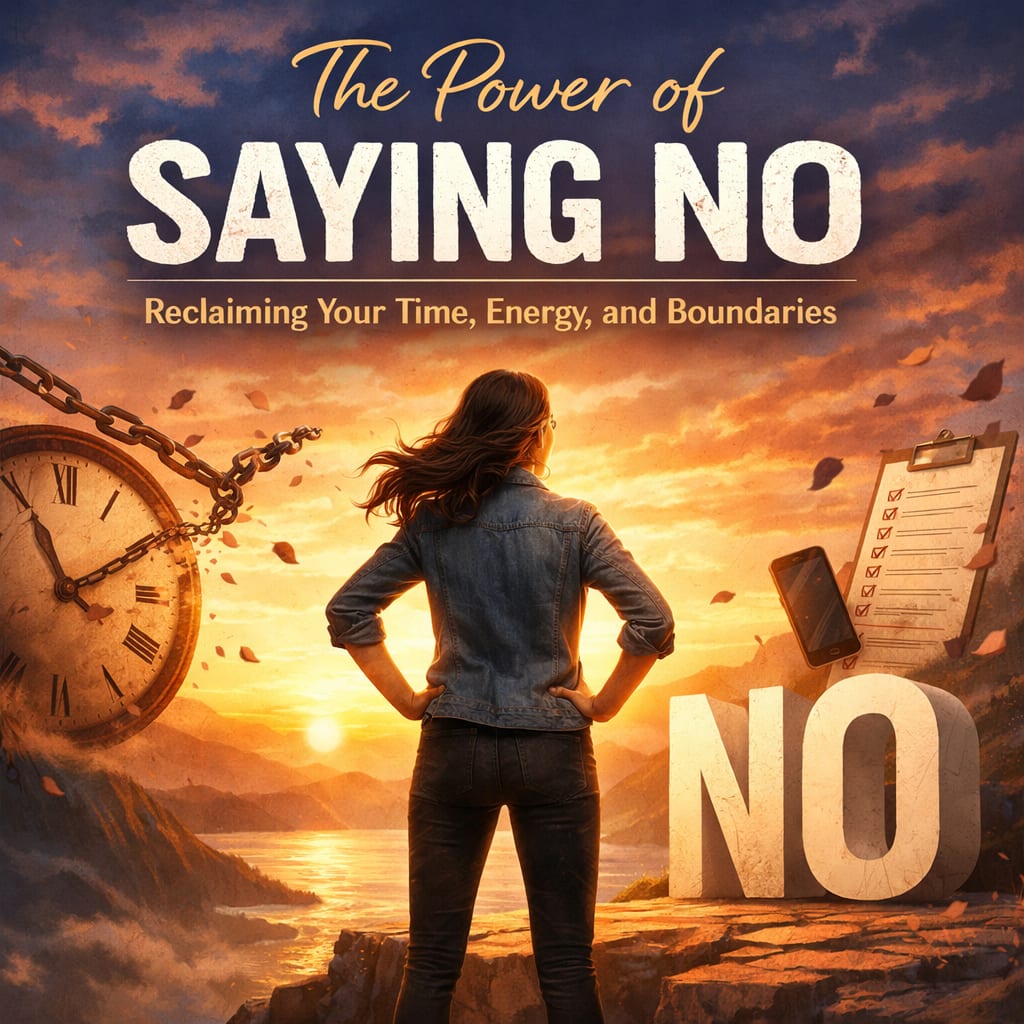
For many of us, the word no feels heavier than it should. It carries guilt, fear, and the uncomfortable possibility of disappointing others. From childhood, we are taught to be polite, agreeable, and accommodating. We learn that saying yes makes us likable, helpful, and valued. Over time, this habit becomes so deeply rooted that we start prioritizing everyone else’s needs over our own.
But what if I told you that no is not a rejection, but a form of self-respect? What if choosing yourself was not selfish, but necessary? The power of saying no lies in its ability to protect your time, energy, and emotional well-being. It is not about shutting people out; it’s about showing up for your life with intention.
Why Saying No Feels So Hard
Saying no feels difficult because it challenges long-held beliefs about who we are supposed to be. Many of us associate our worth with how much we give. We fear that if we stop being “the helpful one” or “the reliable one,” people will leave.
We worry about conflict. We worry about being misunderstood. We worry about being labeled selfish or rude. So instead of listening to our inner voice, we say yes—again and again—even when we are exhausted, overwhelmed, or resentful.
Sometimes we don’t even pause to ask ourselves if we want to do something. We automatically agree because it feels safer than risking discomfort. But comfort often comes at a cost. Each unwanted yes takes a piece of our energy, leaving us drained and disconnected from ourselves.
The Hidden Cost of Always Saying Yes
At first, saying yes feels good. It makes us feel needed. It makes us feel important. But over time, constant yeses create invisible damage.
You begin to feel burnt out.
You start resenting people you care about.
You lose touch with what you actually want.
When you always put others first, you slowly abandon yourself. Your dreams get postponed. Your rest gets sacrificed. Your mental health gets ignored. You become so busy meeting expectations that you forget your own needs exist.
Saying yes to everything means saying no to yourself.
No to your peace.
No to your growth.
No to your happiness.
What Saying No Really Means
Saying no does not mean you are cold or uncaring. It means you are aware of your limits. It means you understand that your energy is valuable and finite.
No means:
I respect my time
I honor my feelings
I choose what aligns with me
It is a boundary, not a wall. Boundaries allow healthy relationships to grow because they are built on honesty, not obligation. When you say no from a place of self-awareness, you teach others how to treat you.
Learning to Listen to Yourself
Before you can say no to others, you must learn to listen to yourself. Ask:
Do I actually want to do this?
Am I agreeing out of fear or guilt?
Will this drain me or nourish me?
Your body often gives the answer before your mind does. That tight feeling in your chest? That heavy sigh? Those are signals. Pay attention to them.
When you ignore your inner voice repeatedly, it gets quieter. But when you honor it, it grows stronger. Saying no is how you build trust with yourself again.
Setting Boundaries Without Guilt
Guilt is the biggest enemy of healthy boundaries. It shows up disguised as kindness. It whispers:
“They’ll be upset.”
“You should help.”
“You’re being selfish.”
But boundaries are not selfish. They are necessary. You cannot pour from an empty cup. Protecting your energy allows you to show up more fully when you do say yes.
Here are gentle ways to say no:
“I can’t commit to that right now.”
“I need to prioritize my own schedule.”
“That doesn’t work for me.”
“I appreciate you asking, but I’ll have to pass.”
You don’t owe anyone a long explanation. A simple, honest response is enough.
The Fear of Disappointing Others
One of the biggest reasons we struggle to say no is the fear of letting people down. We imagine worst-case scenarios. We think they’ll stop liking us. We think we’ll lose the relationship.
But the truth is, the right people will respect your boundaries. They might feel disappointed for a moment, but they won’t abandon you. If someone only values you when you say yes, that connection was never healthy to begin with.
You are not responsible for managing everyone’s emotions. You are responsible for your own well-being.
Saying No Creates Space for What Matters
Every no makes room for a better yes.
When you stop overcommitting, you create space for:
Rest
Creativity
Growth
Relationships that truly matter
You start choosing experiences instead of obligations. You invest your time where it truly counts. Life becomes lighter when you stop carrying what was never yours to begin with.
How Saying No Builds Confidence
Each time you say no, you reinforce your self-worth. You remind yourself that your needs matter. That your time is valuable. That your voice deserves to be heard.
At first, it may feel uncomfortable. You might replay the conversation in your head. You might question yourself. But with practice, it gets easier. Stronger. Clearer.
Confidence grows when your actions align with your values. When you stop betraying yourself for approval, you step into your power.
Letting Go of the Need to Please
People-pleasing often comes from a deep desire to be loved and accepted. But true connection doesn’t come from sacrificing yourself. It comes from authenticity.
When you stop trying to please everyone:
You attract people who respect you
You feel more at peace
You live more honestly
Not everyone will understand your boundaries, and that’s okay. You don’t need universal approval to live a fulfilling life.
Practicing the Art of No
Saying no is a skill. And like any skill, it improves with practice. Start small. Decline minor requests. Notice how it feels.
You’ll realize something powerful:
The world doesn’t collapse.
People survive.
And you feel lighter.
Over time, you’ll learn to say no without anger, without guilt, and without overexplaining. You’ll choose from a place of self-trust instead of fear.
When Saying No Feels Impossible
There will be moments when saying no feels especially hard—family obligations, work pressure, emotional situations. In these moments, pause. Breathe. Ask yourself:
“What would honoring myself look like right now?”
Even a partial boundary is progress. Even a delayed yes is growth. You don’t have to be perfect. You just have to be honest.
The Freedom That Comes After
When you start saying no:
You reclaim your time
You protect your energy
You feel more in control
Life stops feeling like a never-ending to-do list. You begin to live intentionally instead of reactively. You stop surviving and start choosing.
That freedom is priceless.
Final Thoughts
Saying no is not about rejecting others. It’s about choosing yourself. It’s about understanding that your needs are just as important as anyone else’s.
You don’t need to earn rest.
You don’t need to justify boundaries.
You don’t need permission to protect your peace.
The power of saying no lies in the quiet confidence it builds inside you. The more you honor yourself, the more your life begins to reflect who you truly are.
So the next time your heart whispers no—listen.
That voice knows the way. 💛
About the Creator
Keep reading
More stories from Aiman Shahid and writers in Confessions and other communities.
The Forgotten Rebels
History often celebrates kings, generals, and revolutionaries whose names echo through time. Their statues stand tall, their victories recorded in textbooks, their speeches quoted in classrooms. But behind every great movement were countless individuals whose courage never made headlines. They were the quiet resistors, the unseen fighters, the forgotten rebels.
By Aiman Shahida day ago in Confessions
Finding Herself Between Subway Stops
Manthatan Story The morning sun glinted off the glass towers of Manhattan even before Anika stepped off the subway. The city was already humming with life and noise and possibility. Every block felt like a promise waiting to be fulfilled. She had moved here from a small town in Texas with a suitcase full of clothes and an even bigger bag of dreams. Today was her first day at her new job at the publishing house just off Fifth Avenue.
By Ibskins4 days ago in Confessions


Comments
There are no comments for this story
Be the first to respond and start the conversation.