
The Forgotten Rebels
Untold stories of those who resisted quietly
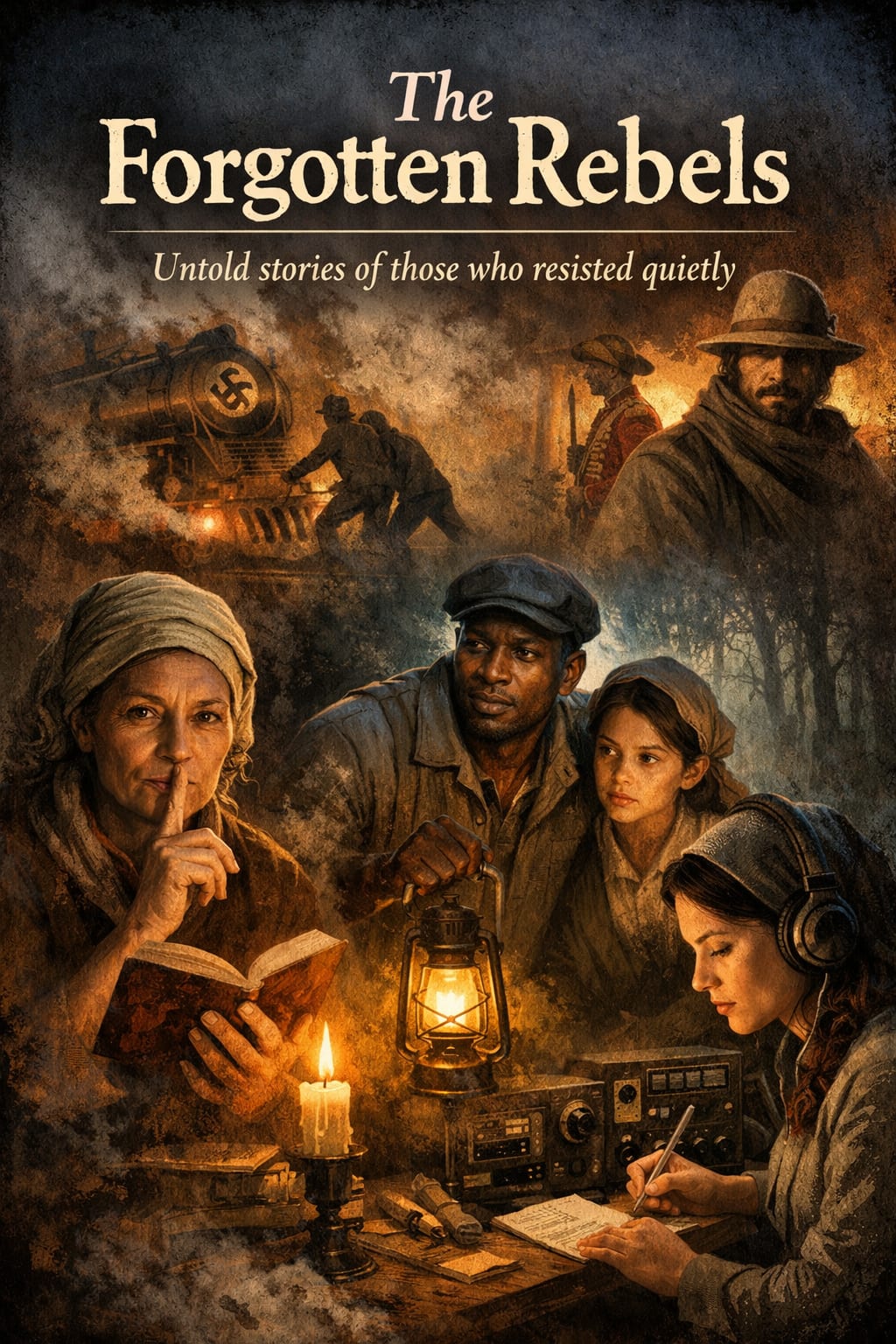
History often celebrates kings, generals, and revolutionaries whose names echo through time. Their statues stand tall, their victories recorded in textbooks, their speeches quoted in classrooms. But behind every great movement were countless individuals whose courage never made headlines. They were the quiet resistors, the unseen fighters, the forgotten rebels.
They did not lead armies. They did not deliver famous speeches. Yet their actions shaped the course of history just as profoundly. They passed secret messages, hid fugitives, refused unjust orders, and preserved forbidden knowledge. Their rebellion was not loud — it was deliberate, dangerous, and deeply human.
This is their story.
The Power of Quiet Resistance
Rebellion is often imagined as loud protests and violent uprisings. But throughout history, some of the most effective resistance has been subtle. Quiet rebels worked within oppressive systems, bending rules just enough to protect others. Their power lay in invisibility.
A teacher who secretly educated girls when schooling was banned. A clerk who altered records to protect families from persecution. A factory worker who sabotaged production to weaken a tyrant’s war machine. These acts were small on the surface, but monumental in consequence.
Quiet resistance required patience. It demanded emotional strength. Most importantly, it required the willingness to risk everything without expecting recognition. Forgotten rebels knew their names might never be remembered — but they resisted anyway.
Hidden Heroes of War
Wars produce heroes, but history tends to remember only those who carried weapons. The forgotten rebels were civilians who fought without guns.
During World War II, thousands of ordinary people across Europe risked their lives to shelter Jewish families. They forged documents, smuggled children across borders, and shared food when they had little themselves. Many were executed when discovered. Their bravery saved lives — but their names remain unknown.
In Nazi-occupied territories, railway workers delayed trains transporting prisoners. Farmers hid resistance fighters in barns. Women acted as couriers, carrying coded messages under the watchful eyes of soldiers. Their rebellion was quiet, but it was relentless.
These people did not seek glory. They simply refused to become complicit in evil.
Rebels Under Colonial Rule
Colonial histories often focus on famous leaders who fought for independence. But entire movements depended on invisible supporters.
In British-ruled India, countless villagers sheltered freedom fighters. Tailors stitched secret pockets into clothes for smuggling letters. Street vendors spread coded messages disguised as gossip. Women hid revolutionaries in their homes while pretending to be obedient subjects of the empire.
Across Africa, enslaved people quietly sabotaged colonial operations. They slowed work, destroyed tools, misled officials, and preserved cultural traditions the colonizers tried to erase. These acts kept identity alive when oppression tried to crush it.
Their rebellion was not always dramatic — but it was constant.
Women History Forgot
Women have always been rebels, but history has rarely acknowledged them. While men fought battles, women organized resistance behind closed doors.
They ran underground networks, hid weapons, fed fighters, and cared for the wounded. Some pretended to be loyal wives while secretly supporting revolutions. Others passed intelligence through coded embroidery patterns and whispered messages.
In many societies, women used society’s expectations against their oppressors. Because they were underestimated, they moved unnoticed. That invisibility became their weapon.
Their stories remain buried under the names of men who took credit. But without them, many revolutions would have failed.
Rebels Without a Cause… or So They Said
Not all forgotten rebels fought for political causes. Some resisted social norms.
In eras where women were forbidden to work, some secretly built businesses from their kitchens. When racial segregation ruled, some people quietly defied laws by serving customers of all backgrounds. When love was forbidden, people loved anyway.
These rebels were not marching in the streets. They were living rebellions.
Their courage was personal. They chose authenticity over safety. Their resistance was simply being who they were in a world that tried to silence them.
The Cost of Being Forgotten
Many quiet rebels paid the ultimate price. Some were imprisoned. Others were tortured. Many disappeared without a trace. Their families were left without answers, their sacrifices unrecorded.
History books prefer clean narratives — heroes, villains, victories. The quiet rebels complicate the story. Their resistance does not fit into neat chapters. It happened in kitchens, classrooms, and dark alleyways.
Because they worked in secrecy, documentation is scarce. Their stories survive only through whispers passed down generations.
Why Their Stories Matter
Remembering forgotten rebels is more than honoring the past. It teaches us something vital about power.
Change does not always begin with a crowd. Sometimes it begins with one person saying “no” when everyone else says “yes.” It begins when someone chooses integrity over comfort. When they protect others at their own expense.
Their stories remind us that we don’t need fame to make an impact. We don’t need a platform. We don’t need permission.
We just need courage.
The Rebels Among Us Today
Forgotten rebels still exist today.
They are the whistleblowers exposing corruption. The teachers educating girls in banned classrooms. The journalists telling forbidden truths. The citizens refusing to spread lies.
They may never trend on social media. Their names might never appear in headlines. But they are shaping history quietly, just like those before them.
Your Turn to Rebel
Not every rebellion looks like a revolution. Sometimes it looks like:
Speaking up in a toxic workplace
Defending someone being mistreated
Refusing to stay silent about injustice
Choosing kindness in a cruel world
Living authentically despite judgment
These are modern acts of rebellion.
You don’t need to overthrow a government to be a rebel. You just need to refuse to surrender your values.
Conclusion: The Legacy of the Unseen
History belongs not only to the loud and powerful but also to the quiet and brave. The forgotten rebels remind us that resistance does not always roar. Sometimes it whispers. Sometimes it hides. Sometimes it waits.
Yet its impact is undeniable.
Because of them, lives were saved. Cultures survived. Truth endured.
They may be forgotten by history books, but their courage lives on in every person who chooses to stand up — even when no one is watching.
And perhaps that is the greatest rebellion of all.
About the Creator
Keep reading
More stories from Aiman Shahid and writers in Confessions and other communities.
Finding Your Voice in a World That Talks Over You
There is a quiet kind of frustration that comes with feeling unheard. It happens in meetings when your idea is ignored, only to be praised when someone else repeats it. It happens in families where your opinions are brushed aside. It happens online when louder voices drown out thoughtful ones. In a world that often rewards volume over value, finding your voice can feel like a battle you never signed up for.
By Aiman Shahid2 months ago in Confessions



Comments
There are no comments for this story
Be the first to respond and start the conversation.