
The Loneliness Paradox: How Connection Made Us More Alone
We’ve never been so reachable — or so unseen. Inside the quiet epidemic of emotional isolation in the age of constant contact.
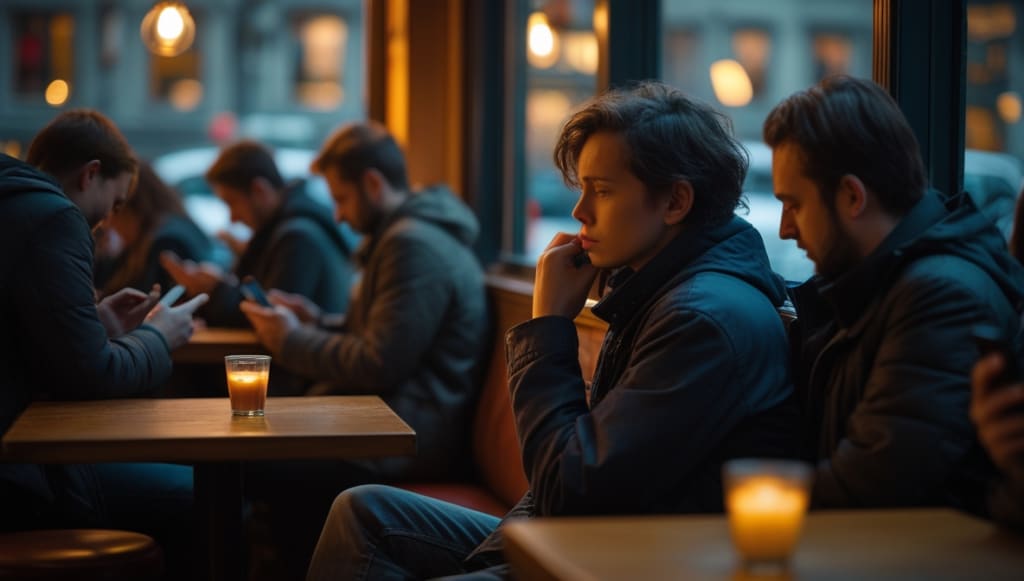
Feeling alone was simple once: an unfilled area, a phone without activity, a quiet night without anybody to contact. We live today in a universe where loneliness has moved onto the virtual world. Though we are surrounded by screens, flooded with notifications, linked to several people, an increasing number of people describe themselves as lonely.
The major irony of our current era is that greater connection equals more separation. Though each alert, message, and notification alludes to intimacy, it provides only a veneer of it. While our modern civilization offers countless choices for communication, it lacks a framework for true understanding among people.
A world of constant communication—and fading closeness
Looking over any social media feed shows how carefully we manage our relationships. Happy expressions under stronger lighting, pictures from trips, fleeting midnight reflections distilled down to little comments. It's a digital performance where everyone takes a major part in their story and nobody properly understands their audience.
We have turned the idea of “connection” into a number—followers, likes, shares. A system measuring participation has replaced the genuine warmth once emanating from face-to-- face contacts. Technically speaking, we certainly are together.
Sociologists call this the "loneliness conundrum." This phenomena observes that communities with sophisticated technology, communication systems, and much internet activity also experience the most emotional isolation. This is known in Japan as hikikomori. Commonly known as "the loneliness epidemic" in Europe and the United States, this issue is a psychological struggle as well, silently changing our interactions with others as well as with ourselves.
The Illusion of Closeness
Contemporary people are always linking links. Using heart emojis to convey our love, we provide fast replies and short affirmations to get the message across that I'm here. Still, this internet activity conceals a vacuum that text conversations or emoticons cannot replace.
Modern technology has changed us such that we can feel several emotions at once. We may flirt, support a charity, and check in on a friend all with one scroll. But it has also taught us to skim across emotional depth. It's rare today to remain in the peace that results between spoken words. It frightens us naturally. Modern exhibitions of affection, friendship, and community rely on constant stimulation rather than close ties.
Our relationships have been hijacked by the Internet. Ghosting, breadcrumbing, and orbiting are contemporary words for centuries-old emotional actions that have been aggravated by connection force. The simplicity of access has also enabled separation. One tap allows us to vanish, remove a friend without cause, or silence them without justification.
The Economics of Attention
One of the reasons loneliness seems so different nowadays is its wealth. The attention economy exploits our need for validation. Social media sites are made to profit from our isolation by nudging us to constantly check, update, and seek validation in small increments.
Each like acts as a dopamine rush; every scroll is a silent transaction. Assuming the parts of both the customer and the product, we exchange our emotional assets for ephemeral value. The ensuing silence seems more stifling than it did earlier when the likes drop and the algorithm adapts.
We feel it even when people are watching us; we are not only lonely. Though just a small minority knows the true stories behind them, everybody has access to the lives we have carefully prepared.
The Disappearance of Solitude
Being lonely differs from appreciating solitude. Selection is solitude; loneliness is what we bear. Solitude, though, has become a rare treasure in a continuously humming setting—and one rather unfamiliar.
We have forgotten how to experience solitude free from loneliness. We are worried of quiet periods since silence exposes the truths we often avoid. Thus, we cover these facts with shallow interactions, infinite content, and notifications. Many times seen as a flaw in a society preoccupied with ongoing interaction, silence is sometimes regarded as such.
Like the heart, though, the mind needs times of peace for refreshment. To consider. To exhale. The answer for modern loneliness might not depend on more ties but rather on improved disconnection—the chance to escape from the unrelenting tumult. and find once more what genuine presence is all about.
Recreating Genuine Connection
Technology does not create true contact. It develops from sincere interest—the kind that actually listens, pauses, and is free of showiness. It's about conveying a message without anticipating a quick answer. It concerns a friend who shows up raw and unedited among your chaos.
In the end, what we're looking for is real communion instead of just information exchange. The kind of intimacy that calls for no social media post or verification.
Moreover, possibly the most rebellious act in this age of saturation is to reclaim the times when you are unavailable — moments where only yours are your feelings, time, and thoughts.
The Quiet Rebellion
Loneliness is more than simply a feeling; it is a sign of a society that has replaced real connection with just connectivity. Yet answers abound within every paradox waiting to be revealed. We must find our interactions depth, be present, and allow ourselves to be vulnerable in order to avoid this.
Turn your phone off. Appreciate the silence. Let a sense of emptiness happen without the drive to look elsewhere. You may find the most primitive kind of communication within that calm: the one with yourself.
Only then do we have the ability to be genuinely present with others—when we are fully present alone.
About the Creator
Keep reading
More stories from Shahjahan Kabir Khan and writers in Confessions and other communities.
The Digital Mask: How Technology Is Changing The Way We See Ourselves
Once, our sole means of looking at ourselves was through a mirror. The mirror is just one tool nowadays, used less often than the front-facing camera, the polished internet profile, the optimized "best angle," and the digital creation of ourselves.
By Shahjahan Kabir Khan2 months ago in Confessions


Comments (1)
Wow… I didn’t expect this to make me emotional, but it did. Thank you for sharing this truth.