
The Digital Mask: How Technology Is Changing The Way We See Ourselves
Filters, screens, and algorithms shape our daily identity—often more than we admit.
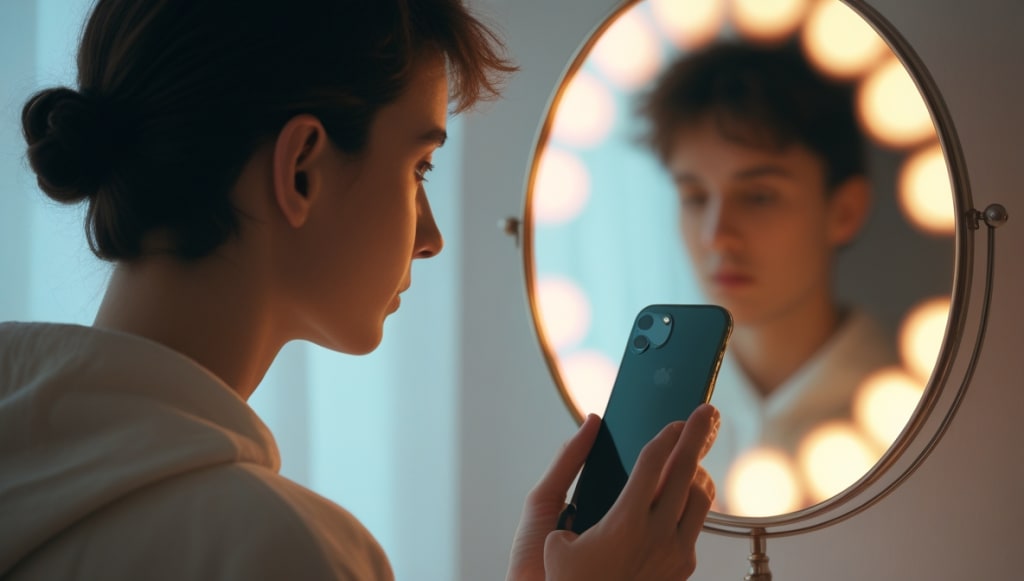
Once, our sole means of looking at ourselves was through a mirror. The mirror is just one tool nowadays, used less often than the front-facing camera, the polished internet profile, the optimized "best angle," and the digital creation of ourselves.
Today, identity is not just a characteristic we have; it is also about about how we act.
It is something we change.
We don't just ask, "How do I look?"
We wonder:
"How will this be perceived? How will this be valued? How will this be grasped in the digital realm?"
These questions progressively change our self-perception and even our evolution.
The camera assumes its judgement
Think of a simple example: you capture a selfie with a few pals.
Before it is shared, before anybody offers criticism,
you scrutinize your facial features
You check the lighting.
you find a flaw,
You consider taking it once more.
you pause and consider,
and then, maybe…
You add a filter.
Not out of self-disgust—
but because the digital representation of you has subtly become the standard.
That filtered picture seems smoother.
More equal.
More “presentable.”
More "you—but enhanced."
Still, here is the basic truth:
Every time we decide on the filtered version…
The genuine version gets somewhat less satisfying.
The Algorithmic Reflection
We believe often online that we are expressing our honest selves without inhibition.
But algorithms mostly define who we are; not our instincts.
They demonstrate:
1. Which images draw more eyes?
2. Which subjects are more often addressed?
3. Which words get the largest response?
4. Which upgrades help us to increase our online visibility?
Hence, our minds transform.
We usually replicate the activities for which we receive praise.
The algorithm claims:
This is the trait of you that draws others.
And we listen closely.
Often lacking information.
Not always with arrogance.
Still, we obey the laws.
We view ourselves via others' viewpoints
Every day, countless individuals undergo a little change in their life:
Instead of considering:
Am I what?
Many people query themselves:
Other people see me as follows:
This change impacts everything.
Because others affect our identity—
when it rests on affirmation:
Rather than authentic representations of ourselves, we become curators of attention.
You are presenting a photograph, but not only that.
You are showcasing who you are.
The Quiet Anxiety of Digital Comparison
Daily, we walk past many faces:
sleek, changed, beautifully lit, precisely arranged, balanced, elevated.
No one plainly remarks,
"You should look like this."
Our ideas, though, imply that
"Perhaps I should."
Even when we understand that someone else is changed, changed, better—
Our emotional reactions miss much of it.
It just sees:
They look appealing. I ought to as well.
Therefore, instinctive comparison develops—
not chosen, not requested, only automated.
Sometimes the Mask is motivational rather than false
Not every manipulated image is inaccurate.
Sometimes they mirror the person we long to be.
Greater assurance.
More expressive.
More inventiveness.
more interactive.
More admirable.
In this manner, the digital façade offers an utopian image of ourselves.
The risk, nevertheless, is in this:
when the facade is valued above our actual selves—
In our own stories, we start to feel like impersonators.
The Question We Rarely Ask: Who Are We Offline?
Identity is less obvious in the real world:
1. There are neither any likes.
2. There are no comments here.
3. Validation is not instant.
4. There is no official count.
Still, it is true.
Many people worry now that their offline personality is less appealing, less intriguing, and less valuable.
The fundamental truth, however, is this:
Offline, the actual you is the one who truly laughs—not merely for appearances.
The true you in real life is the one not acting.
Offline, you are uncensored.
Visual appeal is lacking here.
Algorithms do not hone it.
This is essential.
A gentle reminder for each of us
You are more than what shows on your screen.
You bring much to the table apart from the events you decide to relate.
You have more than only your most attractive looks.
Your comments exceed your overall value.
You are greater than your internet persona.
Your actual self is not within your gadget; rather, it is—
It is not connected to it.
And perhaps as technology continues to alter the way we express ourselves...
We may still keep charge over our definition of who we are.
not exactly.
Not with absolute certainty.
Truthfully, though, though.
#DigitalLife #Identity #SelfImage #Psychology #ModernLife #Technology #Society
About the Creator
Keep reading
More stories from Shahjahan Kabir Khan and writers in Confessions and other communities.
The U.S. Economy Enters 2026 on Solid Ground
As 2025 drew to a close, the U.S. economy demonstrated resilience and stability across key indicators, setting the stage for cautious optimism in the new year. From employment and inflation to housing and consumer goods, the data paints a picture of steady progress amid lingering challenges.
By Organic Products a day ago in Confessions



Comments
There are no comments for this story
Be the first to respond and start the conversation.