
Someone Stole My Out of State Plates
The benefit of habitually using objectivity to maintain peace of mind


The benefit of habitually using objectivity to maintain peace of mind
Photo by Jen Theodore on UnsplashI could've sulked or gotten frustrated, but instead, I decided to make a joke of it:
"I suppose someone really needed those out-of-state plates I had. I hope they're good to go now."
My friend took it a step further and said, "Yeaa. I hope they're in the clear now."
We can label events as bad or random occurrences - events don't have to be labeled good or bad. Sometimes, sh*t happens, and it's not a big deal until we make it a big deal.
Life throws things our way constantly.
People throw things our way constantly.
We have two choices:
A. React
B. Keep it moving.
Which one is most productive?
B. Keep it moving.
The next time you feel anger, frustration, annoyance, or a low emotional frequency due to an event, take a step back and try to maintain an objective view of the situation.
The next time you feel like complaining and voicing your complaints to someone, wait 72 hours and mull it over. At the end of those 72 hours, you'll likely forget about the incident or view the situation more rationally.
The Power of Objectivity
Objectivity is an underrated skill. It doesn’t mean you don’t feel things; it means you don’t let feelings hijack your judgment.
When something inconvenient, annoying, or unfair happens, the mind immediately wants to assign meaning:
Why me? This shouldn’t have happened. This is a problem. But most events don’t come with inherent meaning. We attach meaning to them.
When my plates were stolen, nothing about my actual life was ruined. I wasn’t harmed. I wasn’t stranded. I wasn’t in danger. It was inconvenient, sure—but inconvenience isn’t catastrophe.
The moment you blur that line, peace of mind disappears.
Most emotional turmoil comes from over-identification. We treat events as personal attacks instead of neutral disruptions.
Someone cuts you off in traffic. A package gets delayed. A plan falls through. A stranger acts selfishly. None of these are statements about you, yet we internalize them as if they are. That’s where frustration compounds.
Keeping it moving isn’t avoidance—it’s discernment. It’s recognizing what deserves your energy and what doesn’t.
You can acknowledge that something happened without amplifying it through rumination, storytelling, or emotional replay. Every time you revisit an event mentally, you pay for it again.
The 72 Hour Rule
The 72-hour rule is powerful because time dissolves intensity. What feels urgent today often feels irrelevant three days later.
Distance creates perspective. If something still bothers you after that window, it’s probably worth addressing. If it doesn’t, you just saved yourself unnecessary stress.
This approach doesn’t mean suppressing emotion. It means delaying reaction long enough for reason to re-enter the room.
Most regrettable reactions happen in the heat of the moment—emails sent too fast, words spoken too sharply, assumptions made too confidently. Objectivity protects you from yourself.
Life will continue to throw random variables your way. That’s guaranteed. You don’t control events, but you do control escalation.
You control whether an inconvenience becomes a bad day, whether a bad day becomes a bad week, whether a bad week becomes a narrative about how things “always go wrong.”
People who appear calm aren’t immune to chaos. They’re just selective about engagement. They don’t fight every battle. They don’t narrate every inconvenience. They don’t let minor disruptions become identity-level problems.
Keep It Moving
There’s also a quiet confidence in not reacting. It signals self-trust. It says, I can handle this without spiraling. Over time, that mindset compounds. You become harder to shake, harder to provoke, harder to derail.
Keeping it moving isn’t indifference—it’s maturity. It’s understanding that peace of mind is a resource worth protecting. Not everything deserves commentary. Not everything deserves emotion. Not everything deserves to be carried.
Sometimes, someone steals your plates. You replace them. You laugh about it. You go on with your life.
That’s not weakness. That’s strength.
--
Choose discipline as a mindset
Disclaimer: This content is for informational and educational purposes only and reflects personal experience and opinion. It is not financial, legal, tax, or investment advice. Always do your own research and consult a qualified financial professional before making decisions that could affect your finances."
About the Creator
Destiny S. Harris
Writing since 11. Investing and Lifting since 14.
destinyh.com
Keep reading
More stories from Destiny S. Harris and writers in Confessions and other communities.
The Quiet Power of Starting Again
Life rarely moves in a straight line. Instead, it bends, breaks, pauses, and restarts in ways we often never expect. Plans change, dreams collapse, relationships end, careers shift, and sometimes the life we imagined for ourselves fades into something entirely different. In those moments, when the old path disappears, we are faced with a choice: stay stuck in what was, or gather the courage to begin again.
By Aiman Shahidabout 23 hours ago in Confessions
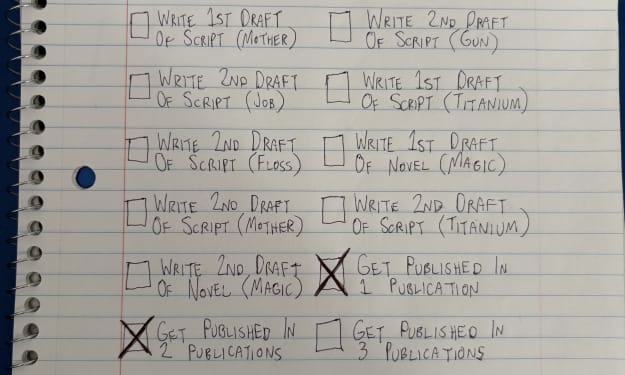
Early March 2026: 4 Goals Accomplished
It's early March and I've now accomplished my 4th writing goal for the year of 2026. Before diving into the behind-the-scenes of it... why not tell you up front what that accomplishment was? I was published in a 2nd publication for this year. Published in Helix Literary Magazine out of Central Connecticut State University. You can read it for free right now!
By Stephen Kramer Avitabile7 days ago in Writers


Comments
There are no comments for this story
Be the first to respond and start the conversation.