
The Art of Starting Small: Why Tiny Steps Matter More Than Giant Leaps
How embracing micro-progress helped me build a life I actually love
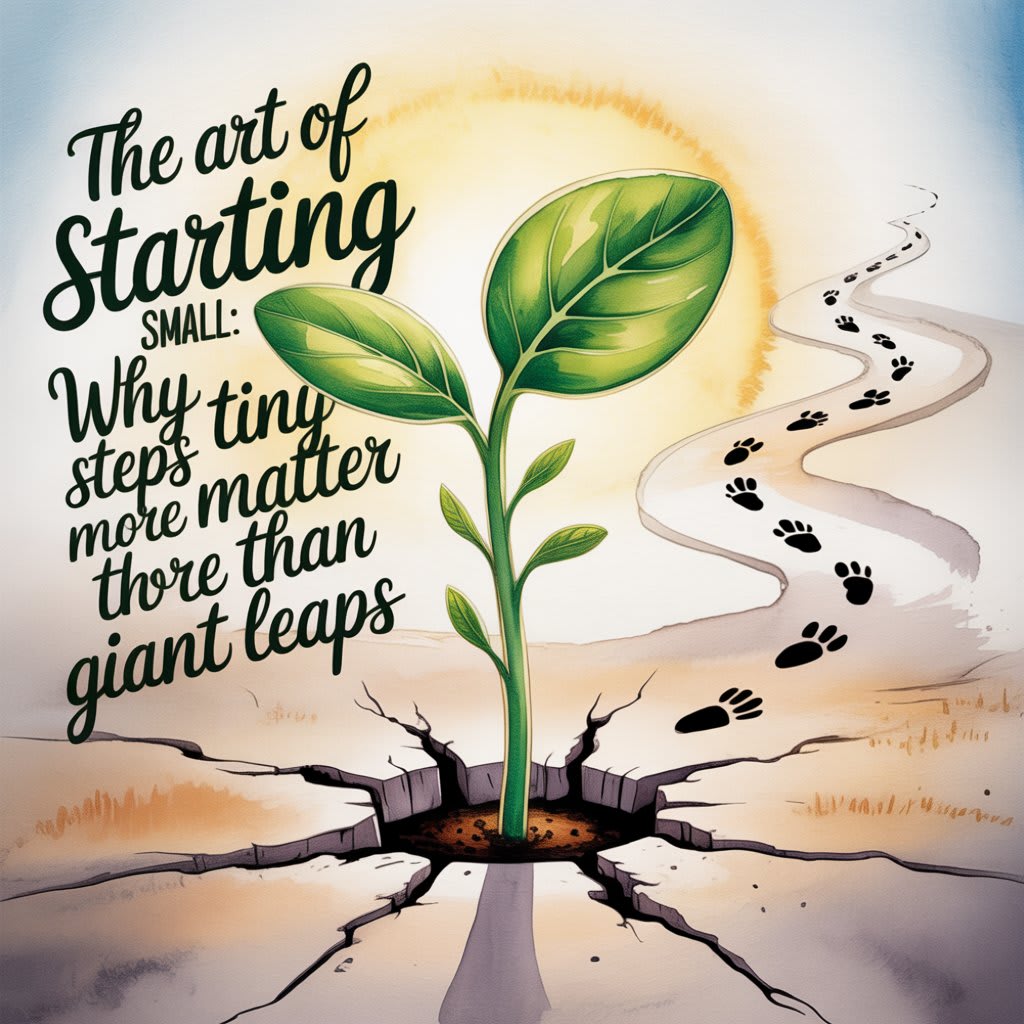
For most of my life, I thought real change had to be big. It had to look like dramatic before-and-after photos, quitting jobs overnight, or completely reinventing myself in the span of a month. If it wasn’t radical, it didn’t feel real. And because I couldn’t always summon the energy for those sweeping transformations, I stayed stuck—forever waiting for the “perfect moment” to become who I wanted to be.
But the truth I’ve slowly come to learn is this: big change often starts with painfully small steps. The kind that barely register. The kind that feel like they couldn’t possibly matter.
And yet… they do. They did.
The Illusion of the Giant Leap
We live in a world that worships speed. From glow-ups to career jumps to relationship milestones, the stories that get told and celebrated are the ones that move fast. Someone goes viral. Someone launches a successful business in a week. Someone loses 50 pounds in three months.
But these highlight reels are deceptive. They rarely show the quiet, tedious, unglamorous work that came before. They don't show the nights of self-doubt, the slow progress, the failed attempts, or the small victories that no one clapped for.
So we start to believe that unless change is fast and loud and obvious, it doesn’t count. But that belief is a trap.
Because the truth is, most sustainable growth is quiet. Most healing is slow. And most meaningful change starts invisibly.
When Small Is All You Can Do
There was a time when I couldn’t even imagine “changing my life.” I was exhausted, overwhelmed, and drowning in comparison. Everyone else seemed ahead of me. I felt broken for not being able to catch up.
That’s when I made a decision that saved me—I gave myself permission to start tiny.
I didn’t force myself to go to the gym for an hour. I just did five minutes of stretching.
I didn’t try to meditate for 20 minutes. I just took one deep breath.
I didn’t overhaul my diet. I just drank one more glass of water.
And you know what? Those tiny steps didn’t feel heroic. They didn’t feel transformative. But they were doable. And they were enough.
The Psychology of Micro-Progress
There’s a reason small steps work so well. Our brains are wired to seek safety. Big changes can feel threatening—even if they’re positive. So when we try to leap too far too fast, we activate resistance. Fear. Procrastination.
But when we start small, we create safety. We trick our brains into showing up. A 2-minute walk doesn’t feel scary. Writing one sentence isn’t overwhelming. Making your bed doesn’t require a lifestyle overhaul. But these actions send a powerful message to your brain: “I’m doing something. I’m moving. I’m not stuck.”
That momentum builds trust. Confidence. Identity. You stop being someone who “wants to change” and start becoming someone who does things. Even small things. Especially small things.
Compounding Progress: The Magic of Consistency
The real magic of starting small is what happens over time.
One glass of water becomes a habit of hydration.
One five-minute walk becomes a daily movement ritual.
One sentence becomes a chapter, then a book.
One boundary becomes a whole new standard for how you allow people to treat you.
It doesn’t happen overnight. But it does happen.
Just like compound interest turns pennies into wealth, compound effort turns tiny actions into transformation. It’s not about speed. It’s about direction. And discipline.
Why Small Feels So Hard
Ironically, starting small can feel harder than chasing big dreams. Why? Because it doesn’t always feel satisfying. There’s no dopamine rush. No applause. No visible results.
Small is quiet. Small requires patience. Small demands trust.
We crave certainty. And small steps don’t give us guarantees. They don’t promise success. That’s why so many people quit—they do the small thing, and when it doesn’t “work” immediately, they assume it never will.
But the truth is, small steps don’t fail—you just have to keep taking them.
The Ego vs. the Inner Child
Sometimes, it’s not laziness holding us back. It’s shame. We don’t believe we’re worthy of even the smallest effort. Our inner critic scoffs at baby steps. But our inner child? That tender, tired version of us? They don’t need grand gestures. They need consistency. Gentleness. Reassurance.
Starting small is a way of saying to yourself: “You matter, even if no one sees this. You’re worth the effort, even if no one claps.”
It’s a healing act. A rebellion against perfectionism. A quiet revolution.
Real-Life Examples of Small-Step Wins
Let me share a few tiny changes that changed my life:
Morning sunlight: Opening the curtains as soon as I wake up. It helps my mood more than any supplement ever did.
1-minute meditation: Just pausing to breathe before I check my phone. It shifted my whole relationship with stress.
“One thing” journaling: Every night, writing down one thing I’m proud of. It silenced a lifetime of self-doubt.
Saying “no” once: That single boundary showed me I was allowed to have needs. And that my needs matter.
These aren’t big leaps. They’re barely steps. But they were the beginning of everything.
A Different Kind of Success
We often define success by outcomes. Promotions. Pounds lost. Follower counts. But maybe success is smaller—and quieter—than that.
Maybe success is:
Brushing your teeth even when you’re depressed
Taking a walk even when it’s just to the end of the street
Saying something kind to yourself when it would’ve been easier to stay cruel
These things don’t go viral. But they’re proof of life. Proof of hope. Proof of growth.
How to Start Small (Without Shame)
If you’re ready to embrace the art of starting small, here’s what helped me:
Lower the bar (on purpose). Start with what feels laughably easy. If you think you should read 20 pages a day, start with one paragraph. Build the habit, not the pressure.
Track effort, not results. Did you show up? Did you try? That’s a win. Progress is about process, not perfection.
Celebrate like it matters—because it does. Clap for yourself. Smile. Tell a friend. Validation fuels consistency.
Forgive the gaps. You will miss days. That’s okay. The goal isn’t a perfect streak. The goal is coming back.
Anchor to identity. Ask yourself, “Who am I becoming with this small step?” Not what you’ll get—but who you’ll be.
Final Thoughts: The Power of Tiny Revolutions
Maybe you’re tired. Maybe your dreams feel too far. Maybe life has knocked the wind out of you, and all you can manage is one deep breath.
That breath counts.
It all counts.
The art of starting small isn’t about settling for less. It’s about building something real—something lasting—on a foundation you can actually stand on.
You don’t need to leap. You don’t need to race. You just need to take the next tiny, gentle, hopeful step.
That’s how I built a life I love—not with one giant leap, but with a thousand small ones.
And you can too.
About the Creator
Keep reading
More stories from Aiman Shahid and writers in Confessions and other communities.
Soft Strength: The Power of Gentle Resilience in a Harsh World
We live in a world that often confuses toughness with strength. Loud voices, bold moves, and hard edges are celebrated as symbols of power, while softness—kindness, empathy, vulnerability—is frequently mistaken for weakness. But there is a different kind of strength. One that doesn’t shout to be seen. One that doesn’t crush others to stand tall. One that survives storms not by resisting them, but by bending with grace. This is gentle resilience—a soft strength that quietly endures, heals, and transforms.
By Aiman Shahid5 months ago in Confessions



Comments
There are no comments for this story
Be the first to respond and start the conversation.