
Palestinians in Gaza Confront Reality Behind Ceasefire’s Second Phase
“As Gaza enters the second phase of the U.S.-brokered ceasefire, Palestinians face harsh realities of continued hardship, political uncertainty, and slow progress on reconstruction and governance.”

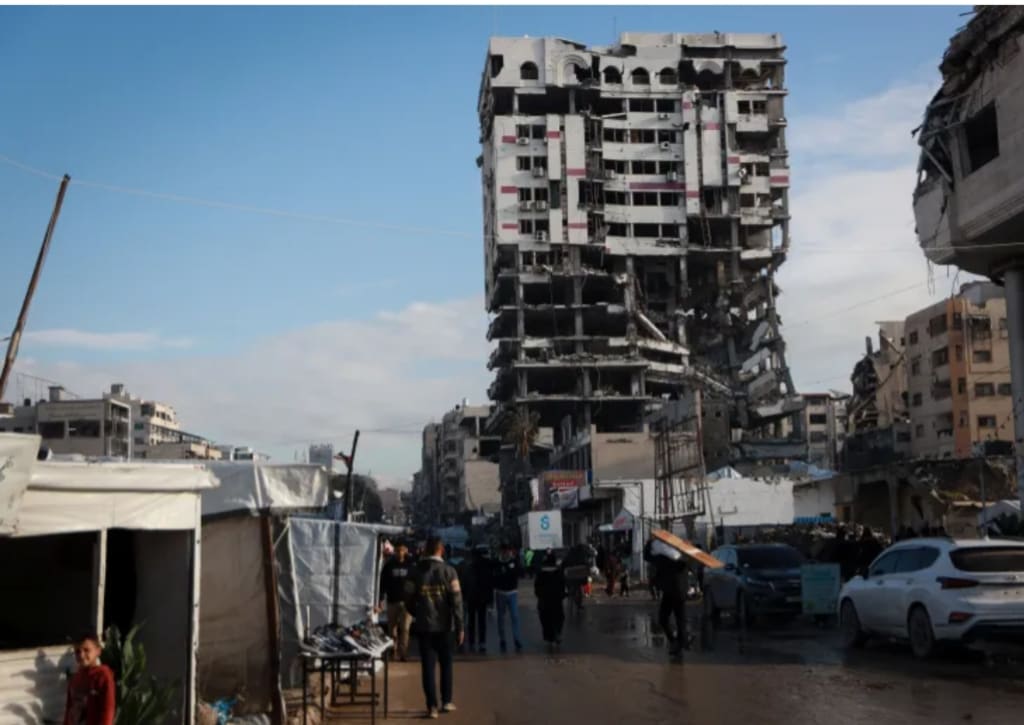
pter, but daily life remains fraught with insecurity, humanitarian strain, and uncertainty about what the future holds.
The second phase of the ceasefire — ushered in by announcements from U.S. negotiators — was supposed to mark a transition from active conflict to governance, demilitarization, and reconstruction. It was designed to initiate structural changes, including the formation of a new National Committee for the Administration of Gaza (NCAG) tasked with managing day‑to‑day affairs, and expectations of disarmament efforts and broader Israeli troop withdrawal from the Strip.
Yet for ordinary Palestinians in Gaza, the reality on the ground paints a far more fragile and unsettling picture than these political developments might suggest.
Hope Meets Hard Reality
When the first phase of the ceasefire took effect in October 2025, there was cautious optimism among many Gazans. Civilians hoped that a halt in major hostilities — even if imperfect — would offer respite from years of war, destruction, and dislocation. Tens of thousands of displaced families returned to remnants of their homes, and humanitarian organizations promised increased aid deliveries.
But now, as the second phase begins, much of that hope has been tempered by continued violence, restricted movement, and an entrenched humanitarian crisis. Recent reports show that despite formal diplomatic milestones:
Israeli forces have continued targeted strikes in parts of Gaza, killing civilians even after the ceasefire’s supposed transition.
Humanitarian hardship remains severe — a three‑month‑old baby recently died from hypothermia amid freezing winter conditions and a lack of adequate shelter, highlighting how dire conditions persist for displaced families.
Daily necessities like reliable electricity, water, food, and medical supplies are still in desperately short supply. Intensive destruction of infrastructure has left many residents in prolonged precarity. International agencies say comprehensive aid remains insufficient to meet the vast needs.
This disconnect between ceasefire declarations and on‑the‑ground realities has left many Gazans disillusioned and skeptical.
Skepticism and Suffering Among Civilians
Families who endured years of warfare and displacement are now watching foreign‑led political processes with wary eyes. Inside Gaza, voices like those of Khaled — a resident watching events from a makeshift shelter — sum up a pervasive sentiment: “We hope it’s not just words on paper. We want real change we can see.”
His concerns are echoed by other political analysts and ordinary civilians who point out that key conditions of the ceasefire’s first phase — such as an end to large‑scale violence, a meaningful Israeli troop withdrawal, and unfettered humanitarian access — have not been fully realized. Israeli Prime Minister Benjamin Netanyahu himself described the second phase announcement as largely “symbolic,” raising doubts about full implementation of the agreement.
Critics stress that real progress depends heavily on both parties adhering to commitments that, so far, have been elusive. The formation of the NCAG, for instance, could be an important step toward governance, but Palestinians point out that a committee cannot function effectively without secure territory, freedom of movement, and sufficient international support reaching those most in need.
Humanitarian Conditions: Beyond Politics
Beyond political maneuvering, the humanitarian situation remains catastrophic:
Thousands of families still live in makeshift shelters, with tents battered by winter winds and minimal insulation.
Aid deliveries have increased compared to wartime conditions, but are still far below what is required to address mass malnutrition, scarce medical supplies, and widespread destruction of infrastructure.
Many civilians have little access to functioning health services or clean drinking water — conditions that disproportionately affect children, the elderly, and those with chronic illnesses.
These daily challenges underscore a grim truth: the transition to Phase Two may be underway in diplomatic terms, but the tangible benefits for ordinary Palestinians have been slow to materialize.
Political Obstacles and Uneven Implementation
The ceasefire’s second phase is not just a humanitarian or administrative question — it is deeply political. The agreement calls for difficult steps such as the disarmament of Hamas, a contentious issue that remains hotly debated and unresolved. Hamas has expressed willingness to negotiate, but disagreements persist, especially around what demilitarization and sovereignty should look like in a post‑conflict Gaza.
Equally significant is Israel’s continued control over borders, crossings, and large swaths of territory — factors that influence the flow of aid and the ability of any new governing body to exert authority. These dynamics have fueled ongoing debates over the feasibility and authenticity of the second phase.
What Gazans Want: Stability, Aid, and Dignity
For many Palestinians in Gaza, the phase two political framework matters less than concrete improvements in daily life. They want:
Expanded, reliable access to food, water, and medical care.
Safeguards for civilian safety free from airstrikes or small‑scale hostilities.
The reopening of crossings like Rafah to facilitate travel, commerce, and humanitarian corridors.
Functional institutions capable of providing education, public services, and employment opportunities.
Without these essentials, Phase Two risks being seen not as a step toward peace, but as a bureaucratic pivot that fails to address the immediate needs of a population yearning for stability and dignity.
A Fragile Future
The second phase of the Gaza ceasefire, intended to begin a transition from active conflict to governance and reconstruction, now faces a stark reality check. Diplomatic declarations have arrived — but so have ongoing violence, humanitarian deprivation, and political deadlock.
For Palestinians in Gaza, confronting the reality behind the ceasefire means balancing cautious hope with the enduring challenges of survival. Only time will tell whether this diplomatic shift can translate into real improvements on the ground — or whether it becomes another phase marked by unmet promises and deepening uncertainty.
Ifouide
About the Creator
Keep reading
More stories from Salaar Jamali and writers in Confessions and other communities.
What to Know About Trump’s ‘Board of Peace’ for Gaza
As tensions and humanitarian needs in the Gaza Strip continue to generate global concern, U.S. President **Donald Trump has introduced a new and ambitious initiative known as the “Board of Peace” — a high‑profile international body designed to oversee the fragile post‑war transition in Gaza and potentially shape how global conflicts are managed in the future. The proposal has sparked both interest and controversy, attracting international invitations and scrutiny from allied nations and diplomatic institutions.
By Salaar Jamaliabout 3 hours ago in The Swamp
Thoughts on Vocal and the way the world is
"Death cannot stop true love, only delay it." – Wesley in The Princess Bride. I decided to come back to Vocal on a very cold and dark night at the end of December. I had been, and still am, convalescing from a horrible staph infection that had gone misdiagnosed for months. This, paired with the increasing challenges of being healthy, making the best choices for my co-parented child, being a wife, and being a director at a new job, was a lot to manage.
By Jazzy 3 days ago in Confessions
I Missed the Meeting, But the Fire Cats Stayed
I’m sitting here watching a strange video—three orange cats, neon-bright, glowing like embers. The number 333 keeps flashing on the screen, and for some reason it feels intentional, like the universe is tapping me on the shoulder instead of shaking me awake. The sound from the TV hums softly, almost like a bonfire crackling on a beach. Fire cats. That’s what they are. I don’t know why that comforts me, but it does.
By Jhon smith6 days ago in Confessions



Comments
There are no comments for this story
Be the first to respond and start the conversation.